Is this police force professional and capable of handling violen...
/ 2026-10-16 18:54:07Focus


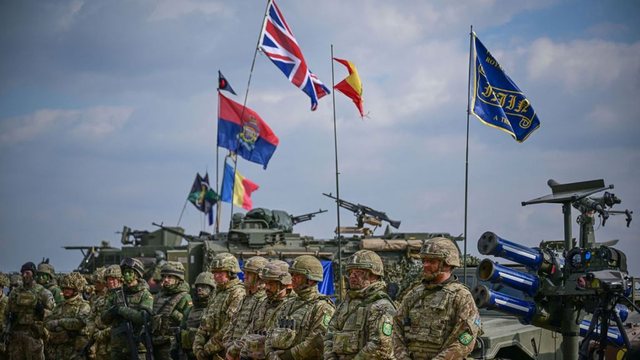
Europe is facing a new and uncertain reality, where the United States' support for NATO – the alliance that has guaranteed the continent's security for nearly eight decades – is no longer certain.
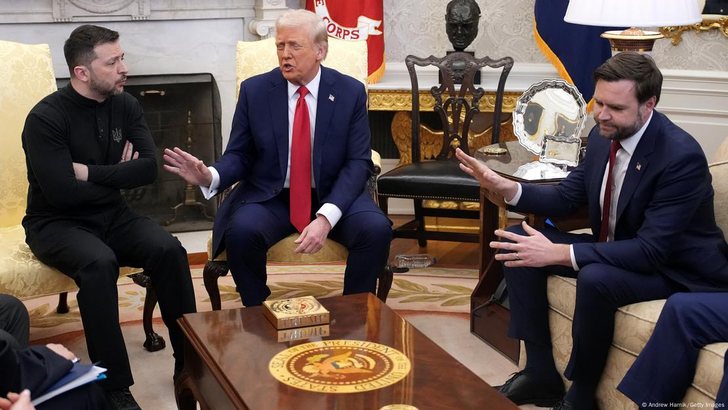
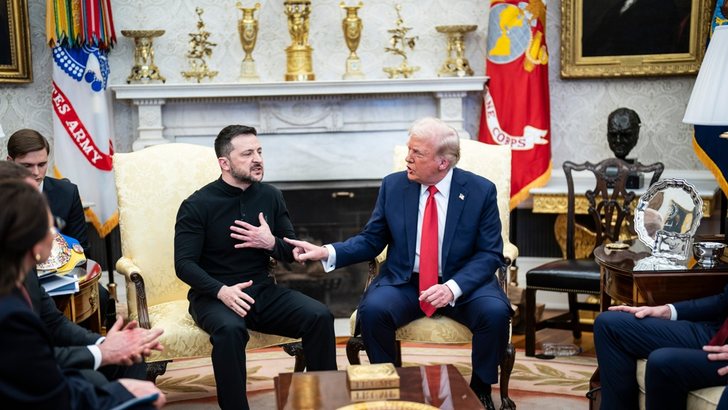
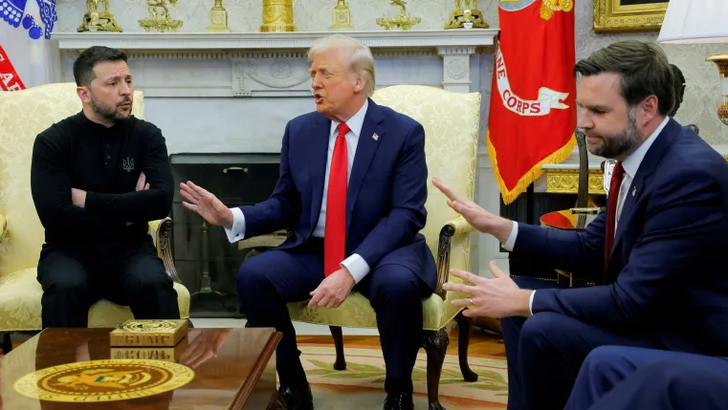
President Donald Trump has openly expressed his distrust of Ukrainian President Volodymyr Zelensky, has shown a dangerous rapprochement with Vladimir Putin, and has declared that he will not defend NATO allies “if they don’t pay up.” These statements have prompted European leaders to consider a scenario that was previously unimaginable: Is America still a reliable security partner for Europe, especially at a time when the continent is embroiled in its biggest conflict since the 1940s?
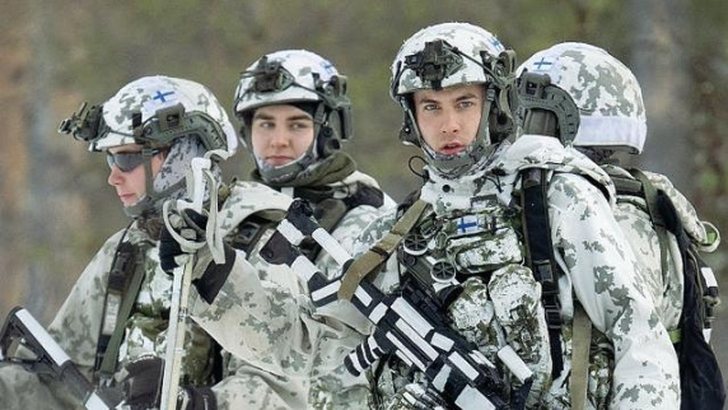
NATO without the United States is not powerless. It numbers over a million troops and has modern military equipment from its 31 member countries. Moreover, it has the wealth and technological expertise to guarantee its own security.
According to a NATO report, the US and Germany each contribute nearly 16% to NATO's military and civilian budgets and security investment programs. The UK contributes 11%, while France contributes 10%. Experts believe that Europe could fill the gap that a possible withdrawal by Washington would create.
Ben Schreer, executive director for Europe at the International Institute for Strategic Studies (IISS), says that if European countries come together and invest in the right equipment, they can create a powerful conventional and nuclear force to deter Russia. “Europe has the resources to defend itself, the question is whether it is willing to do so,” he added.
For more than 75 years, the US has been the linchpin that has held NATO together. During the Cold War, US troops in Europe served as a deterrent to the Soviet Union. In the 1990s, NATO's military campaigns in the Balkans were conducted largely with the support of the US army and air force. Until January 20, 2025, when Trump's second term began, the US was the leading aid provider to Ukraine.
But now, transatlantic relations are looking increasingly fragile. According to former NATO official John Lough, the US is seeing Europe more as a rival than an ally. “If you lose any part of the US commitment to NATO, you lose virtually all of it,” he says. In European political circles, a new question is even being raised: Should the US be seen as an adversary in some way?
On the other hand, some analysts think that a NATO without the US could be even stronger. Moritz Graefrath, a foreign policy researcher at the Global Research Institute, argues that a possible US withdrawal would force European countries to strengthen their defense capabilities. “In this sense, a US departure could lead to an even stronger Europe,” he emphasizes.
Polish Prime Minister Donald Tusk believes this process has already begun. "Europe is capable of winning any military, financial or economic confrontation with Russia. We are stronger, but we just had to believe in it," he declared before an EU summit.
Europe's capacities
In theory, a European army could be a formidable force. Turkey has the largest NATO force after the US, with 355,200 active troops. It is followed by France (202,200), Germany (179,850), Poland (164,100), Italy (161,850), the United Kingdom (141,100), Greece (132,000) and Spain (122,200).
Also, several European countries possess advanced weapons that surpass the Russian arsenal. For example, while Russia has only one outdated aircraft carrier, the United Kingdom has two modern aircraft carriers, while France, Italy, and Spain also have warships that can launch fighter jets. Furthermore, France and the United Kingdom are nuclear powers and possess ballistic missile submarines.
European air forces consist of around 2,000 fighter jets and bombers, including dozens of F-35s. On the ground, Europe possesses advanced tanks such as the Leopard and Challenger, which are already being used by Ukraine against Russia. Europe also has powerful missiles such as the SCALP/Storm Shadow, produced by France and the United Kingdom.
To strengthen their defenses, in 2024 six European countries launched a project to develop long-range missiles, increased ammunition production capacities, and diversified their suppliers to include countries such as Brazil, Israel, and South Korea.
Even if the US withdraws from Europe, NATO would inherit the 31 US bases located on the continent, including naval, air and land bases that can be used by host countries.
What will happen next?
Some experts believe that Trump's threat to withdraw from NATO is simply a strategy to force allies to increase defense spending. They argue that the situation could end up like South Korea, when Trump threatened to withdraw US troops, but in the end everything went on as normal.
If relations between Trump and Putin deteriorate, even Trump himself may understand the importance of NATO.
Thus, NATO can continue to exist, and these tensions be just a passing episode in history.
"If Putin pushes Donald too hard, he might realize the danger and change his approach," Schreer says.