Is this police force professional and capable of handling violen...
/ 2026-10-16 18:54:07Focus


Maurizio Caprara - Corriere della Sera
The Russian invasion of Ukraine, which began three years ago, plus the attacks on Israel that began on October 7, 2023 and were then followed by the Jewish state's responses, have brought twentieth-century questions to the forefront.
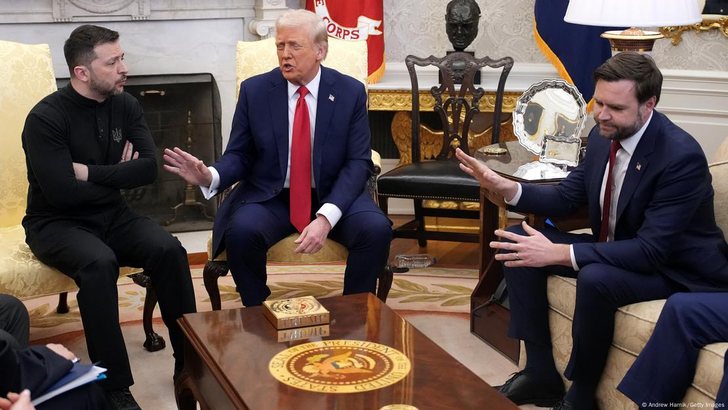
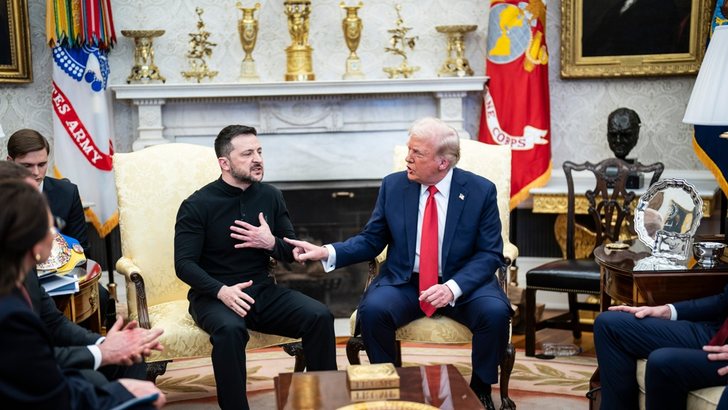
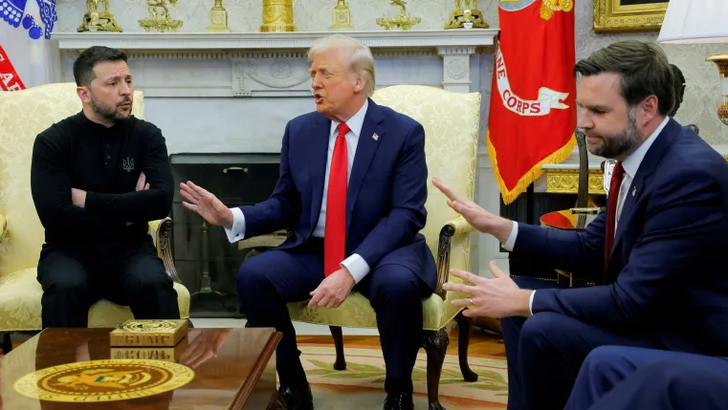
If the blows to geopolitical structures continue, who will defend Europe? By what means? The presidency of the United States in the hands of Donald Trump raises the questions drastically.
It was Trump who threatened to leave European allies alone on the front lines to increase defense spending in the face of Russia, if attacked by it.
The opposite of the three musketeers' rule of "one for all, all for one" on which the Atlantic Alliance is based, sanctioned in other words by Article 5 of the Washington Treaty.
At the moment, there are about 40,000 people monitoring the eastern side of the Alliance for NATO, both up close and from afar.
It is not easy to count them by location. Battalions and vehicles are deployed on a rotational basis in the field and with updated plans.
The alliance has 500,000 people “on high operational alert.” It is the sum of those required to deal with any emergency across land, sea, air and digital forces.
In short, from soldiers to air traffic controllers, from submarines to logistics personnel, and so on. How many men and women would it take to monitor a possible “ceasefire” in Ukraine?
It is impossible to know until it is clear whether those being deployed will be intervention forces to keep Ukrainians and Russians apart or units sent to consolidate Ukrainian defenses behind the lines.
It is not known and it does not matter what the United States would guarantee for air, missile, and naval defense.
Geography shows that the country's security does not depend exclusively on troops. Ukraine has a 1,940-kilometer border with Russia, over 1,100 km with Belarus.
Almost 2,800 kilometers of coastline. Security consists of the widespread recognition of a necessity: the defense spending of European countries must increase.
At the next Alliance summit, in June in The Hague, heads of state and government will redefine the target agreed in 2014, to allocate the equivalent of 2% of Gross Domestic Product to the military and arms.
It will need to get above 2% as soon as possible and, perhaps, to 3% or more by 2030.
Trump has expressed his intention to increase allied spending to 5%, a share that is not even touched by his own country. Beyond the percentage, the direction of travel matters.
Any development of European defense cannot ignore what the largest political-military alliance in history, NATO, is doing today.
So, it is good to keep in mind that of its 32 member states, at the end of 2024, 23 were already above the 2% threshold.
Sixteen, among the 23, are countries that also enter the EU: from Poland with 4.12% to Slovakia with 2% passing through Greece with 3.08%.
Italy is outside the perimeter. In 2024, the latter was at 1.54% of GDP according to the Italian calculation criteria, at 1.49% based on those of the Alliance.
Reluctance to increase military spending – 2%, agreed in 2014 by the states and never denied by the center-left and center-right governments – has hindered a debate in Italy about how and in what ways we should spend more to be more secure.
"The discussion of 2%, 3% or 4% is meaningless," says, for example, a researcher with a certain Atlantic background, Stefano Silvestri, author of the book "War in Europa" together with Adolfo Battaglia.
"There is no doubt that we need to spend more, especially us Italians. But how can such a target be set without deciding what needs to be done?" asks Silvestri.
The invasion of Ukraine has already prompted more outflows. Last year, EU states' defense spending rose to 326 billion euros, 1.9% of the European Union's GDP.
Compared to 2001, an overall increase of over 30%. Unfortunately, Mario Draghi's report on European competitiveness highlighted that between June 2022 and June 2023, 78% of the money went to suppliers outside the EU.
63% in the United States. The former president of the European Central Bank, advised strengthening and coordinating purchases in Europe.
At the extraordinary European Council on Thursday, March 6, European Commission President Ursula von der Leyen detailed possible solutions for new forms of financing: issuing debt securities, easing national deficit restrictions or others.
"NATO has created a common culture among the military, the ability to work together," emphasizes Francesco Talò, former permanent representative of Italy to the Alliance.
"In the current EU we will never have a European defense. What can be done is for a certain number of countries to set themselves a common objective, such as helping to defend Ukraine, and to set up a multilateral military staff for this purpose," Silvestri asserts. Starting from a nucleus. To then develop the project on a less hypothetical basis.