Is this police force professional and capable of handling violen...
/ 2026-10-16 18:54:07Focus


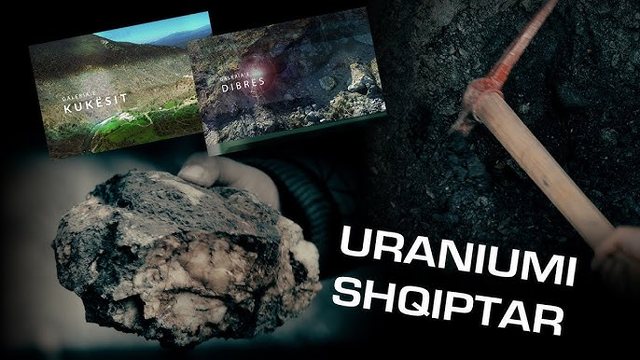
Ibrahim Voka, who no longer lives, worked in this gallery. He lost his life after health problems that started at work for uranium research.
"The father's condition when he returned home, fainting, vomiting, 4 hours without communication, they had some criteria that we later found out, they must have 3 children or more," said Melaim Voka, a miner's family member.
The son of the deceased miner, tells us what he remembers from the conversations with his father, but also the times when he entered these galleries to accompany him, without having any information about the danger that threatened him in these galleries. The workers had no idea they were looking for uranium.
"He worked for 5-6 years in these mines, at first they didn't know what it was about, sometime later they learned that they were looking for uranium", said Melaim Voka, a miner's family member.
The scheme remains the same, the secret carefully hidden by the leaders while the workers continued to dig in the galleries looking for the mineral, which would give Albania a great fortune. The goal was to find the mineral, but for its extraction, processing and exploitation, other plans would be needed, which have not yet been drawn up. This is unlikely to happen as the cost of this infrastructure is high.
"The names of some miners and the rules in the gallery, milk, cigarettes, washing hands", said Melaim Voka, a miner's family member.
Surprising episode that scared Chinese engineers, dangerous galleries still remain open in Muhur
In this gallery, in front of which the son of Ibrahim Voka is located, an event occurred which made the workers suspicious of the mineral that is being sought. Chinese experts equipped with protective equipment and devices placed a device in front of the gallery and immediately it was burned. At this moment the gallery is closed and is considered dangerous. Melaimi remembers his father's conversation with one of the team leaders who was Albanian.
The conversation, the burning of the camera, the steamer a month at sea, America, I remember I was here with my father, the geologist came here with a camera that day, he placed the camera in front of the gallery and the camera burned, it emitted smoke, dad said why burned, we got close to the mineral and the closure was put in place, a cross was put in the gallery...' said Melaim Voka, a miner's family member.
This gallery, today discovered by the collapses at that time scared the experts who stopped the workers from entering. Is it dangerous? In the past it was considered as such, but surprisingly today it remains open.
This is not the only dangerous gallery. Another one is located in this area near the Lekaj stream. Residents tell a similar story to the gallery located in Bufull that we told you about a little earlier. Here the works have started and this is the first one opened by the workers.
'The first gallery in this area that ... is this gallery here. 6-7 probes were here, then they opened this gallery, they came across uranium and stopped working, they opened other tunnels, this tunnel stayed until recently, it was the last quota, then the Chinese came and took it used, they worked hard but none of them live today', said Ramadan Leka, a resident of Muhur.
Inside there are three tunnels going in different directions. Yes, in that area above there were 2 other galleries. There are residential houses near them. Ramadan Leka, who has a house on the hill, near these galleries, shows how dangerous waste came out of the mine. He explains it with the fact that there used to be fish in this stream, but after the opening of the gallery until today there is no living thing.
Rare Confession: I am the sole survivor of the mysterious substance mining brigade
Another miner who fortunately escaped the evil, is Zyber Veshi. He says he is the only survivor of more than 20 workers from the brigade he was a part of. He lives in Sukth, Durrës with his wife and children. When he worked in the uranium mine in this very gallery, he shows that within a short time he had health problems. Although he was only 28 years old, after only 2 weeks of work in that gallery he felt tired and powerless.
'I was young, I had strength, after 2 weeks my body began to fall, the musculature of my body was falling as if someone had killed me, the brigadier took me to the stream to swim to work. the gallery was like a rainbow of colors, I brought the dynamite, lit it and ran away, I worked 50 cm for 15 days, we had a lot of conversations with each other, our whole bodies fell, but we were young people, we had to work to raise our children. 24 people, none living. only me', said Zyber Veshi, a mining worker.
Contrary to the rules that worked in the uranium galleries in Nimçë, in the galleries of Muhurri, the miners entered without any kind of protective equipment. Drilling was not done wet as defined in the regulations.
"It was done with wet drilling with a hammer with air and water, we actually worked like animals without water, we entered the gallery and worked on the job description", said Zyber Veshi, a mining worker.
Mzezezi mine, study: It was built on the body of the mine, there is a risk of the buildings collapsing
The coal mine in Mzes continued its work until 1993. In the last two years, there are no documents of the work that was done, topographic maps or other elements that indicate the work processes, to what extent it was intervened and what the data are.
"In the specific case, when we have the placement of housing engineering facilities or different infrastructures, this becomes a problem for the stability of the structures, but also for the lives of the citizens who are located on their surface. Regarding the environmental part, we can say that if a mine is not isolated, closed and hermetically encapsulated, then it will always be active", says professor Klodian Skrame.
A study report carried out in 2007 in this area highlights numerous and disturbing problems for residents, buildings and the area as a whole. "Assessment of ground movements from mining impacts
in the region of Mëzezi and the segment of the Tirana - Durrës Highway near this mine", shows that the coal seams with an exit to the surface have a great slope.
"Mining works in the Mzezez mine were carried out in a coal deposit with specific geological and mining conditions. The coal seams, with outcrops, have a steep slope of about 80 degrees and are covered by several thin layers of mudstones without clear and unstable continuity. These mainly affect the damage to the underground water network, the physical changes of the terrain, as a result of subsidence of the land on the exploited areas, as well as the pollution of the environment from the disposal of sterile waste extracted from the underground. Although they have been identified as a problem, the measures taken are minimal," the study states.
The inhabitants have filled a visible part of the galleries with materials from the mine. Groundwater and surface water damage, environmental pollution, as well as cracks and cracks in the ground have been detected and recorded, but without taking any protective measures.
"What has been noticed since the first moments is the creation of what are called cavities or pits on the body of this mine. We can say that we have two types of problems, engineering and environmental problems", said Skrame.
The geological mining features encountered in this mine can bring a negative impact even today. Due to the collapse of the galleries, there may be displacement of the building structures, despite the fact that in some areas the massif underutilized by coal mining has been compacted.