Protests, violence, curfews: From France to Albania, why Europe'...
/ 2026-10-20 23:47:20Focus


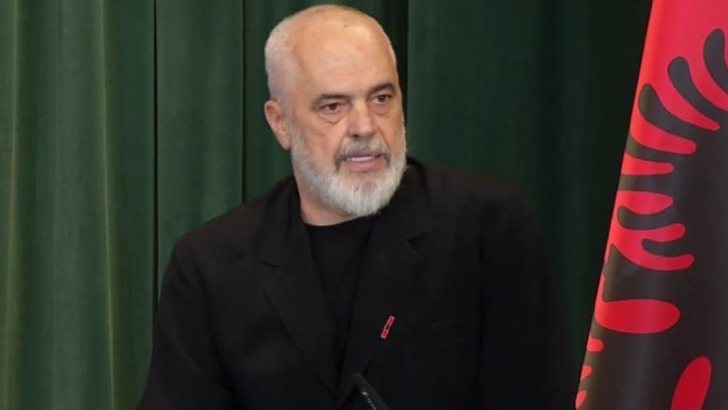
Prime Minister Edi Rama posted on his Facebook account an example where, according to him, nature coexists with elite tourism, similar to the objective for the development of Zvërnec.
"Nassau, Bahamas, one of the most famous and luxurious resorts in the Caribbean, Baha Mar, flamingos are not considered a problem. On the contrary. They are the symbol of the destination. They are part of the identity of the country, part of the tourist experience, part of the image with which the Bahamas presents itself as peaceful and welcoming to the world. Hundreds of thousands of tourists are photographed with flamingos every year. Resorts organize activities around them. Children learn about them. Visitors come from far and wide just to see them.
"No one asks anymore if flamingos can coexist with tourism. The question is how to further develop tourism so that flamingos always remain there. Because in the modern economy, nature is not the enemy of development. It is part of development. Flamingos are not a problem for development. They are a privilege. They are an asset that many tourist places would give a lot to have, to turn into a source of well-being," Rama wrote.
“Our challenge is not to choose between flamingos and tourism. Our challenge is to build a model where flamingos, lagoon, forest, beach and high-quality tourism reinforce each other. Because in the end, no one travels thousands of kilometers to see what they find closer. People travel to see what is unique. And for Albania of many unique things, one of the most unique things is precisely the flamingos of Vlora and the rare beauty of Zvërnec. There is even a significant detail. In Baha Mar, one of the main brands of the project is Rosewood Baha Mar, one of the most prestigious names in luxury hospitality in the world. The same brand is also in the investor file of the Zvërnec project.”
Rama said that some of the most well-known global ultra-luxury hospitality brands will also be present in Zvërnec, from Cheval Blanc to Mandarin Oriental, to Atlantis Resorts.
"The brand that contributed to the transformation of Dubai into the number one tourist destination in the Arabian Gulf and that has now agreed to come to Europe for the first time, to Vlora, after having always refused to come to the old continent. This does not mean that Albania should or will become the Bahamas. Not at all. Despite the respect for that country, Albania has much more potential. This means that Albania has the opportunity to dream big and build a spectacular model of its own, where nature is not isolated from development, but becomes the reason why development has value. In short, in quite a few of the most successful tourist destinations in the world, flamingos are part of their success. Therefore: the stupidity that has held Albania hostage for 100 years will not be able to stop it from continuing the path it has started to enter this country into the league of world tourism champions", the prime minister wrote.
Earlier, he also posted photos from another example that he said shows the coexistence between a lagoon with protected species and tourism, the Camargue area in France.
"When talking about wetlands, lagoons and protected areas, one often gets the impression that the only way to protect them is to cut them off from economic life. But the Camargue in France tells a completely different story. Located in the Rhône River delta, the Camargue is one of the most important wetlands in Europe. An extraordinary landscape with lagoons, marshes, coastal dunes, salt marshes, pink flamingos, the famous white horses of the Camargue and hundreds of bird species. A paradise of biodiversity. But also an economic engine," Rama wrote.
“Today, the Camargue is an international destination with boutique hotels, restaurants, marinas, nature tourism, horseback riding, bird watching, traditional salt production and a local economy that lives precisely thanks to the landscape it has preserved. France did not protect the Camargue by keeping civilization away from it. It protected it by making it valuable for its civilization. Understanding that nature is not necessarily the opponent of development. Sometimes it is even development itself. That is why today the flamingos are still there. The lagoons are still there. Biodiversity is still there. That is why the question is not whether nature and the economy can coexist. The question is whether we have the vision to turn nature into an asset of the economy. Because when the landscape becomes part of the economic model, people are no longer indifferent and often its destroyers and polluters. They have an interest in protecting it. And this is the true lesson of the Camargue: It did not choose between nature and development, but that it found a way for both to win together.”