Is this police force professional and capable of handling violen...
/ 2026-10-16 18:54:07Focus


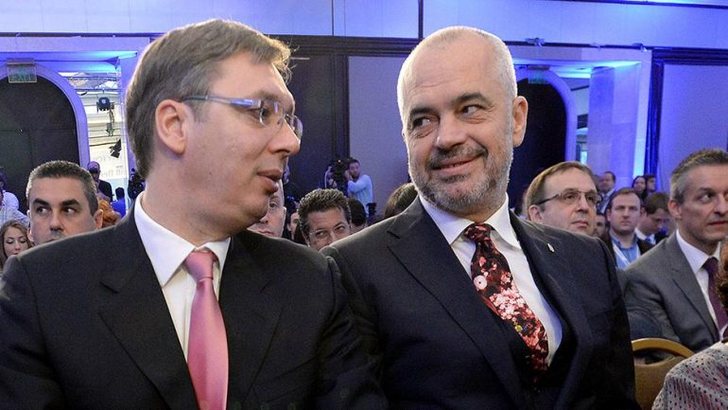
The Prime Minister of Albania, Edi Rama, and the President of Serbia, Aleksandar Vučić, have proposed a new approach to the European integration of the Western Balkan countries.
In a joint opinion published in the German daily Frankfurter Allgemeine Zeitung, the two leaders suggest a "realistic path" towards the European Union, shifting the focus from full membership to integration into the European single market and the Schengen area.
In their writing, Rama and Vučić do not insist on a quick deadline for EU membership, but propose the inclusion of prepared candidate countries in the common market and free movement in the Schengen area. According to them, this would bring immediate benefits to the citizens and respective economies, while also strengthening the economic and geopolitical position of the EU itself.
The two leaders express disappointment at the lack of EU enlargement since 2013, describing the current reality as discouraging for the region. They emphasize that the Western Balkans represent a “new front line for investment” and argue that Brussels should see the region as a strategic space in the context of new geopolitical developments.
In their opinion, Rama and Vučić acknowledge that within the EU there are two objectives that often seem different: on the one hand, candidate countries seek a clear and credible path towards full membership; on the other hand, member states aim to maintain the functionality, unity and decision-making capacity of the Union.
As a solution to this dilemma, they propose accelerated integration into the common market and the Schengen area, without changing the EU's institutional architecture.
According to their idea, this model would not imply veto rights for candidate countries, nor the appointment of new commissioners, nor the addition of members to the European Parliament, nor changes in voting mechanisms.
Such a formula, they argue, would be more acceptable to member states hesitant in the face of a new enlargement and would make it easier to explain the process to European public opinion.