Is this police force professional and capable of handling violen...
/ 2026-10-16 18:54:07Focus


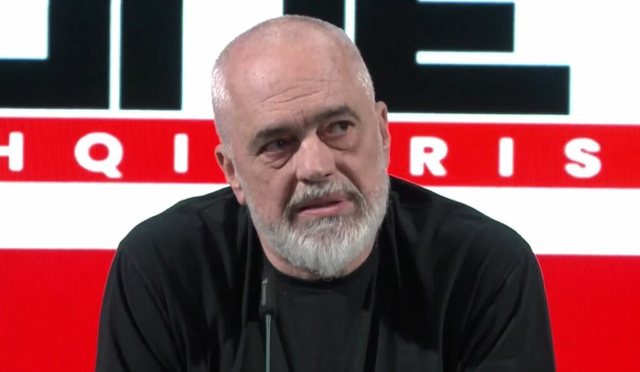
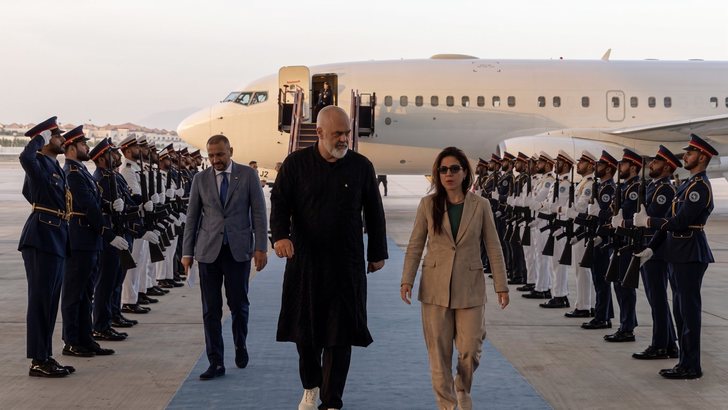
"Nationalist tendencies can sometimes emerge quickly, often reflecting a lack of maturity," Edi Rama declared to the Greek media outlet "Kathimerini", when asked about the joke made about the origin of Greeks, made a few weeks ago at the Abu Dhabi summit, which caused a stir in Greece.
The head of government was asked about many issues during this interview, such as the relationship between the two countries, the accusations that he received a scholarship from Greece to study at Harvard, or even the issue of the lands of the Greek minority in our country, referring to Himara.
" What we are doing now is a process of consolidation and unification of the cadastre. We are making progress and recently we have issued many property titles to people in the south, in Himara. Regardless of whether they are of Greek or Albanian origin, people are getting property titles for their old houses, for which they did not have before ," Rama says regarding the property issue.
-During your mandate, Albania opened its doors to foreign investment, the annual growth rate is around 4%, while the country has become a magnet for tourists. What is Albania today?
– We have brought about a very important change in many ways. As you said, today Albania has become a tourist destination and the most important thing is that we have managed to overcome the stigma and numerous prejudices that kept us away from other countries for many years. Now we must continue, do our best to improve what needs improvement and to avoid repeating the mistakes that sometimes seem inevitable.
– The Commission estimates that a large part of your economy depends on the informal economy, around 30% of GDP, and has expressed concerns regarding the rule of law. What measures have you taken to address these issues?
– The shadow economy is part of the historical phase of transformative changes in Albania. 35 years have passed, but this is not enough to leave behind many of the challenges that arose from the lack of experience, state institutions, democratic tradition and the rule of law. We are building and changing every day.
We have significantly improved the balance between the formal and informal economy, and this is clearly reflected in government revenues, which continue to grow without a corresponding increase in taxes. This means that a larger part of the economy is being sold and tax collection is becoming more sustainable. We are also using technology, including artificial intelligence, and this will continue to improve.
– Your statement at the Abu Dhabi summit regarding the Greeks “thinking that you are descendants of Plato and Aristotle, but you are not,” caused strong reactions in Greek society. Do you regret your comment?
– I regret that comments that were intended to be “provocative”, more for the sake of discussion and with a little humor, can turn into serious issues and provoke disproportionate reactions. This surprised me. I think we should treat such comments with more tenderness. They are not intended to offend, but rather to encourage self-sarcasm, which is always healthy.
If the people in Greece who were upset had also listened to my comments about how we in Albania need to take ourselves less seriously and not rely on the past to feel better or more important, they might have understood what I mean. However, I have made it clear that when it comes to Greece, its history, language, literature and culture, my feelings are completely positive. I admire it greatly and anyone who knows me understands this.
However, nationalistic tendencies can sometimes emerge quickly, often reflecting a lack of maturity and awareness. We should all try to smile more and take ourselves, and others, a little less seriously.
– This statement of yours also gave rise to accusations about your connection to the Greek minority in Albania, through your mother from the village of Vuno, but also about a “Greek scholarship” that you were reported to have received as mayor of Tirana to study at Harvard. What is the truth about all of this?
– Vunoi is a village in Himara, there are people who speak Greek in other villages, but in Vunoi no one spoke Greek. I don't know the reason, but that doesn't mean anything. If I had Greek roots I would be very happy and proud, but I don't. I am proud of my Albanian roots.
Second, I never received a scholarship to Harvard and I never studied at Harvard. I have visited it, thanks to a very close and dear friend who is like a sister to me and a Greek-American. However, I never studied there. There is a lot of misinformation circulating and I don't understand why.
– Another issue between the two sides concerns the property of the Greek minority, which has not been fully resolved. What is the latest development on this issue?
– This is not an isolated issue. Property rights remain a broader issue throughout the country, it is not something that concerns only the Greek minority. Greeks and Albanians living in the same village face the same challenges. This situation stems from a very difficult historical legacy. There was a 50-year period of complete expropriation, which affected us all.
A transition phase followed, during which many things went wrong, titles and ownership documents were destroyed and in some cases assigned to the wrong people.
What we are doing now is a process of consolidating and unifying the cadastre. We are making progress and recently we have issued many property titles to people in the south, in Himara. Regardless of whether they are of Greek or Albanian origin, people are getting property titles for their old houses, for which they did not have before. This process is complicated, because it involves the unification of maps and is not as simple as it may seem. There are still tens of thousands of old houses in the country that are in the process of being issued property titles.
– It seems that Himara has been included in the tourism development plan. Are you discussing with your Greek counterpart ways to strengthen tourism relations?
– Himara has always been part of our tourist plan, it is nothing new. Like the rest of the country, it has seen significant growth in recent years. The municipality of Himara is one of the richest in the country, thanks to tax revenues from development.
Contrary to much of the “fake” information circulating in the Greek media, the residents of Himara benefit significantly from this development. When they enter into development contracts, often backed by flexible agreements that recognize long-term land use, they can receive substantial compensation from the developers.
Himara is doing very well and the mayor is doing an excellent job. He represents what I believe is a role model: he has a Greek parent and an Albanian parent and is fully committed to both communities. He supports the Greek-speaking residents and this is reflected in the promotional tourism material, which is available in Albanian, Greek and English. What happened in the past with the person (ed.: Fredis Beleris) who ended up in prison instead of serving as mayor was unfortunate.
We are not afraid of Iran. We learn from Greece.
– Former Iranian Supreme Leader Ali Khamenei described Albania as “a very small but very evil European country, where American elements are collaborating with Iranian traitors and plotting against the Islamic Republic.” Albania has recently been the target of hybrid attacks. Are you concerned that Tehran might try to expand them?
– I have no information about heaven and hell, and I don’t know for sure if they exist, but if they do, I hope he (Khamenei) rots in hell. I say this for the sake of the hundreds of thousands of Iranian girls and women who have suffered under his rule. I also say this for the sake of the many people who have been imprisoned, massacred, or have seen their lives destroyed under this regime.
I have nothing else to add. We are not afraid of them. We have hosted a group of Iranians who oppose the regime. It is clearly stated in our agreement that they are being sheltered for humanitarian reasons, to save their lives and not to use Albania as a platform to act against the regime.
– Since your last interview in 2023 in “Kathimerini”, have you learned any Greek words or phrases?
– I already knew the two most beautiful Greek words: “love” and “thank you”. For the rest, English works very well. I’m not young enough to learn Greek anymore. My brother, who is not much younger than me, learned it when we went to Corfu and has continued to practice, so he speaks well. He can easily handle situations, like talking to a taxi driver in Athens, while I am completely at the mercy of the driver and it doesn’t bother me.
– I have to ask, have you visited many destinations in Greece?
-I would like to visit Greece more often and discover more places. However, due to my job and the fact that I am well-known in Greece, for good and not so good reasons, it is not easy. I have also set a rule for myself and others in the government not to vacation outside Albania. The reason is simple: it would not make sense to promote Albania as a tourist destination, while we spend our vacations in countries like Greece or Turkey.
I understand that Kyriakos (Mitsotakis) can do this, because Greece is already an established and consolidated tourist destination. But we are still in the process of creating our own.
By the way, I am very impressed by what has happened in Greece in recent years, especially after the economic crisis and under the government of Kyriakos. The new developments, especially the high-quality hotels and resorts, are very impressive. Maybe now he is reaping the fruits of the foundations laid earlier, as often happens. However, it is very impressive and we have a lot to learn from Greece./ Kathimerini