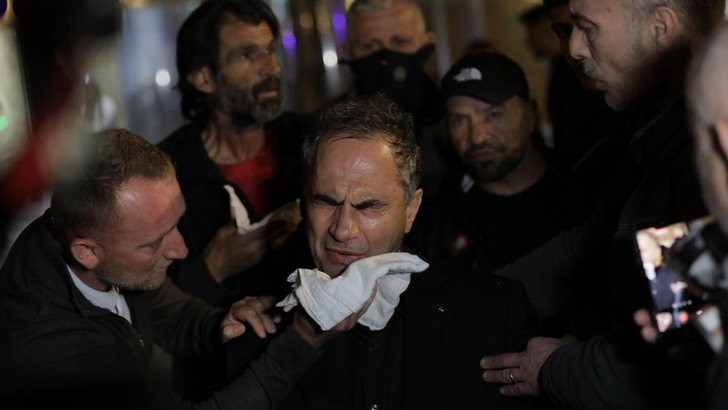
Is this police force professional and capable of handling violen...
/ 2026-10-16 18:54:07Focus


The European Commissioner for Enlargement, Marta Kos , recently stated that Albania could become part of the European Union even before 2030.
The Commissioner made this statement during an interview at the Atlantic Council, where she spoke about the path ahead for the Western Balkan countries, highlighting Montenegro and Albania.
"It is also possible that Albania will become a member by 2030 or even earlier," Kos said, among other things.
She was further asked about the letter written by Vučić and Rama suggesting that their countries could join Schengen and the common market, for example, at the cost of an easy membership, i.e. without the right of veto. Kos said in this regard: "I do not support this, because my role is to help those countries become full members of the EU."
Excerpt from the interview:
Question: Coming to the Western Balkans in particular, as I said, many of the candidate countries have been in this process for decades. At the same time, we have two leading countries: Montenegro, which hopes to close all its chapters by the end of this year. And then Albania, which has expressed its determination to close the negotiations by the end of next year. How do you assess this progress? How realistic is the Montenegrin slogan “28 by 28”? So, the 28th member by 2028. Give us your assessment.
Marta Kos: You know, usually we don't set dates in the accession process, because it really depends on the merits. So it depends on how the countries are delivering. But of course, we support ambitious objectives. First for Montenegro, it is possible that we can close them.
So, it is possible that Montenegro with 650,000 inhabitants could become the 28th member of the European Union.
It is also possible that Albania will become a member by 2030 or even earlier. And then of course, now maybe we will have a new candidate country. I am looking forward to it very much.
Question: Let me ask you as a last question, perhaps related to this, which is part of the discussion on reform. We recently had an opinion written by President Vučić of Serbia and Prime Minister Edi Rama of Albania, where they suggested that their countries could join Schengen and the common market, for example, at the cost of an easy membership, i.e. without the right of veto. How do you see such proposals and interim agreements proposed as part of a different membership dynamic?
Marta Kos: There is no “light” membership. Either you are a member and then you get all the rights. Or you are not a member and you don’t get the rights. But of course, I understand this letter from Mr. Vučić and Rama, in the sense that if the EU is going to have problems, you know, to continue with the enlargement process, they would be happy with something less. That is their choice. I do not support this, because my role is to help those countries become full members of the EU. The simple rule is this: if a country meets all the reforms and criteria, it should become a full member of the European Union. That is how our European Treaty is built.