Environmental genocide in Elbasan - The Prosecution lands at "Al...
/ 2026-10-30 21:22:00Focus


US President Donald Trump's threat to strike Iran again confronts America's Gulf allies with a grim prospect: another war decided by Washington, in which the American bases built to protect them could turn them into targets for harsh Iranian retaliation.
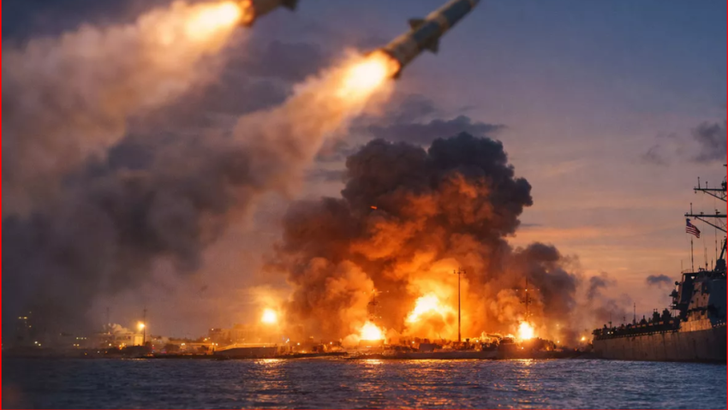
The Iranian missiles that struck US military bases and Gulf energy facilities in the latest round of fighting exposed a weakness at the heart of Washington's decades-old security architecture.
Rather than deterring Tehran, America's broad regional footprint has given Iran fixed targets and the Gulf states that harbor those pressure points it can exploit.
That perspective dominated discussions among ministers, policymakers and security officials at the annual Manama Dialogue security conference in Bahrain over the weekend, as governments assessed what another round of war could mean for US forces and the countries that host them.
The situation has become more urgent after Trump again threatened military action, stating that he could undertake “another ‘Little Operation Epic Fury’” after Tuesday’s midterm elections – referring to the US-Israeli operation that began on February 28.
Four European officials said the US has amassed enough forces and assets in the region to attack Iran within a very short time, possibly as early as this week.
“War is coming,” said a fifth European official, who has close contacts with Gulf leaders. “Nobody is in favor of this war.”
Egyptian Foreign Minister Badr Abdelatty told the Manama conference that another round of fighting would be more dangerous and destructive than the previous one: “This will lead nowhere.”
Two of the European officials told Reuters that any US attack would likely target Iranian nuclear sites, including research and development facilities.
Among the possible sites is Pickaxe Mountain, a site linked to Iran's nuclear program, although officials said military action would probably only be able to weaken Tehran's capabilities rather than destroy them.
Iranian officials have told Reuters that Tehran has drawn up detailed lists of targets in retaliation for another US-Israeli attack, including undersea communication cables and military bases, some secret.
The strategy could extend the cost of war beyond the battlefield, with energy infrastructure, salt smelting plants, communications networks, and highly visible targets in Gulf cities at risk.
Iran cannot militarily confront the United States and Israel. But it does not need to, three delegates said.
His strategy is increasingly one of attrition: make American forces expensive to defend and sustain, turn the Gulf states that host them into pressure points, and exploit any American retreat as proof that Washington cannot protect its partners.
"What the Iranians are really interested in is the removal of American forces from the region," said Emile Hokayem, director of regional security at the International Institute for Strategic Studies, which is organizing the Manama conference.
Tehran's message to the Gulf powers, he told Reuters, is largely: "You spent four decades investing in the US and after 40 years, those bases didn't protect you, they exposed you."
Nowhere is this argument more powerful than in Bahrain, the headquarters of the US Fifth Fleet and, for decades, a pillar of American military power in the region.
Near the base in Juffair, traces of the strikes were still visible just a few meters from residential areas: the tin roof and front of a warehouse were destroyed and blackened by shellfire, while an Iranian-run radar had lost a third of its parabolic antenna.
The damage caused has forced Washington to confront an issue that goes beyond Bahrain: whether to rebuild, reinforce or withdraw its military presence – a presence designed to project American power, not to withstand constant missile and drone attacks.