Is this police force professional and capable of handling violen...
/ 2026-10-16 18:54:07Focus


A mysterious phenomenon first observed in 2013 on board a ship in part of the Pacific Ocean seemed so absurd that it convinced scientists that the monitoring equipment was faulty.
Sensor readings indicated that oxygen was produced on the seabed 4,000 meters deep, where no light can penetrate.
The same thing happened on three subsequent trips to a region known as the Clarion-Clipperton Zone.
Photosynthetic organisms such as plants, plankton, and algae were thought to use sunlight to produce oxygen that circulates in the deep ocean, but previous studies conducted in the deep sea have shown that oxygen is only consumed, not produced, by the organisms that live there. . Currently, the team's research is only challenging this assumption by finding oxygen produced without photosynthesis.
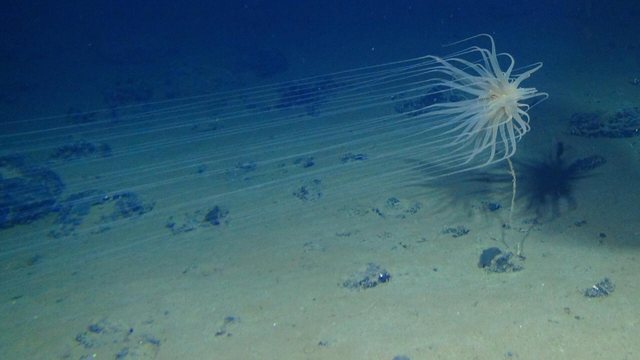
The study, published in the journal Nature Geoscience, shows how much is still unknown about the deep ocean. The discovery that there is another source of oxygen on the planet besides photosynthesis could also help unravel the origins of life. The team took some of the sediment, seawater and polymetallic nodule samples to study in the lab and try to understand exactly how the oxygen was produced.
Many unanswered questions remain about how "dark oxygen" is produced and what role it plays in the deep sea ecosystem. Understanding how the ocean floor produces oxygen may also shed light on the origins of life.
A long-standing theory is that life evolved in hydrothermal vents in the deep sea, and the discovery that electrolysis of seawater can form oxygen at depth could inspire new ways of thinking about how life began on Earth.