How Belinda Balluku is fabricating the rumor about Top Channel's...
/ 2026-10-19 16:19:00Focus


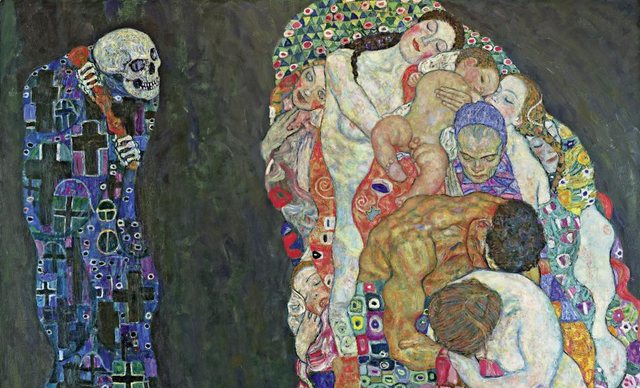
For many believers, death is not the end. But what happens after it? When does death begin? And do we have a soul? Science can at least objectively explain this taboo subject, the rest is a matter of faith.
At Easter, Christians celebrate the resurrection of Jesus and the victory of life over death. Orthodox Jews and Muslims also believe in the resurrection. Hindus and Buddhists emphasize salvation through rebirth.
For religious people, grief over the loss of a loved one through illness, old age, violence, or accidents is mixed with hope that death is not the end. They find solace in the visions of an afterlife, which exist not only in today's religions. Even the first humans, who were gatherers and hunters, the Egyptians, the Vikings, and many other cultures said goodbye to the dead with burial rituals, placing objects in graves in order to pave the way for them to the afterlife.
How is death defined?
Biologically, the human body functions optimally for about 120 years. But what is important is the current lifespan, which has been extended over time due to improved living conditions and hygiene. In Germany, for example, life expectancy increases by about 3 months per year.
Most people are not afraid of death, but of the lack of knowledge about what happens during and after death. From a medical point of view, there are several types of death. In “clinical death”, the cardiovascular system stops working, the pulse and breathing stop, and the organs are no longer supplied with oxygen and nutrients. But in the case of “clinical death”, resuscitation through ventilation and cardiac massage is possible and often successful. This does not happen in the case of “brain death”, because the cerebrum, cerebellum and brainstem no longer function. Even in brain death, some brain cells may still be active in deeper layers, but “consciousness” has already been lost.
However, people who are “brain dead” can be kept alive artificially for a long time. Some brain-dead patients also react to external stimuli, such as during surgery. But from a medical point of view, these are only reflexes of the spinal cord and not pain.
What happens to the dead body?
Initially, our organs can survive for a while without oxygen and nutrients. Gradually, cell division stops completely, and then the cells die. If too many cells have died, the organs can no longer regenerate. The brain reacts fastest, with cells there dying in just three to five minutes. The heart can last up to half an hour. As soon as the blood stops circulating, it collapses and “livor mortis” stains form, which can provide forensic medicine with clues to the cause and location of death.
After two hours, the corpse begins to stiffen, because adenosine triphosphate is no longer produced. Without this energy source in the cells, the muscles stiffen. After a few days, this stiffening of the corpse disappears.
The gastrointestinal tract dies after two to three days and the bacteria found in it accelerate the decomposition of the body. However, pathogens in the body remain dangerous for a long time. Hepatitis pathogens, for example, live for a few days, while tuberculosis bacteria for years. In general, the process of decomposition of the human body lasts about 30 years.
What do near-death experiences teach us?
Scientifically speaking, near-death experiences occur in the period between clinical death and resuscitation. Not only science, but also religions and esotericism have been intensely concerned with the described experiences, which can vary greatly depending on cultural or regional influences.
Many affected people have no memory of this phase. Others report a multitude of memories, dissociation from the body, landscapes, or a bright light (at the end of a tunnel). Some have reported a feeling of great happiness, others have experienced anxiety or panic attacks.
Near-death experiences seem to occur more frequently when resuscitation has been prolonged and the oxygen supply to the brain has been restricted for a longer period. This insufficient supply to the brain primarily affects the temporal and parietal lobes of the brain, as well as the angular gyrus, which is located in the middle. Whether near-death experiences originate there is unclear.
Do we have a soul?
Although death is a part of life, we do not want to accept it as an inevitable end. By “soul” we usually mean the immaterial, immortal essence of a person, separate from the body. In many religions, it is the soul that makes a person who they are.
Belief in an immortal soul is deeply rooted in our dualistic thinking, which divides the world into two opposing categories: good and evil, right and wrong, body and soul. Philosophers such as Plato, Socrates, and Descartes saw the body and soul as separate entities.
Neuroscience studies show that all mental processes are linked to brain function. According to them, our entire "mental life" can be explained by neurons, neurotransmitters, and networks.
But is it really only measurable brain activities, biochemical processes, and socio-cultural influences that define a person's being, their soul? Or is it a very complex interaction of body, mind, and environment that shapes our "spiritual life"?
The existence of a soul or such an interaction cannot be scientifically proven. And beyond empirical sciences, faith begins./ DW