How Belinda Balluku is fabricating the rumor about Top Channel's...
/ 2026-10-19 16:19:00Focus


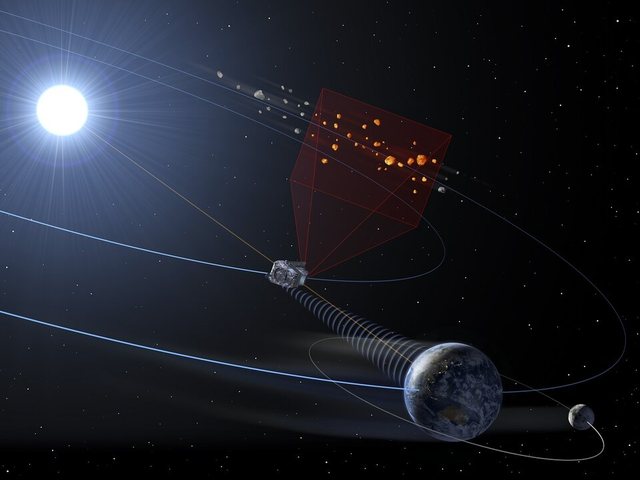
To date, more than 40,000 near-Earth asteroids have been identified, meaning objects that can come within 45 million kilometers of Earth's orbit.
Of these, approximately two thousand have a remote probability of impacting our planet within the next hundred years, but these probabilities are generally well below 1% and are very small, so they do not pose a significant threat.
The first near-Earth asteroid, or NEA, was discovered in 1898 and since then, observations have accelerated, in parallel with the construction of new telescopes and dedicated instruments: out of forty thousand identified, ten thousand have been discovered in the last three years alone.
“The number of discoveries is growing exponentially,” says Luca Conversi, head of the European Space Agency’s Near-Earth Object Coordination Centre (NEOCC), the centre dedicated to planetary protection.
"With the entry into service of the next generation of telescopes, we expect the number of known NEAs to continue to grow at an even faster rate," Conversi adds.
According to the scientific community, the vast majority of the largest asteroids – those exceeding a kilometer in diameter and therefore the most dangerous – have already been discovered.
Attention is currently focused on medium-sized asteroids, between one hundred and three hundred meters in diameter: these are much more difficult to detect and it is believed that only about 30% have been discovered.
While we wait to find lost NEAs, ESA's planetary defense missions are also ramping up, aiming to understand what to do if the risk of collision with one of these objects becomes real.
These missions range from Hera, currently en route to the asteroid Dimorphos to study the aftermath of NASA's DART mission, to Ramses, which will track the asteroid Apophis during its near-Earth flyby in 2029, to Neomir, which will fill the blind spot, where intense sunlight prevents Earth-based optical telescopes from seeing.