Is this police force professional and capable of handling violen...
/ 2026-10-16 18:54:07Focus


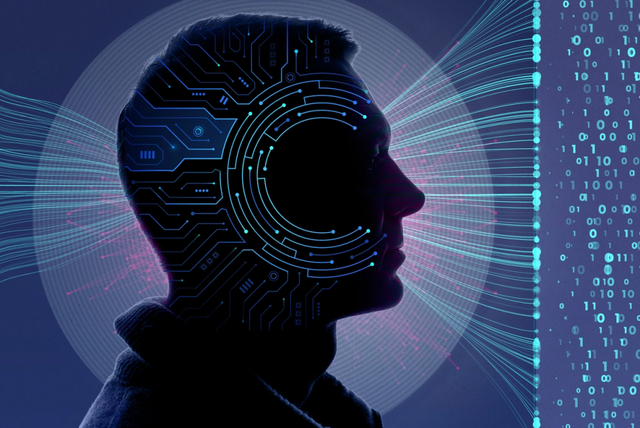
There will come a day when people will voluntarily implant a computer chip in their brains. At least that's what D. Scott Phoenix, a tech entrepreneur and investor in Silicon Valley, believes, who warned during the TED 2026 conference that the union between humans and artificial intelligence is much closer than we think.
"First it will be someone you work with. You will resist for a while, like you did with smartphones. But eventually you will not be able to escape it," he told an audience in Vancouver. "The advantages of integration will be very great."
What once sounded like science fiction is gradually becoming a real debate in the American technology industry. Some of the most powerful figures in Silicon Valley openly believe that the future of humanity lies in merging biology with AI, writes Politico .
Sam Altman, the head of OpenAI, had declared in 2017 that “merging” with artificial intelligence could be “the best-case scenario for the survival of humanity.” Meanwhile, billionaire Peter Thiel has long been a supporter of the idea of “transhumanism,” the philosophy that aims to radically transform the human body and mind through technology.
However, the technology is still in its early stages. Brain implants — known as Brain-Computer Interfaces (BCIs) — are currently used primarily for medical purposes. The most famous case is that of Noland Arbaugh, the first person to receive an implant from Elon Musk's company Neuralink. Arbaugh, paralyzed from the neck down, can now control a computer with just his mind.
But while direct brain implants still remain rare, lighter forms of neurotechnology are already part of everyday life: smart glasses, smartwatches, fitness bracelets, or apps that measure stress and sleep.
And that's where the big battle begins. These devices don't just collect data on physical activity. They can record neurological signals, emotions, psychological reactions, and behavioral patterns — a new treasure trove of information that tech companies are calling the "oil of the 21st century."
"If data is the oil of the 21st century, then brain data is crude oil," former UNESCO director Audrey Azoulay warned in the Financial Times. "We need to protect it much more strongly."
The industry is growing at a breakneck pace. The brain-computer interface market is currently valued at around $350 million, but is projected to reach $1.2 billion by 2035. The overall neurotechnology market could reach $52 billion by 2032.
In Silicon Valley, this is seen as the next technological revolution. To critics, it is the beginning of a dangerous race for control of the human mind.
Experts warn that possessing large amounts of neurological data could be used for ultra-personalized advertising, behavioral manipulation, psychological surveillance, and direct influence on people's decision-making.
Fear is prompting several US states to react. Colorado, California, Connecticut and Montana have begun passing laws to protect “neural data,” while the “MIND Act,” a bill that would seek federal regulation of neurological data, has also been proposed in the US Senate.
At the center of the debate is the biggest question: should private companies be allowed access to a person's most intimate thoughts and reactions?
Susan Schneider, director of the Center for the Future of AI and Society at Florida Atlantic University, calls the logic of merging humans with AI "deeply distorted."
"Artificial intelligence must be developed in a way that protects privacy and helps humanity thrive," she declared.
But Silicon Valley’s most radical figures seem to think otherwise. Peter Thiel has spoken openly about transforming the human body into an “immortal body.” Bryan Johnson, the billionaire obsessed with extending life, declared late last year that “a new age of man has arrived.” While Dario Amodei, the chief executive of Anthropic, wrote that humanity is entering an “inevitable rite of passage as a species.”
Phoenix himself believes that humans will have no choice but to merge with AI.
"Either we get on the train, or we get left behind in a very bad way for us," he said. "I don't think we'll be able to control a god-brain. We only have the opportunity to humanize it."
This idea is causing strong reactions on both the right and the left in the US. Some conservatives warn that younger generations are being taught to live as “machine pets,” while progressives accuse the tech elite of using AI only for more power and wealth.
However, the big clash has only just begun. And it's no longer just about privacy or technology. The real debate, according to Politico, is much deeper: what it means to be human in the age of artificial intelligence.