"Condemned" protesters?! Who trapped Rama inside the Prime Minis...
/ 2026-10-23 16:02:00Focus


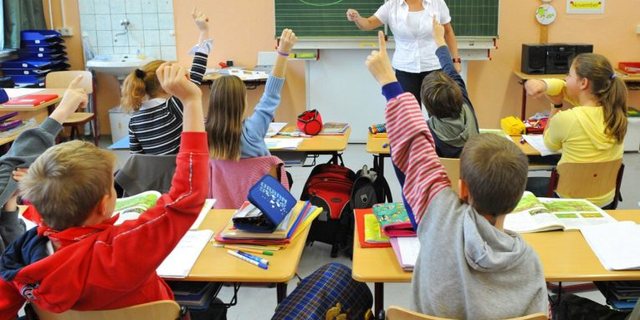
There are many advantages to learning foreign languages at a young age: it improves your understanding of the world, allows you to converse with your neighbors, allows you to discover new series in their original language, and helps you to be understood better (in most ) during holidays abroad.
Later in life, multilingualism expands professional opportunities, improves access to services and favors social cohesion by strengthening intercultural dialogue. Scientific studies also show that speaking more than one language can delay the onset of Alzheimer's.
It is therefore a great idea to study foreign languages at school as early as possible. However, foreign language learning is uneven in EU countries.
In 2022, 6.5% of primary school pupils in the EU were learning two or more foreign languages, according to Eurostat. Luxembourg was the only EU country where the majority of primary school pupils (79.6%) learned two or more foreign languages.
Part of this success may lie in Eurostat's methodology. He points out that although the official languages of Luxembourg are French, German and Luxembourgish, for the purposes of education statistics, French and German were counted as foreign languages.
It was followed by Latvia (37.2%), Greece (34.9%) and Estonia (33.6%). While the study of two or more foreign languages is in the minority, the good news is that language learning is on the rise across the EU.
Between 2013 and 2022, the proportion of primary school pupils in the EU learning at least two foreign languages increased from 4.6% to 6.5%. In contrast, of the nine EU countries where weight fell, Poland (-6.8%) and Luxembourg (-4.2%) reported the most significant declines.
At the lower secondary level, 60.7% of students were learning two or more foreign languages in 2022. The highest percentages were observed in Finland (98%), Italy (96%) and Greece (96%). In Finland, depending on their mother tongue, students have to choose between Finnish and Swedish. Both were considered foreign languages for the purposes of education statistics, Eurostat clarified.
On the other hand, the lowest percentages were observed in Ireland (6.1%), Hungary (6.6%) and Austria (7.7%). As in primary education, foreign language learning is on the rise in secondary school. Compared to 2013, the percentage of lower secondary students in the EU learning at least two foreign languages increased to 60.7% in 2022, from 58.4%.
This percentage increased the most in the Czech Republic (24.1%), France (21.8%) and Belgium (18.5%). But keep in mind that Belgium has three official state languages: Dutch, French and German.