Is this police force professional and capable of handling violen...
/ 2026-10-16 18:54:07Focus


Gravity is explained today through the general theory of relativity, according to which a body falling towards Earth is not actually affected by a force, but simply moves following the curvature of space-time created by the planet.
Relativity is the only theory that describes gravity under extreme conditions, such as the environment around black holes or objects approaching at the speed of light.
However, in most cases, even when NASA plans the trajectories of space missions to other planets, physicists continue to use the law of gravity formulated by Isaac Newton.
Three centuries later, an international team of astronomers has confirmed Newton and Einstein's theory and in galaxy clusters, the largest structures in the Universe. This confirmation narrows the scope for new theories of gravity.
In his famous work Philosophia Naturalis Principia Mathematica of 1687, Isaac Newton formulated the law of universal gravitation, according to which the attractive force between two bodies decreases with the square of the distance.
The mathematical formula allowed the English scientist to explain the motion of the planets, which until then had been described by the empirical laws of motion of Johannes Kepler. Since the 18th century, numerous experiments have confirmed Newton's theory at very small distances.
The new study, published in Physical Review Letters, examines the law of gravity at the greatest possible distances.
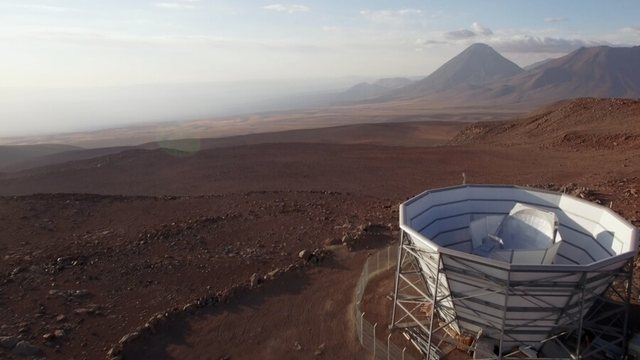
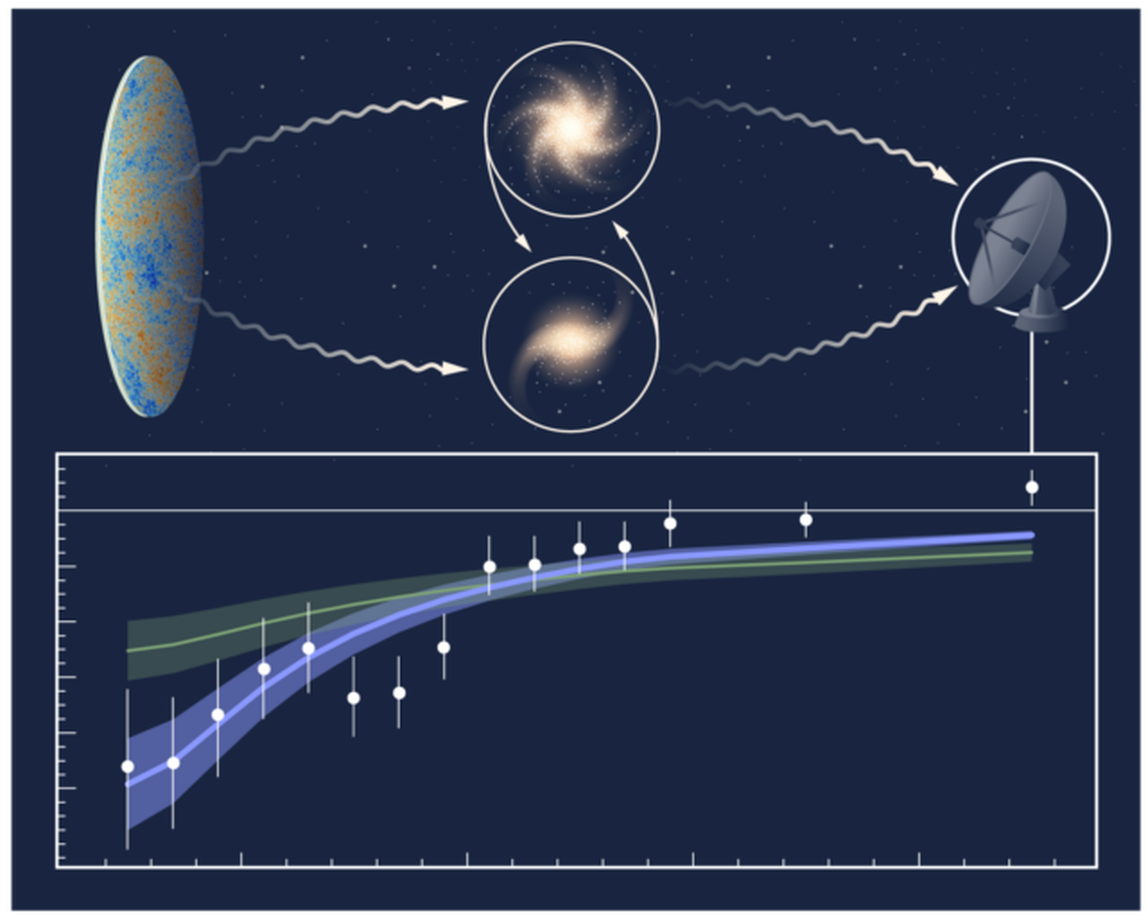
Using the ACT telescope in the Atacama Desert, researchers measured the velocities of hundreds of thousands of galaxy clusters, groups of galaxies considered the largest structures in the Universe.
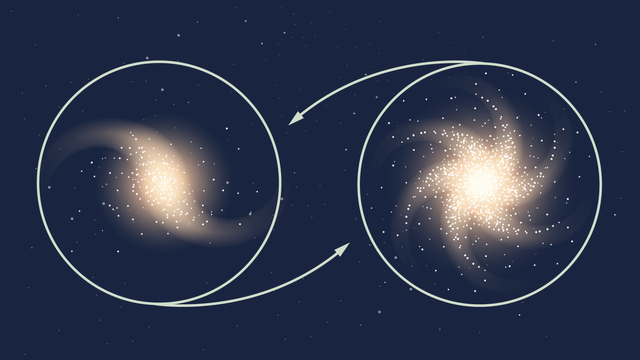
Just as planets closer to the Sun move faster around it compared to planets further away, two nearby galaxy clusters must also move at high speed towards each other.
However, their motion is also affected by the gravitational pull of all the other galaxy clusters around them. The research team used a statistical model that took these interactions into account to compare the velocity measurements with the distribution of galaxy clusters.
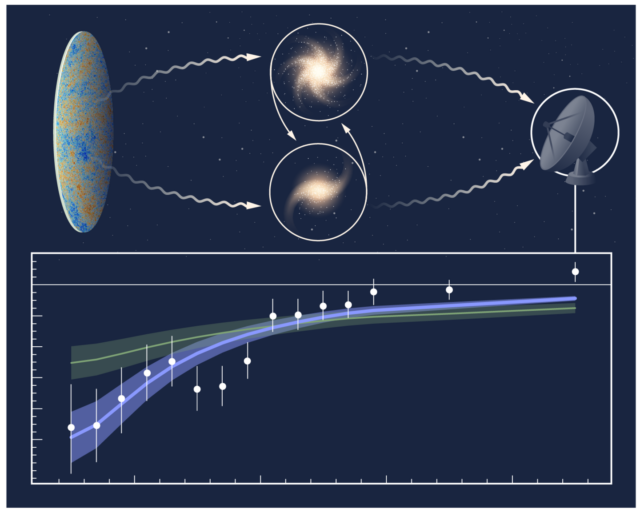
The study measured extremely small accelerations, about 10 femtometers per second squared, a million trillion times weaker than gravity at the Earth's surface.
At distances between 80 and 800 million light years, the force of gravity was found to be inversely proportional to the distance raised to the 2.1 power, with a margin of error of 0.3. This result confirms with great accuracy Isaac Newton's law of universal gravitation.
This confirmation weakens the theory called Modified Newtonian Dynamics (MOND), proposed in the 1980s as an alternative to the hypothesis of dark matter, a mysterious and invisible material believed to be five to six times more abundant than normal matter in the Universe.
According to MOND, dark matter is an illusion that arises because Isaac Newton's second law of motion, according to which force is equal to mass times acceleration, does not work at very small accelerations.
Although MOND does not change the law of universal gravitation itself, it predicts that at very large distances the gravitational pull is inversely proportional to the distance, rather than its square.
The latest results prove Isaac Newton right and deal a blow to the MOND theory. It means that the mystery of dark matter still remains unsolved.