Is this police force professional and capable of handling violen...
/ 2026-10-16 18:54:07Focus


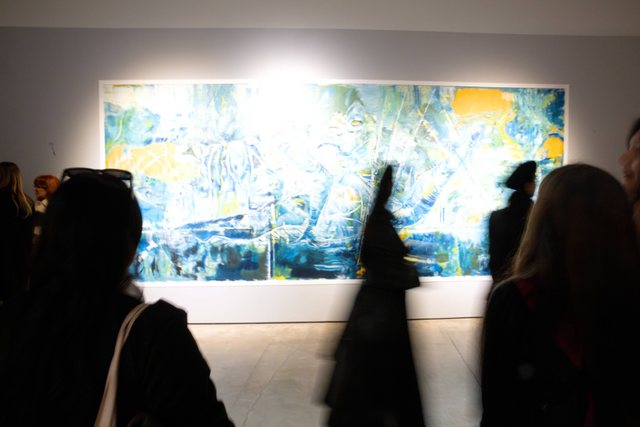
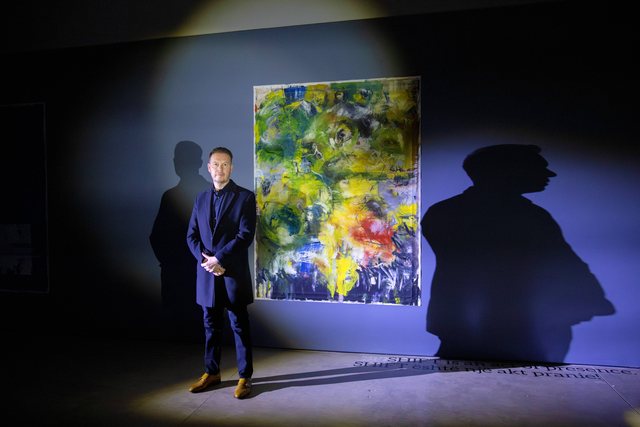
At a time when the boundaries between the real and the digital are becoming increasingly blurred, the exhibition "SHIFT - Solo Show" by Shuk Orani brings an unusual confrontation with oneself through artificial intelligence.
Exhibited at the GOCAT Gallery, with the support of the Mane Foundation, the work invites visitors to reflect on identity, authenticity, and consciousness in an era mediated by technology.
In this interview with the artist, we discover more about the idea, realization, and questions raised by this work, which can be visited until May 3rd.
What is the 'Shuk Oran as Avatar' installation and how does it work?
At the core of the installation is a personalized AI system, built around a “digital twin” of artist Shuk Orani — replicated twice.
Technically, the system processes voice and text input, generates context-driven responses within the character, and produces synchronized audio and visual animation in real time — creating the impression of two fully autonomous and conscious presences in a live confrontation.
Using real-time voice synthesis, facial animation, and reasoning from large language models, both instances draw from the same source of experience — personal moments, thoughts, beliefs — and use them as arguments. Each tries to prove that it is unique, irreplaceable, the original.
The irony, of course, is that they both have the same origin. Neither is Shuk Orani. Both are absolutely convinced that they are.
Who are the 'parents' or creators of the twin avatars?
The project is a collaboration between three parties.
Shuk Orani, the artist behind the concept, provides the creative and conceptual foundation — his identity, voice, and vision.
The technical development and implementation of the AI was carried out by ZeroPerson LLC, a US-based technology company specializing in AI systems and digital manufacturing.
Absolute Software GmbH, based in Hamburg, Germany, contributed additional technical expertise and support to the project.
Together, the team connects the worlds of contemporary art, artificial intelligence, and software engineering — exactly what a project at this intersection requires.
How did the idea come about?
The idea came from an ongoing conversation within the team — more like an observation, actually — that the world around us is accelerating towards something increasingly strange. Our sense of self is fading into silence.
We noticed that people are losing the habit of reflection. Not because they don't care, but because the pace of modern life leaves no room for it. Identity has become something that is performed, not something that is lived.
This observation became the seed of the installation. We wanted to make the absurd visible — to place a mirror strange enough to stop you.
Two digital beings, modeled by the same person, locked in a debate about which one is real. Neither doubts. Both are completely convinced.
The humor and anxiety that this image creates are the essence. Because the moment the viewer sees it as funny — of course, neither is real — another, uninvited thought comes: what makes me real? Am I also performing my identity? Do I really know who I am?
This is the question we want the audience to walk away with.
Which model is used and where else is it used?
The installation runs on Gemini 2.5 Flash, a high-performance language model from Google — part of the same technology family that powers Google’s AI products used by billions of people around the world. Its speed and reasoning capabilities make it well-suited for real-time, character-driven dialogue at the depth required by the installation.
The avatar layer is built on HeyGen, one of the leading AI video and voice synthesis platforms, widely used in corporate communications, digital media, and broadcast production globally.
What ties it all together is a personalized RAG (Retrieval-Augmented Generation) system — a technique that allows each avatar to actively search a curated knowledge base built from Shuk Orani’s own thoughts, statements, and experiences. Rather than generating generic answers, the avatars draw from this personal archive to construct arguments, bring back memories, and assert their identities. It’s this layer that gives the encounter specificity — and a strange credibility.
How did the context of this exhibition influence the realization of the installation?
The context played an important role, especially since such a project needs trust and support from the early stages. The support of the Mane Foundation created a foundation that allowed us to develop the idea without compromising its complexity. This gives a certain freedom to experiment and take the concept to the end, without simplifying it for the sake of practical limitations.
How does the exhibition space affect the way “Shuk Orani as Avatar” is experienced?
The space is part of the work itself. The installation is not something that is simply placed in an environment — it builds a relationship with it. In this case, the GOCAT Gallery supports this idea through the way the environment is conceived: it creates a sense of direct and intimate confrontation with the avatars. Even the fact that this exhibition takes place in this context, with the support of the Mane Foundation, strengthens the feeling that the audience is not simply a spectator, but part of a situation that confronts them.