Protests, violence, curfews: From France to Albania, why Europe'...
/ 2026-10-20 23:47:20Focus


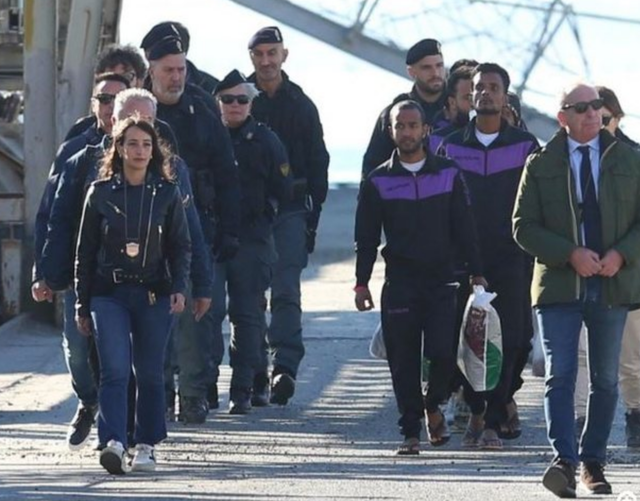
The decision of the Court of Justice of the European Union to emphasize the need for effective judicial control in determining "safe countries of origin" has caused strong reactions from the Italian government.
In an official statement published by Palazzo Chigi (Italian government) and shared by Prime Minister Giorgia Meloni on social networks, the verdict was described as another example of "the usurpation of political competences by European justice".
"Once again, the judiciary, this time the European one, claims spaces that do not belong to it, for issues that are exclusively political," the official communiqué states.
"The Court of Justice of the EU empowers a simple national judge to rule not on a particular case, but on an entire segment of immigration policy, such as the list of safe countries and return procedures," it further said.
According to the Italian executive, Luxembourg's decision poses a serious threat to the capacity of states to manage immigration, based on a legal interpretation that "does not take into account the reality of migratory pressure".
The government statement emphasizes that the decision "weakens policies of controlling illegal immigration en masse and protecting national borders", calling it unacceptable for such a decision to be based "even on private sources, instead of full analyses made by the relevant ministries and approved by the Parliament".
The Court's decision comes after the appeal filed by the Court of Rome, regarding two asylum seekers from Bangladesh, who were sent to a reception center in Albania, as part of the agreement signed between Italy and Albania for the treatment of migrants outside Italian territory.
The asylum seekers were involved in an expedited procedure and rejected, with the argument that Bangladesh has been declared a safe country. The Court of Justice of the EU ruled that this determination cannot be based solely on a law adopted by the government, if verifiable, accessible and judicially controllable data is missing.
In its reaction, the government hints that it has no intention of withdrawing from the line followed so far. "For the ten months that separate us from the entry into force of the new European Pact on Migration and Asylum," the statement said, "the government will not stop looking for any technical and legal solution to protect the safety of Italian citizens."
The government considers it "strange" that a decision with such an impact is taken "right on the eve of the entry into force of the new EU rules, which themselves define stricter criteria for identifying safe countries".