Protests, violence, curfews: From France to Albania, why Europe'...
/ 2026-10-20 23:47:20Focus


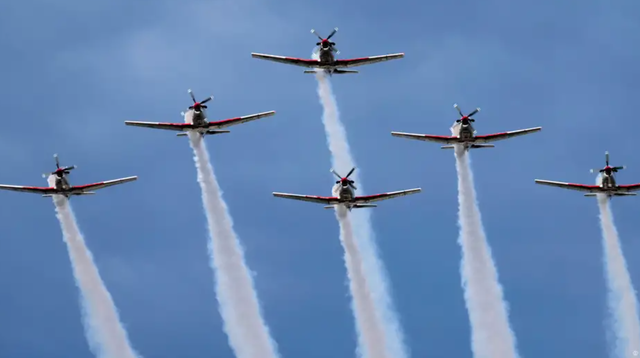
The competitive nature of the arms race between Serbia and Croatia: are the Zagreb and Belgrade military parades just propaganda?
Croatia organized its military parade on the occasion of the 30th anniversary of Operation Storm (Oluja) on Thursday, July 31. While Belgrade, on the other hand, is preparing its parade for September 20.
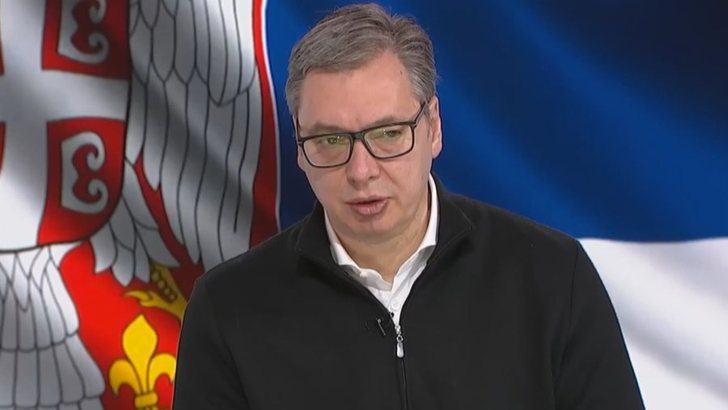
The response to a parade by parade is just a continuation of the multi-year arms race that is taking place between Serbia and Croatia. Serbian President Aleksandar Vucic links almost every arms purchase to Croatia and its weapons. He has often declared Serbia to be "the strongest military power in the region".
But while the military parade in Belgrade is expected, as a kind of overture to the promotion of young officers, which is scheduled for Saturday, August 2, 2025, it is already being criticized very much in advance.
For critics of the regime, the fact that due to the so-called "Ćacilend" (as the place where Vucic's supporters gathered in Belgrade is called) in the centre of Belgrade, the promotion was moved to the barracks in Banjica, shows the current government's lack of respect for the Serbian Army. Such humiliation of the Army is seen as a message that "Caciland" is more important to Vucic than the country's armed forces.
Intolerance generation
"There is no doubt that Serbia and Croatia are competing for the modernization of their armed forces. Croatia is in NATO, but still sees Serbia as the biggest security challenge. Serbia also sees Croatia in the same way," military analyst Aleksandar Radic tells DW.
"We cannot reduce relations between Serbs and Croats to military parades and weapons. In a way, it is surprising that 30 years after Operation Storm, so much intolerance is being created. After that tragic event, Serbs are no longer important in Croatia in terms of their number and role. But Belgrade and Zagreb have clearly found a way to continue to generate hatred and intolerance," Radić told DW.
Parade or masquerade?
"I call these parades a farce that only serves the local public," journalist Davor Lukac tells DW. "Croatia, as a member of NATO, is not threatened by Serbia. The military parades we are talking about only serve to boost morale and propaganda, because they are trying to show the power of their weapons, which they otherwise cannot use against anyone in the region."
Although some analysts believe that the Croatian military parade is a message to Belgrade, Aleksandar Radic believes "that this rivalry is not the motive for the parade to take place".
"Croatia attaches great importance to the commemoration of Operation Storm, so it was expected that something like this would be organized. But now we have a Serbian parade and the question arises, what is the motive for organizing it? Despite how much Vucic tries to present it as a show of power towards Croatia, this parade has much more to do with its internal problems and protests. The date of September 20 has no significance for Serbia, there is no reason for this parade and we can say that it was organized to show rebel Serbia that 'I am stronger than you'. He will thus declare victory over the color revolution," Radic points out.
Serbia is still in the second league
As a significant moment in this regional arms race, Aleksandar Radić also highlights Croatia's membership in NATO, which "gives it the opportunity to buy different types of weapons, according to modern specifications, which are not available to Serbia. That is why Serbia now has a mix of Russian, Chinese, French weapons and all the restrictions that such a diverse range brings. NATO military training should also be mentioned – there is some cooperation, but it is unlikely that NATO will allow Serbia access to all the nuances of modern training according to NATO standards," Radic points out.
Who supports the "color revolution"?
During the months of protests in Serbia, Croatia was identified as a key country supporting the so-called 'colour revolution'. Later, several other Western countries and secret services were blamed, but it is not known if there really are countries and secret services involved in the protests.
Croatia thus remained the only publicly named country, while unidentified Western countries remained part of the tabloid package spreading anti-Western rhetoric in Serbia.
"This is important for the regime and Vucic, because there are still many refugees from Krajina in Serbia," Lukac says, adding that "voters here still believe, even though it is absolutely impossible, that a war with Croatia is possible".
"The government is constantly pushing this. For thirty years, the trauma of the war in Croatia has been used to maintain tensions in both Serbia and Croatia," Lukac notes.
A similar assessment is made by Aleksandar Radic, who says that "Vucic is sending messages to Serbs from Krajina who are important voters and who have the trauma of Operation Storm, as well as nationalist circles who have a sense of revanchism towards Croatia".
According to him, this is not a coincidence. "It is an unpleasant situation for the government. The majority in Serbia believes that foreign intelligence services are destroying Serbia, but the government, of course, never says that it is any Western country, because that is not very convenient and smart. Therefore, only Croatia remains", concludes Radić./ DW