"The fate of the homeland is in our hands" - An appeal by Ismail...
/ 2026-10-18 16:09:54Focus



"On April 12, exactly 23 years after the referendum that brought Hungary into the EU, we want to confirm that choice: that Hungary's home is Europe," insisted Péter Magyar at the end of a campaign marked by wiretaps of ties between Budapest and the Kremlin.
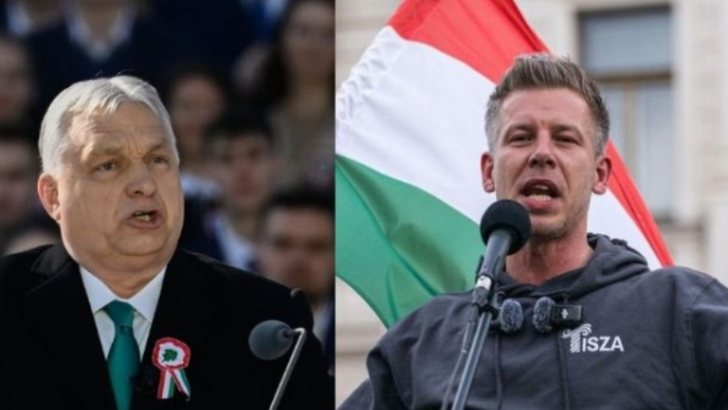
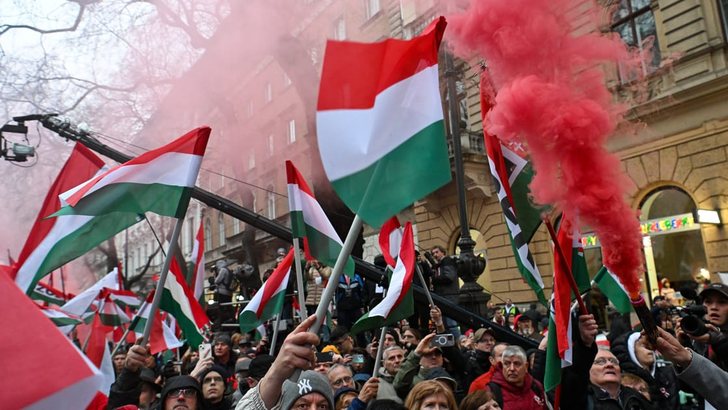
Amid loud applause, cheers and phone lights, the crowd forgave him for an hour's delay. Magyar spoke from Győr, a city 120km northwest of the capital that has become one of the main scenes of his clash with the prime minister, who lost his cool here last week when he was challenged. In mid-November, the two rivals held rallies on the same day and at the same time.
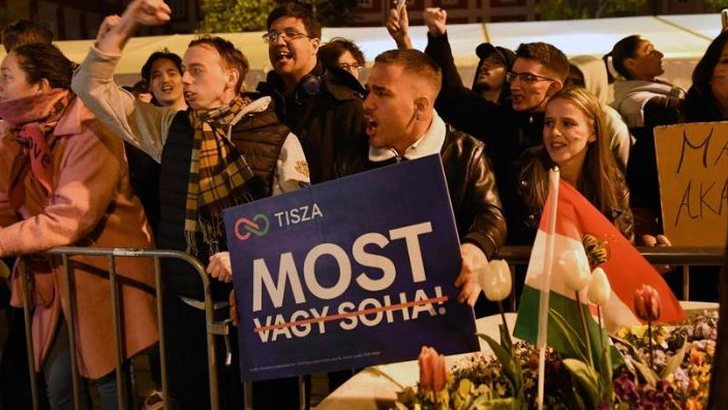
This historic stronghold of the Fidesz party, with 130,000 inhabitants and an Audi factory, has already shown that it is open to change: it has elected a new, independent mayor. For this reason, Győr is considered one of the key cities that could decide the end of the Orbán era. There were many young people and families in the square.
18-year-old Ramon and his friend Kakas say the same thing: our parents used to vote for Fidesz, now they don't. Even Tibos and his wife Bea accept the change. Magyar knows how to motivate them: "We have 5,000 volunteers, no other party has that many." He represents the "old new" that is advancing.
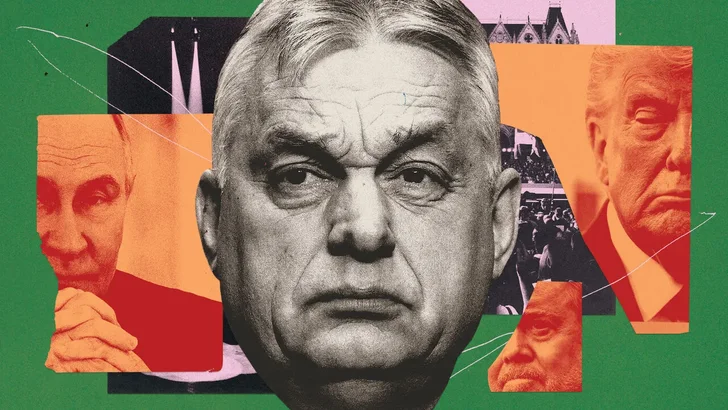
Because the man who in a few months managed to turn Viktor Orbán from invincible to weak is an energetic 45-year-old lawyer, raised in the shadow of the long-serving Hungarian leader.
Appearing on the political scene like a meteor two years ago, Magyar and his Tisza party, less than four months after debuting, managed to win 30% in the 2024 European elections. A political earthquake that never stopped. In 2025, he overtook Fidesz in the polls and now, according to some measurements, the advantage has expanded to a super-majority.
Thus, this former official, unknown to most, became Orbán’s biggest nightmare, not least because he didn’t see it coming. Magyar’s story is that of an “insider” who perhaps never fully integrated. Raised in a family of conservative lawyers (the son of a Supreme Court judge and the grandson of a former head of state), he represents the Hungarian elite.
He attended a prestigious Catholic high school during Orbán’s first term, when he promised to break with the Soviet past and move closer to Europe. He joined the party in 2002 while studying law at the Catholic University of Budapest, a hotbed of the conservative elite. During an Erasmus program in Hamburg, he became friends with Gergely Gulyás, now a key figure in Orbán’s government. It was Gulyás who introduced him to Judit Varga, who became his wife and a key figure in the Fidesz party.
The couple lived for years in Brussels, where Magyar began working for EU institutions after 2010, when Orbán returned to power and began his illiberal turn.
After returning to Hungary in 2018, as Varga's career grew, first as secretary of state and then as minister of justice, he failed to secure political roles.
"Although his friend Gulyás had placed him on the boards of state-owned companies, providing him with prestige and income, his political ambitions remained unrealized. Fidesz leaders considered him too independent and not willing to compromise," explains Miklós Sükösd, a professor at the University of Copenhagen.
In those years, he became his wife's image consultant, successfully, but he felt the weight of a secondary role. This tension led to the end of their marriage in 2023.
“After the divorce, he started getting kicked out of companies and from the Stádium Club, an exclusive Fidesz club,” Sükösd explains. At that moment, Magyar decided to turn his deep knowledge of the system into a weapon.
The turning point came in February 2024, with the scandal of pardoning a pedophile in a public orphanage, which led to the resignation of the president and the Minister of Justice, Judit Varga, considered "victims" of the system.
This was followed by a wave of collective indignation. Magyar seized the moment to enter the scene with a YouTube interview on the Partizán channel: a two-hour broadcast denouncing corruption, with 2.6 million views, about a quarter of the population. A month later he founded the Tisza party and made a successful debut in the European elections.
“Magyar’s extraordinary rise is linked to the combination of a charismatic figure, a willing public and a context of crisis,” explains researcher Rudolf Metz. “Society was ready for someone like him: a man who knows the system from the inside and decides to rebel against it. His rhetoric is strong and combines themes of national sovereignty with issues of corruption and institutional abuse. He has also been very effective in bridging the gap between the online and real worlds.”/ Corriere della Sera