"The fate of the homeland is in our hands" - An appeal by Ismail...
/ 2026-10-18 16:09:54Focus


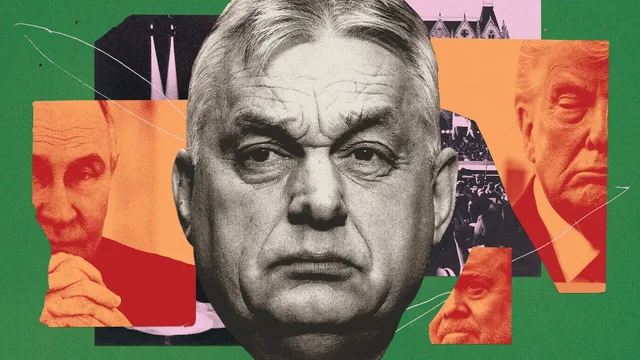
The parliamentary elections on April 12th are the most important for Hungary since the end of the dictatorship in 1989 – and they also have historical significance for Europe. Deutsche Welle answers the important questions.
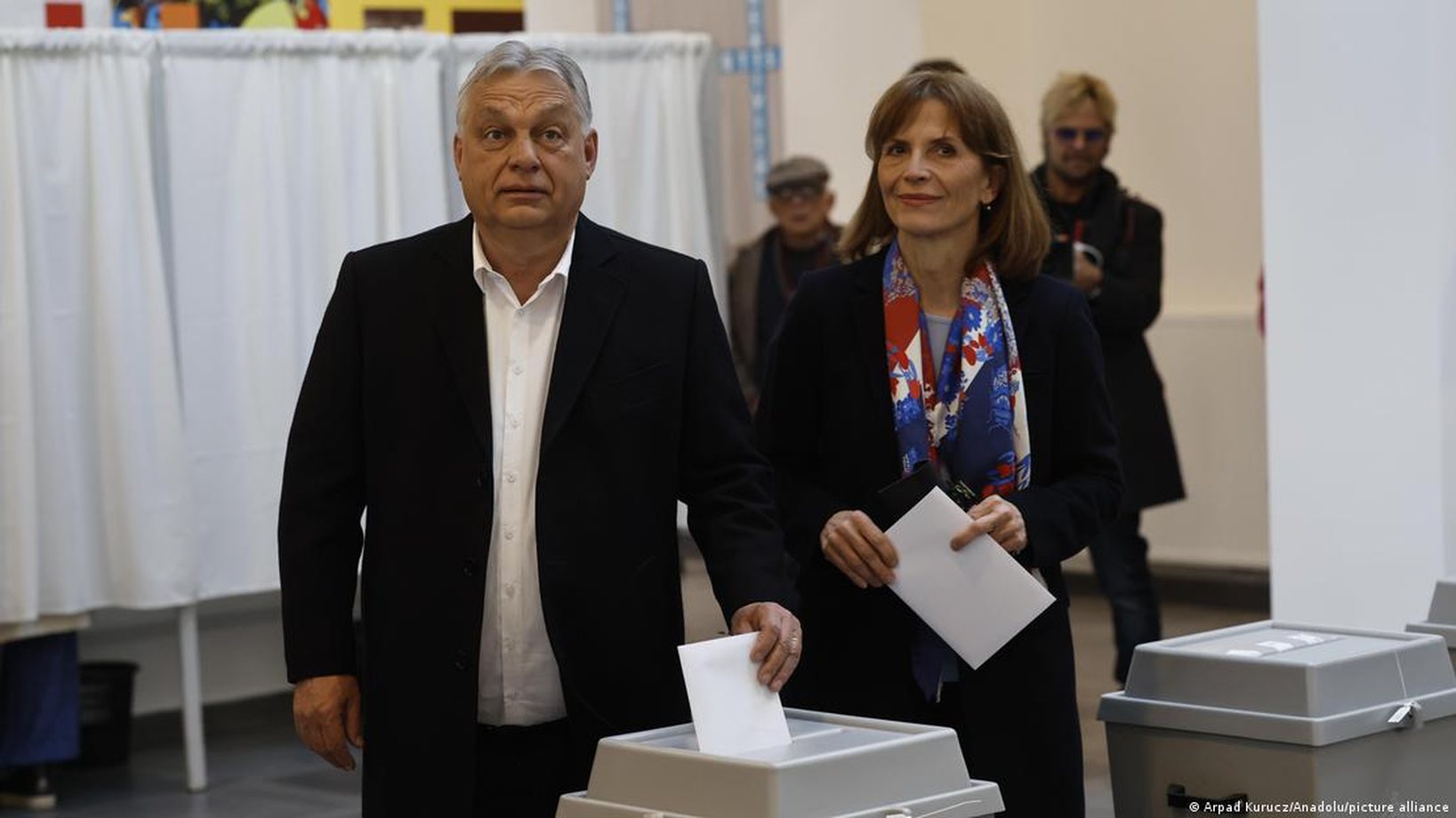
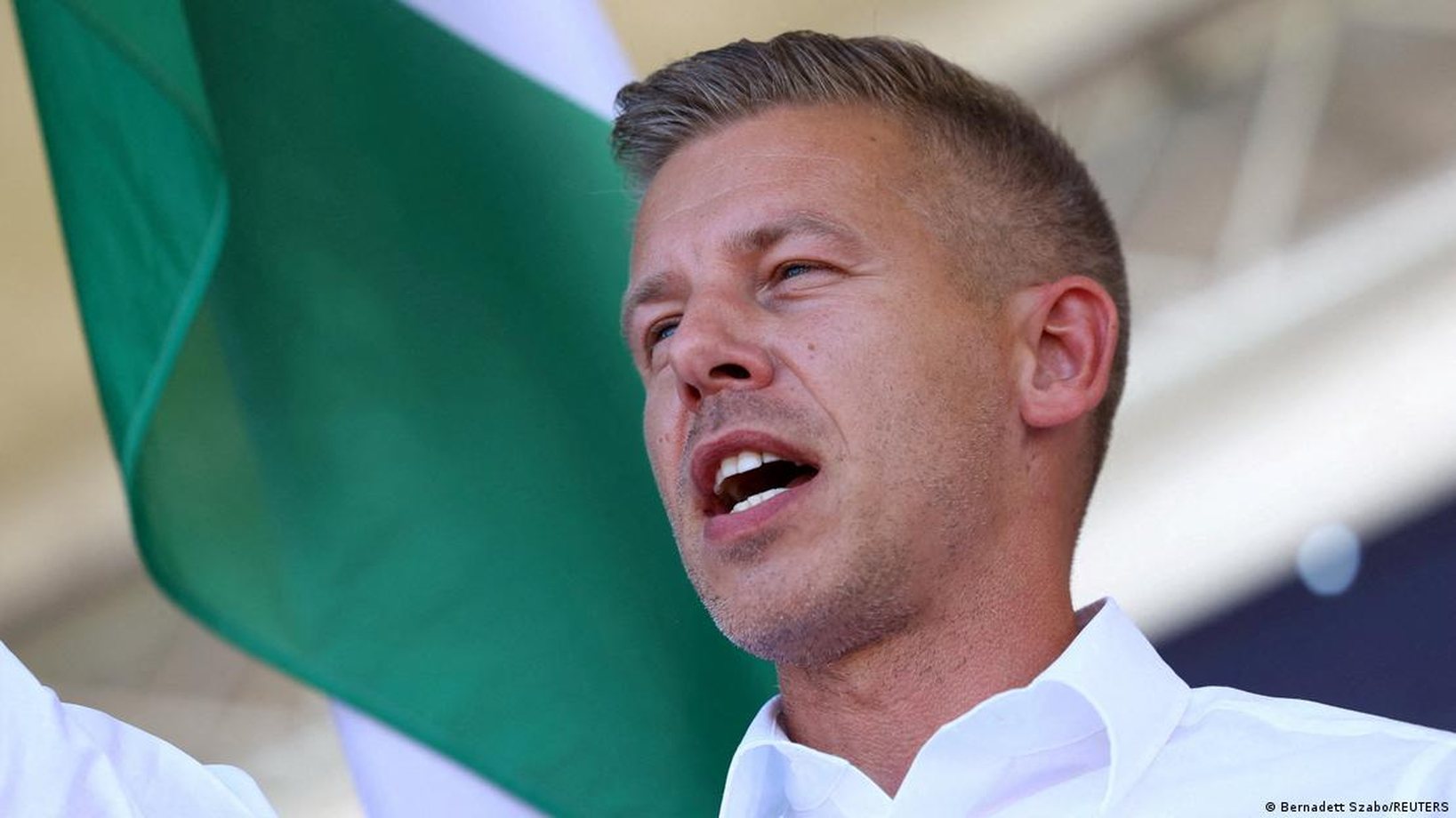
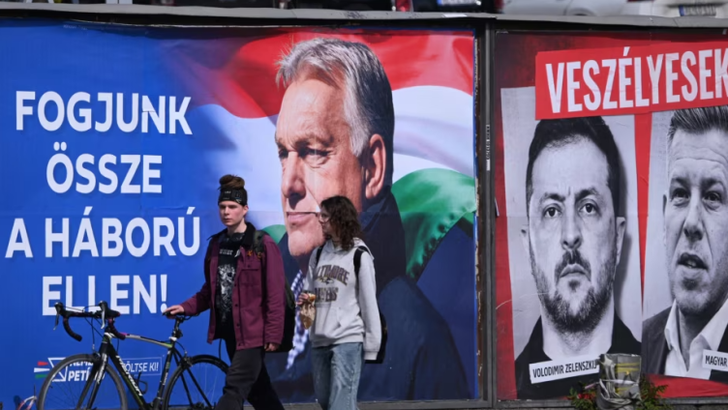
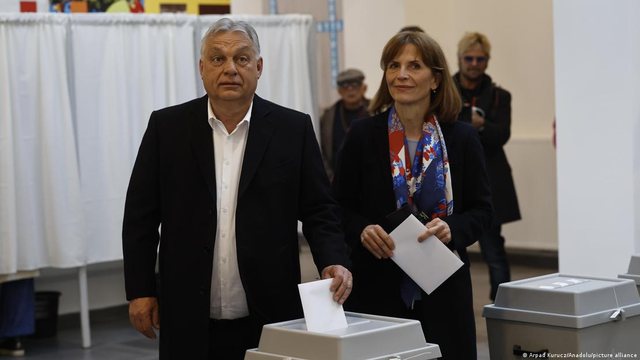
On April 12, Hungary will hold its most important parliamentary elections since the communists voluntarily left power in 1989/90. The question is whether Prime Minister Viktor Orbán and his system of government can be defeated at the ballot box. For the first time since 2010, there is a real chance of a change of power: the opposition is likely to win, led by the conservative Tisza Party and its leader, Orbán's rival Péter Magyar.
In Hungary, these elections are considered a key moment in the country's modern history. At the same time, they are among the most important for Europe in recent years. The result could affect not only the future of the European Union and the level of Russian influence on the continent, but also the further fate of the populist and extreme right in Europe. On the occasion of these elections, Deutsche Welle answers the most important questions.
Is Orban a dictator?
Since the mid-1990s, Viktor Orbán has transformed his Fidesz party – once the full name of the “League of Young Democrats”, now the “Hungarian Civic Union” – into a strictly disciplined party modeled after the leader, where nothing happens against his will and where the fundamental principle is personal loyalty to him. After Fidesz came to power in 2010, the same logic was extended to the state level.
Today, Viktor Orbán intervenes in the smallest details of the country's governance. Whether it's renovating a building, increasing pensions or geopolitical issues – when talking about government activities, Orbán usually uses the first person singular: "I make a law," "I increase the pension," "I agree with the president." Orbán does not meet all the classic criteria of a dictator – Hungary remains formally a parliamentary democracy with free elections – but he is undoubtedly an autocrat.
How many times has Orbán reformed Hungary?
After his first election victory with a two-thirds majority in the spring of 2010, Viktor Orbán declared the so-called "National Order of Cooperation" (NER). In the state, administrative and judicial apparatus, as well as in the civil service, he undertook a change of elites, placing his loyalists in key positions. Hungary was reorganized as a highly centralized state.
Overall, Orbán weakened the system of checks and balances, significantly limiting the possibilities for the creation of counter-powers. Most of the print and audiovisual media were placed – directly or indirectly through companies and foundations close to Fidesz – under government control; the autonomy of universities was abolished, and a significant part of state and public assets were placed under the control of foundations close to Orbán. Experts describe Hungary as a “hybrid system” between democracy and dictatorship.
Why do many Hungarians want a change of power?
Orbán's economic and tax policies largely favor his upper-middle-class clientele. The financial situation of many other Hungarians, however, has deteriorated in recent years. Added to this is the poor state of public infrastructure, healthcare and education, as well as widespread dissatisfaction with corruption and serious cases of illicit self-enrichment.
At the same time, many citizens in Hungary are tired of the constant atmosphere of "verbal civil war" that Orbán creates - for example, from the absurd portrayal of Ukraine as the personification of evil or from the constant slander of all critics, who are labeled as enemies and traitors to the homeland.
Why are these elections important for Europe?
Viktor Orbán's declared goal is to "conquer Brussels" and transform the European Union into a union of politically sovereign nation-states, bound primarily by common economic interests. The Hungarian prime minister has been agitating against the European Union for years and, through his vetoes and refusal to support important European and foreign policy decisions, is blocking the EU's ability to act. An electoral victory for Orbán would lead to a further weakening of the European Union; a change of power in Budapest, on the contrary, would strengthen the EU again.
Why are these elections important for populists?
Viktor Orbán is considered the most successful model within the camp of right-wing and far-right populists in Europe – and at the same time their most important organizer. No one else from this spectrum has ever achieved an electoral victory with a two-thirds majority and has not governed for as long as the Hungarian prime minister. Also, no one else has invested so much energy in uniting and strengthening this political camp at the European level. For this reason, the outcome of the elections in Hungary is also a decision for the future of populism in Europe.
Why are these elections important for Russia?
No other European Union member state is as closely aligned with Russia as Hungary under Viktor Orbán. Although Orbán has approved most of the EU sanctions against Russia since 2014, he has consistently called for their lifting, imposed exemptions and, since 2022, has blocked support for Ukraine whenever possible. In doing so, he is weakening and dividing the European Union – a declared shared goal of Orbán and Russia. For Moscow, removing Orbán from power would be a major setback.
Is it possible to defeat the Orban regime with votes?
After its 2010 election victory, the Fidesz party implemented far-reaching reforms to the electoral system, significantly strengthening the majority principle – changes that have given the party structural advantages to this day. Of the 199 members of parliament, 106 are elected in direct constituencies with a simple majority. Constituencies loyal to Fidesz are smaller, meaning that fewer votes are needed to win a parliamentary seat.
As a result, in the last parliamentary elections of 2022, Orbán's party received around 53 percent of the vote, but won significantly more constituencies and managed to secure around 68 percent of the seats in parliament – an absolute majority.
Ethnic Hungarians from Hungary's neighboring countries, who hold Hungarian citizenship, have the right to vote for party lists and participate in elections via postal voting. Meanwhile, Hungarian labor migrants living in Western European countries – who tend to be more critical of Orbán – can only vote in person, at embassies and a limited number of consulates, but not by mail. Hungarian election experts criticize this arrangement as unfair. As a result, a change of power is significantly more difficult to achieve – but not impossible.
Could Orban's government manipulate the elections?
Election experts in Hungary expect that direct vote rigging will not occur, as the opposition Tisza party has organized a parallel vote count. However, there are possibilities for rigging in the postal voting of Hungarians from minorities in neighboring countries. These votes could provide Orbán with one to two additional mandates. Also, the massive vote buying in poor regions of Hungary is currently a widely debated topic, after a documentary film made the practice public.
What do the polls say and how reliable are they?
Hungarian election researchers are convinced that an absolute majority of voters in Hungary want a change of power. Independent polling institutes have been predicting for more than a year an advantage – in some cases clear – of the Tisza party over Orbán’s Fidesz. However, these figures only reflect the real chances of the candidates in individual constituencies to a limited extent. Furthermore, Fidesz’s electorate – mainly elderly and pensioners in small towns and rural areas – is not fully captured by the polls. For this reason, the predictions may turn out to be inaccurate. However, most election researchers are more likely to expect Orbán to leave power.
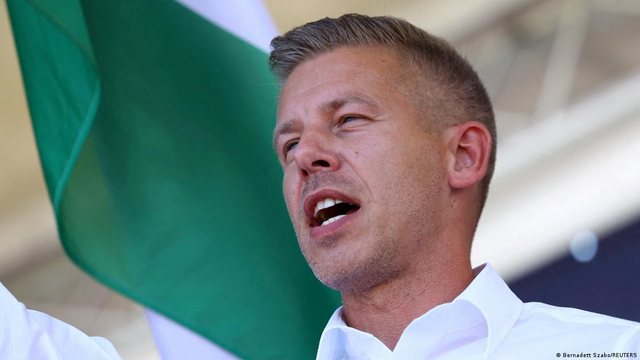
What will Peter Magyar do if the government changes?
The main goals and projects of Peter Magyar and his Tisza party are to distance Hungary from Russia and to restore the country as a reliable ally of the European Union and NATO. However, not without conditions. In migration policy and that towards Ukraine, Magyar intends to continue partially or even completely the Hungarian line so far – but without open and continuous confrontation with the EU.
In domestic politics, Magyar warns of a tough fight against corruption and announces a "system change". By this he means, among other things, a fairer electoral system, limiting the prime minister's term to two election cycles and the adoption of a new constitution. Orbán and other senior politicians from his circle would have to face charges of corruption and treason.
Will Orbán accept an election defeat?
Viktor Orbán has not yet spoken directly on the issue. He has limited himself to saying that he has won and lost elections during his political career and that Hungary is a democracy.
Could violent unrest arise after the elections?
If Viktor Orbán declares himself the winner of the elections, mass protests are possible and violent clashes are not ruled out, as anger and hatred towards Orbán's regime are already widespread in society. If Orbán loses, it will depend on his stance and his word as a leader whether his supporters will take to the streets en masse or not./ DW