Is this police force professional and capable of handling violen...
/ 2026-10-16 18:54:07Focus


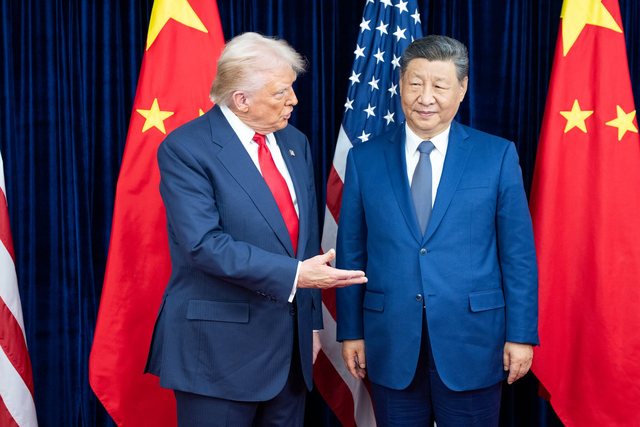
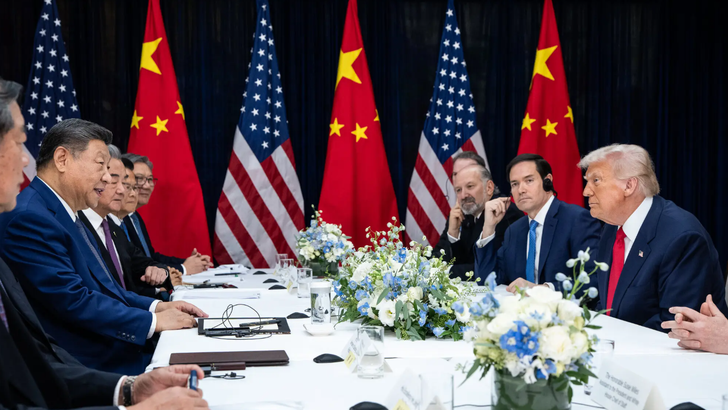
The public message of the meeting between Donald Trump and Xi Jinping in Beijing will be peace and stability. But behind this diplomatic facade, the reality is harsher. Both sides are preparing for a prolonged economic war, seeking each other's weaknesses and strengthening the means to inflict damage on the adversary.
China has given clear signals in recent weeks that it is no longer afraid of a new escalation. It has activated new legal mechanisms to counter US sanctions, blocked Meta's acquisition of a promising Chinese-origin artificial intelligence startup, and adopted rules that punish foreign companies that comply with Western pressure to leave China.
The measures are part of a broader strategy by Beijing to counter what it sees as increasingly aggressive efforts by Washington to curb China's economic and technological rise. Over the past year, the two countries have stepped up economic attacks on each other: high tariffs, restrictions on rare metals and critical technologies, and sanctions on major industrial companies.
The key question now is whether Trump and Xi will manage to set at least some minimal limits on this widening economic showdown. That will be the clearest test of whether their summit is a success or not.
The biggest concern is that the clash will not remain just between the US and China. Both sides are increasingly using laws, regulations and sanctions as economic weapons, forcing other countries and companies to choose sides: with Washington or with Beijing.
In April, China adopted sweeping rules that give authorities the right to inspect company documents, question employees and even ban company executives from leaving China if they are found to be helping shift supply chains abroad.
This puts companies in a very difficult position. Many of them have moved or are considering moving factories to countries like Vietnam or Mexico to avoid high tariffs on Chinese goods. Now they face a direct dilemma: whether to comply with American law or Chinese law.
The case of PVH, the owner of the Calvin Klein and Tommy Hilfiger brands, was a clear warning. After it stopped sourcing cotton from Xinjiang due to US bans on forced labor, China accused it of discrimination, launched an investigation, and then added it to its list of “unsafe entities,” a status that can carry serious legal consequences.
According to experts, this no longer looks like an isolated retaliation, but a new pattern. In short, China is saying: if the US strikes, we will retaliate, and we will do it harder than before.
This shift accelerated as Washington took tougher measures: tariffs of up to 145 percent, additional fees for Chinese ships in American ports, and new restrictions on semiconductors, chemicals, and machinery.
Beijing sees these moves as part of a long-term trend that threatens not only the Chinese economy but also its national security. For this very reason, China is trying to build a stable legal framework to deal with this economic war not only today but also in the years to come.
So the Trump-Xi meeting may talk about peace and stability, but in the background a much bigger battle is taking place: an economic war where both sides are preparing not for compromise but for a long showdown. ( New York Times )