Is this police force professional and capable of handling violen...
/ 2026-10-16 18:54:07Focus


Timothy Garton Ash – La Repubblica
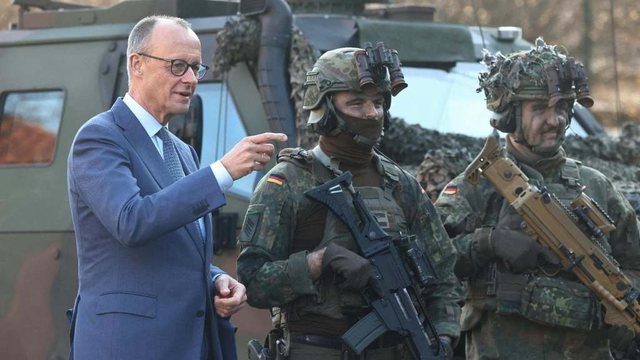
Today marks the 81st anniversary of the end of World War II in Europe, and it is clear that Germany will soon once again be the continent's leading military power.
German defense spending will now equal that of France and the United Kingdom combined next year – and is expected to far exceed them by 2030. The German government's stated goal is to have "the strongest conventional army in Europe."
It is true that France and the United Kingdom possess nuclear weapons, but this means that fewer resources can be allocated to other areas of defense.
Therefore, it is indisputable that German military power is destined to increase, barring unforeseen circumstances.
The question that arises, especially on such a solemn occasion, is another: how can we ensure that this time it represents a positive factor for all of Europe?
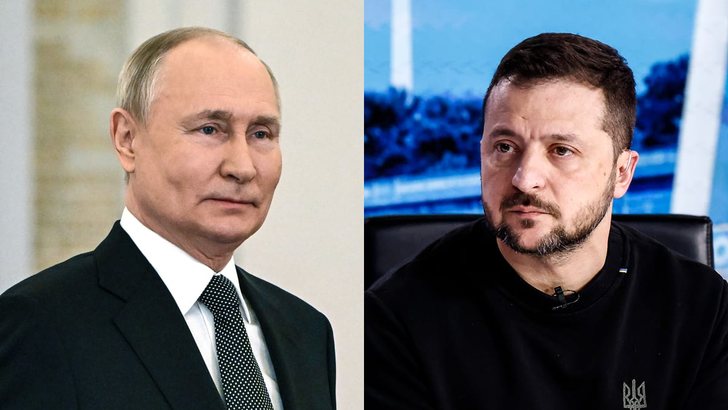
There are two reasons for this radical shift from the increasingly untenable course pursued by the optimistic outlook of the 1990s to Vladimir Putin’s full-scale invasion of Ukraine on February 24, 2022. The first is Russian aggression itself.
Berlin is gaining ground on the belief that Putin will not stop in Ukraine. The second is that President Donald Trump has called into question the comprehensive commitment of the United States to the defense of Europe, embodied by NATO since 1949. The recent announcement of the withdrawal of 5,000 American troops (and possibly more) from Germany is just the latest sign in this direction.
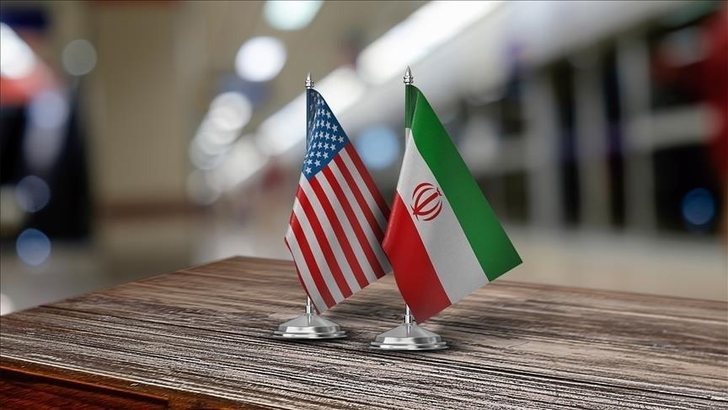
The announcement, more than the withdrawal itself, stems from Trump's personal resentment of German Chancellor Friedrich Merz, who was critical of the US president's disastrous war against Iran.
The challenge facing Europe is therefore this: are we the only ones capable of deterring an aggressive, nuclear-armed Russia? (“We” should include Ukraine, which has the largest and most experienced military in Europe.)
But there is also a less obvious but equally important challenge: how can we avoid reviving acute tensions over the distribution of military power among European countries, which, until 1945, were both the norm and the bane of the continent? As a largely benevolent military hegemonic power, the United States has protected us from both eventualities.
Germany is central to answering both questions. Its new military strategy, the first in the history of the Federal Republic, is entitled “Responsibility for Europe”.
But “for Europe” is simply a phrase that all European countries (except the United Kingdom) use to refer to their national policies. The real question is whether the words will translate into truly European action.
The main areas that require joint responses are the defense industry and our current combat capabilities. Defense technology and production are the muscles and tendons of military power.
Otto von Bismarck is often mistakenly attributed with the phrase “blood and iron,” but historian Peter Wilson recalls that, in 1862, when he asked the Prussian Parliament to increase military spending, the chancellor actually spoke of “iron and blood.” First iron, then blood.
Wilson also notes that, even before 2022, despite having reduced its military and continuing to strongly support an appeasement policy towards Russia, Germany was still among the world's largest arms exporters.
If Germany continues to invest the vast resources dedicated to defense in its domestic industry (while simultaneously reducing purchases from the United States), it could eventually overtake France, currently the world's second-largest arms exporter after the United States. This is a possibility that deeply worries Paris.
With impeccable Cartesian logic, France interprets “European sovereignty” as: don’t buy American, British or German weapons – buy French weapons. Or, at worst, Franco-German; but the main joint project between Paris and Berlin, the Future Combat Air System, is now being destroyed.
The French are not the only ones with concerns. The Polish right is anxious, while other European countries are also starting to feel uneasy.
Another concern is the prospect that the Alternative for Germany (AfD), the populist nationalist party currently leading in the polls, could take control of the powerful armed forces.
In reality, the AfD is likely to revert to a policy of appeasement towards Moscow. But who can predict what the political situation in Germany will be like at the end of the medium-term military strategic planning horizon, set for 2035?
After all, just a decade ago, no one would have imagined that the AfD would become the most popular party in Germany by 2026.
The German government is under immense pressure to spend billions of dollars domestically. The country's export-driven economic model is in crisis, and this is one of the few solutions available.
Several car factories are already being converted to arms production. Furthermore, any military procurement contract exceeding 25 million euros must be approved by the Bundestag's Budget Committee, a process that favors a territorial distribution of spending aimed at electoral consensus.
On the operational side, the reality, however unpleasant, is that the defense of Europe today depends on the US-led NATO. Battle plans envisage a massive war machine ready to be deployed in the event of a Russian attack along the Alliance's eastern flank.
Multinational brigades in frontline countries would quickly receive reinforcements from other alliance members. This response relies on the United States at every level, from satellite intelligence to heavy transport aircraft, from integrated air defense to command and control systems, and even nuclear deterrence.
Achieving even a partial Europeanization of this formidable apparatus is a challenge as necessary as it is complex.
Where to start? This summer, Chancellor Merz is expected to meet with French President Emmanuel Macron, British Prime Minister Keir Starmer (or his successor), and Polish Prime Minister Donald Tusk at an informal working dinner to frankly and pragmatically address the key issues: how to Europeanize the defense industry and how to strengthen the continent's autonomous military capabilities.
On the first point, it is paradoxical that, compared to the US’s 33 major weapons systems, Europe boasts approximately 174 – including 12 different types of tanks and 14 fighter jets. As for the rest, the first step is simply to set the context for this discussion, which should also include the issue of the eastward expansion of the Franco-British nuclear deterrent.
In the 1990s, Merz's great predecessor, Helmut Kohl, integrated a reunified Germany into the European single market and monetary union. No country benefited more than Germany itself. Merz should aim to do the same in the area of European security.
The solutions will by no means be as linear as the single market and monetary union – nor will they be largely located within the European Union. Ultimately, the tests will be this: in the perception of Germany’s neighbors, will a truly integrated European defense industry emerge, or will competing national systems remain?
And will Vladimir Putin perceive autonomous European military assets, however chaotic and imperfect, as a sufficient deterrent?
If Merz, along with other European leaders, can provide convincing answers to these two questions, he will secure a place in the history books.