Is this police force professional and capable of handling violen...
/ 2026-10-16 18:54:07Focus


Mark Urban- The Times
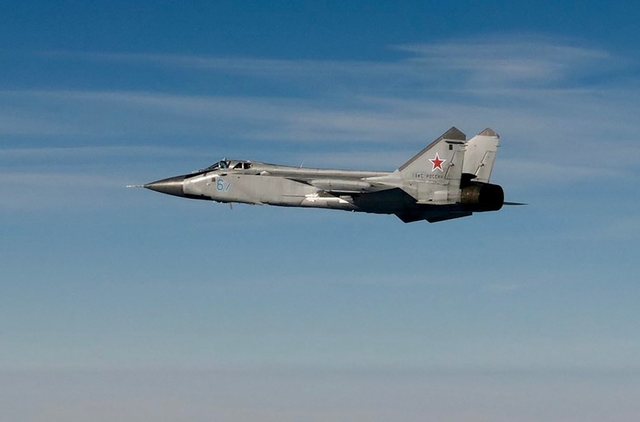
NATO is facing serious challenges in establishing a “red line” for responding to Russian air provocations. On Friday, September 19, three Russian MiG-31 jets stayed inside Estonian airspace for 12 minutes, sparking criticism that the alliance did not intervene.
Russia's goal, experts say, is to demonstrate NATO's weakness and remind Western audiences that the confrontation with Moscow is not limited to Ukraine. In the past two weeks, more than 20 Russian drones have entered Polish airspace, some of which were shot down by NATO aircraft, while another incident occurred in Romania.
But the incident over the Baltic has prompted the alliance to reassess its rules of engagement, as its interruption could have led to a deadly clash.
Alliance Rules
Air Marshal Greg Bagwell, a former RAF commander and president of the Air and Space Power Association, points out that NATO rules distinguish between a “hostile act,” which can be responded to with force, and aggression, as the MiGs over Estonia demonstrated. He states that:
NATO will have difficulty considering this a hostile act, and Putin knows this.
The incident began when the three planes entered the Baltic Sea near Vaindloo Island. Estonian Prime Minister Kristen Michal said they were signaled to turn away but did not do so at the right speed. Moscow claimed the move was planned for Kaliningrad, but the planes had their transponders turned off and were not responding to calls from Estonian controllers.
Michal added that Italian F-35 jets in Estonia were ready to intervene if ordered. He called for NATO military chiefs to discuss changing the rules of engagement next week.

Operations and protection measures
After Poland suffered the latest attacks, NATO launched Operation Eastern Sentry, sending additional aircraft to Eastern Europe, including RAF Typhoons patrolling over Poland. Swedish aircraft photographed the MiGs, showing that they were carrying air-to-air missiles. If they had been equipped with ground-attack equipment, this would have been considered evidence of hostile action.
Allowing these violations risks not only security in the affected areas, but also tactical surprise, should the Kremlin decide to launch a real attack. Aerial conflicts between Russian and Western aircraft have been numerous since the invasion of Ukraine in 2022, and the latest incident in Estonia was the fourth this year.
Debate about the future
Some experts, such as Captain John Foreman, argue that NATO should remain calm and not turn routine provocations into armed clashes. But some NATO member states worry that the continued provocations, which force planes to take off and expend expensive ammunition, weaken the security of parts of the alliance near Ukraine.
Kaja Kallas, former Estonian Prime Minister and EU Foreign Policy Chief, wrote: "Putin is testing the West's resolve. We must not show weakness!"
Other Russian provocations, such as sabotage, cyberattacks and attacks on defense companies in Germany, have challenged the patience of decision-makers. These operations are often called “gray zones” because they cause uncertainty without prompting direct military action.
Bagwell emphasizes: "We need to draw a clear line and be ready to act. The gray area can turn black!"
Experts who support a tougher line cite the case of Turkey in 2015, showing that there can be consequences without a full-scale conflict erupting.
This week is expected to see discussions by NATO military chiefs in Belgium on changing the rules of engagement and the precise definition of "hostile action," as the alliance continues to carefully calculate the risks of a direct confrontation with Moscow.