Protests, violence, curfews: From France to Albania, why Europe'...
/ 2026-10-20 23:47:20Focus


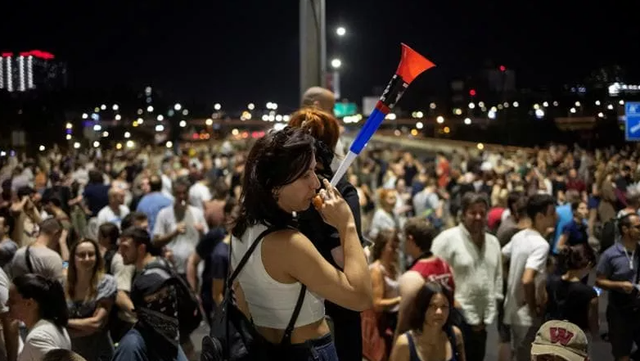
For eight months, Serbia has been experiencing an unusual wave of protests against President Aleksandar Vučić.
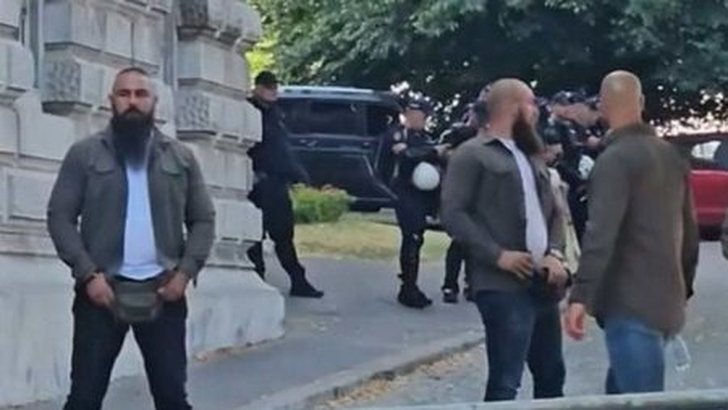
After a massive demonstration on Saturday, attended by about 140,000 people, thousands of citizens have organized roadblocks in Belgrade and other cities in the country, demanding the release of young people arrested during clashes with police. The protesters accuse the government of inciting violence and consider it illegal.
According to official data, 48 police officers were injured during the clashes, while 77 people were arrested, 38 of whom are still in custody.
President Vučić, former Minister of Information during the Milošević regime and leader of the right-wing SNS party, has condemned the violence, interpreting it as an attempt to destabilize the state.
Authorities have accused protesters of planning violent actions for June 28, the symbolic day of the Battle of Kosovo, with the aim of “scare away foreign investors and isolate the country.” Parliament Speaker Ana Brnabić described the situation as “terrorism or fascism.”
The protest movement began on November 1, following a tragedy in Novi Sad, where a concrete ceiling collapsed at the central station, killing 15 people. Despite recent investments, the construction proved unsafe, and investigations revealed links to a company close to the Chinese government, one of Serbia's strategic partners, along with Russia and Hungary.
The protests have had visible consequences: on January 28, Prime Minister Milos Vučević, who had been mayor of Novi Sad for a decade, resigned. However, citizens are demanding more: the end of a regime that controls public media and closes down non-governmental organizations.
Vučić has stated that he may go to early elections or a referendum within a few months, but the students remain determined that this should happen as soon as possible, before 2027 when the next elections are scheduled.
Meanwhile, Russia is also following the situation in Belgrade with concern. Russian Foreign Minister Sergei Lavrov expressed hope that everything will be resolved in accordance with the Constitution and warned the West not to intervene to incite a "color revolution," as happened in the past in countries like Georgia or Ukraine.
Meanwhile, in a statement from the UN conference in Seville, President Aleksandar Vučić thanked "Russian friends for their understanding and good assessment of what is happening in Serbia", while vowing that the state will do its job: "When I spoke with President Putin and Lavrov, they knew that this was a color revolution. Thank you to our Russian friends who noticed this. Thank you to Sergei Lavrov for understanding so well and thank you to the rare and honest Russian analysts who noticed that Vučić will be difficult to break, that I am not like those who will flee Serbia, but that I will fight for the country's freedom and will never leave it to the mercy of fate".
He added that elections in Serbia will be held when called by the competent authorities, not when a "gang of hooligans" demands it.