Protests, violence, curfews: From France to Albania, why Europe'...
/ 2026-10-20 23:47:20Focus


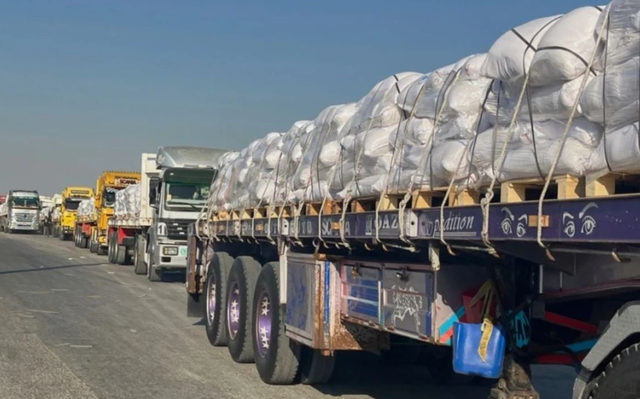
The UN has 6,000 food trucks stranded outside Gaza and ready to enter the Palestinian enclave, the head of the UN Relief and Works Agency for Palestinian Refugees (UNRWA), Philippe Lazzarini, announced today.
"UNRWA has nearly 6,000 trucks of humanitarian aid stranded outside Gaza waiting for the green light to enter," said Lazzarini, who argues that humanitarian aid in the enclave should be transported by ground, rather than airborne.
Airdrops cost at least 100 times more than trucks that transport twice as much aid, he said.
"If there is political will to allow aerial discharges which are extremely costly, inefficient and ineffective, there must be a corresponding political will to open land crossings," he added.
Israel has only slightly eased the blockade it imposed on Gaza in early March since late May, causing severe shortages of food, medicine and basic needs.
The transport of humanitarian aid has been entrusted to the Gaza Humanitarian Foundation (GHF), which is supported by the US and Israel. The amount of aid entering the enclave is minimal compared to needs, while GHF distribution centers have become "deadly traps" for hungry Palestinians. The international community refuses to cooperate with this organization.
In recent days, 100-200 trucks have been able to enter Gaza, according to Cogat, the Israeli Defense Ministry agency tasked with "coordinating" aid shipments and generally weighing and ensuring its delivery with droplets in the enclave.
The UN estimates that at least 500 trucks per day are needed to meet the needs of the population at a minimum.
As of May 19, of the 2,010 trucks sent to Gaza, only 260 have reached their destination unhindered, while 1,753 have been blocked either peacefully by hungry people or by armed men, according to data from the UN Office for the Coordination of Humanitarian Affairs (UNOPS).
The UN managed to secure the entry of 500-600 trucks a day during the ceasefire at the beginning of the year, which was interrupted by Israel, Philippe Lazzarini recalled.
This aid was reaching "the entire population of Gaza in conditions of security and dignity" without exception, he insisted, adding that "no other alternative to coordinated UN action has yielded comparable results".
"Let's get back to what works and let's do our job. This is what the people of Gaza need more than ever today, along with a permanent ceasefire," the UNRWA chief concluded.