Is this police force professional and capable of handling violen...
/ 2026-10-16 18:54:07Focus


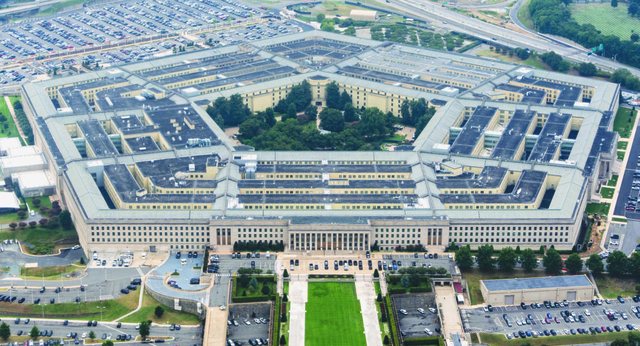
An idea is being consolidated in the Pentagon that until a few years ago would have seemed more rhetoric than doctrine: that economic warfare is just as decisive as military warfare.
A relatively new unit, informally known as “Deal Team Six,” is trying to institutionalize this approach, putting capital, investments, and markets on the same level as land, sea, and air.
At the center of this structure is the Defense Economic Unit (EDU), a mechanism that aims to use financial and industrial instruments to strengthen the national security of the United States. In this logic, agreements, investments, and control of supply chains are no longer simply economic matters, but direct elements of state power.
The unit's head, George Kollitides, articulates this transformation clearly: economic warfare is not a new concept, but is returning to the center of modern strategy. For the Pentagon, this means treating markets and capital as a separate "operational domain."
In practice, this translates into more active state intervention in guiding the defense industry, stimulating production, and identifying strategic gaps in the economy. It's not just about financing, but also about directing.
From contracts to "deal-making" as a strategic instrument
The new unit has hundreds of millions of dollars at its disposal under the defense budget for fiscal year 2027, which amounts to about $1.5 trillion. These funds are expected to be used to boost defense contractor production, for strategic analysis of industrial capabilities and for sensitive activities that are not made public.
Kollitides defines this as an effort to ensure that the American state “gets a good deal” from public investments – an approach that reflects the direct influence of the business mindset on security structures.
In this model, "deal-making" is no longer an administrative function, but a mechanism of pressure and influence, both domestically and internationally.
The economic clash with China in the background
The broader dimension of this strategy is the rivalry with China. According to EDU leaders, Beijing has been building a sustainable form of economic warfare for decades through global investment and initiatives like the “Belt and Road.”
In this context, Washington is trying to recover lost ground, reducing dependence on foreign production and restoring industrial capacity domestically or in controlled partnerships.
This is not just a matter of economic competition, but a clash for control of global supply chains and technology – that is, for the very architecture of global power.
The Pentagon with business DNA
Another important element is the profile of the leaders. The Pentagon of this phase is characterized by a greater presence of figures with business backgrounds, reflecting a shift from classical military logic towards a more hybrid approach, where finance and industry are integral parts of the strategy.
This brings a new style of decision-making: more oriented towards economic efficiency, but also more inclined to use market instruments for geopolitical purposes.
In essence, “Deal Team Six” is not just a new unit in the Pentagon. It is a sign of a deeper transformation: the shift of warfare from traditional battlefields to markets, investments, and industrial infrastructure.
In this new paradigm, victories are not measured solely by territory or military capacity, but by control over production, technology, and capital. And in this game, agreements can be as important as weapons.