Protests, violence, curfews: From France to Albania, why Europe'...
/ 2026-10-20 23:47:20Focus


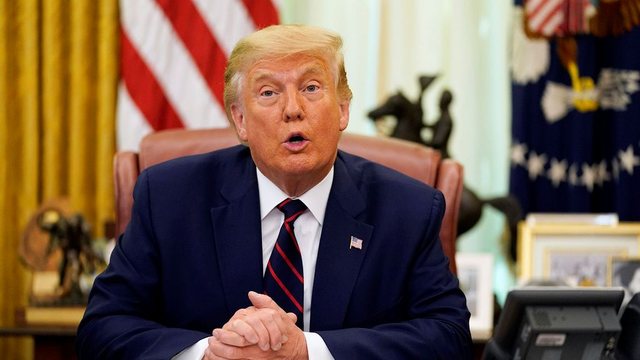
With just hours left until the announcement of this year's Nobel Peace Prize winner, Norwegian politicians are preparing for the potential consequences for US-Norway relations if the prize is not awarded to Donald Trump.
The Norwegian Nobel Committee announced on Thursday, October 9, that it had made the decision on the winner of the 2025 "Peace" prize on Monday, a few days before Israel and Hamas agreed to a ceasefire under the US president's plan for Gaza.
Considering this timeline and the composition of the five-member independent committee, most Nobel experts and Norwegian observers believe it is extremely unlikely that Trump will be declared the winner.
This has caused concern in the country about how the US president might react to such a public exclusion.
Kirsti Bergsto, chairwoman of the Socialist Left Party of Norway and spokesperson for foreign policy, said Oslo must be prepared for everything.
"Donald Trump is taking the US in an extreme direction, attacking freedom of expression, with masked secret police abducting people in broad daylight and undermining institutions and courts. When the president is so unpredictable and authoritarian, of course we have to be prepared for anything," she told The Guardian.
"The Nobel Committee is an independent body and the Norwegian government has no involvement in determining the winners. But I'm not sure Trump knows that. We have to be ready for anything from his side."
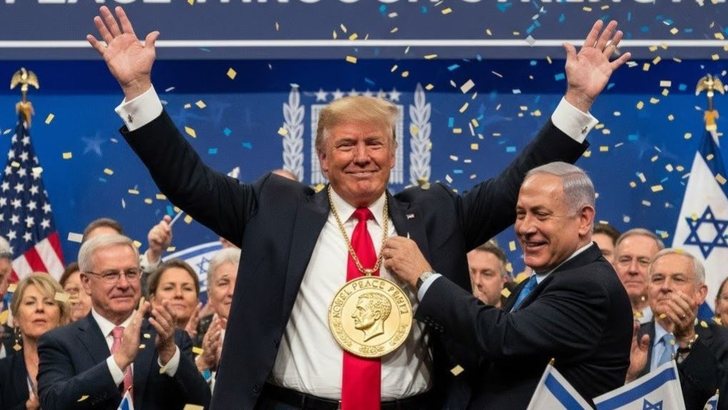
Trump has long expressed his belief that he deserves the Nobel Peace Prize, an honor awarded to former President Barack Obama in 2009, for "extraordinary efforts in strengthening international diplomacy and cooperation between peoples."
In July, Trump reportedly called Jens Stoltenberg, the Norwegian finance minister and former NATO secretary general, to ask about the Nobel Prize. Last month at the UN, Trump claimed to have ended seven endless wars, telling world leaders: “Everybody says I should get the Nobel Peace Prize.”
Arild Hermstad, leader of Norway's Green Party, stated that the independence of the Nobel Committee is what gives credibility to this prize.
“Peace prizes are won through sustained engagement, not social media outbursts or blackmail,” he said. “It is positive that Trump supported the recent ceasefire agreement between Israel and Hamas. Any step towards ending the suffering in Gaza is welcome. But a belated contribution does not erase a history of inciting violence and division.”
Kristian Berg Harpviken, director of the Norwegian Nobel Institute, confirmed that the decision on the winner was finalized at the committee's last meeting on Monday.
He stressed that the decisions are completely apolitical, although the fact that the committee members are appointed by the Norwegian parliament (in accordance with Alfred Nobel's will) may complicate the perception of their independence.
"I know from experience that the committee acts completely independently. But Alfred Nobel made it a little more difficult by writing in his will that the committee must be appointed by parliament. This, unfortunately, cannot be changed."
Harald Stanghelle, a columnist and political analyst, speculated that Trump's possible retaliation, if it occurs, could take the form of trade tariffs, increased contributions to NATO or even declaring Norway an enemy.
“He is so unpredictable. I don’t want to use the word ‘fear,’ but there is a sense that this could turn into a challenging situation,” he said. “It is extremely difficult to explain to Donald Trump, or many other countries in the world, that this is a completely independent committee, because they don’t respect that kind of independence.”
He added that if Trump were to win the prize, "it would be the biggest surprise in the history of the Nobel Peace Prize."
Nina Grager, director of the Peace Research Institute Oslo (PRIO), said that the most likely candidates for the award this year include: Emergency Response Rooms in Sudan, the Committee to Protect Journalists, and the Women's International League for Peace and Freedom (WILPF).