Is this police force professional and capable of handling violen...
/ 2026-10-16 18:54:07Focus


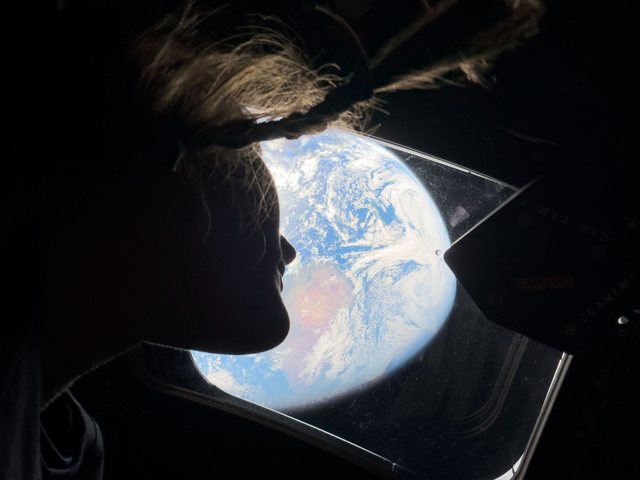
NASA's Artemis II astronauts have broken the record for the greatest distance traveled from Earth, surpassing the 248,655 miles set by the Apollo 13 mission in April 1970.
The team, consisting of Commander Reid Wiseman, Pilot Victor Glover, and Mission Specialists Christina Koch and Jeremy Hansen, achieved this historic moment just before 7:00 PM Greenwich Mean Time, surpassing the Apollo 13 record by over 4,100 miles.
This historic achievement brought strong emotions to the crew, especially when they proposed placing the name of Wiseman's late wife, Carroll Taylor Wiseman, in a crater on the Moon.
Hansen explained the significance of the crater, which is located near the boundary between the visible and far sides of the Moon and will be visible from Earth at certain times. Mission Control accepted the designation, confirming “Integrity and Carroll Craters, clearly registered.”
Over the next 24 hours, the Orion spacecraft will make a “drop” around the Moon, giving astronauts direct views of regions never before seen by humans. Communications with Earth will be temporarily cut off at 11:44 p.m. Greenwich Mean Time as Orion passes behind the Moon. The spacecraft will reach its closest approach to the Moon around midnight and experience a solar eclipse around 1:35 a.m. GMT.
Hansen commented on the importance of the mission: "We honor the extraordinary efforts and achievements of our predecessors in space exploration. We choose this moment to challenge this and future generations to ensure that this record does not stand still."
After flying near the Moon, the Artemis II crew will return to Earth in four days, with a safe landing expected near San Diego on April 10, nine days after departure from Florida.
This mission paves the way for future Artemis missions, including Artemis III, which will practice docking with lunar robots, and Artemis IV in 2028, which will culminate in a lunar landing near the south pole of Earth's natural satellite.