Is this police force professional and capable of handling violen...
/ 2026-10-16 18:54:07Focus


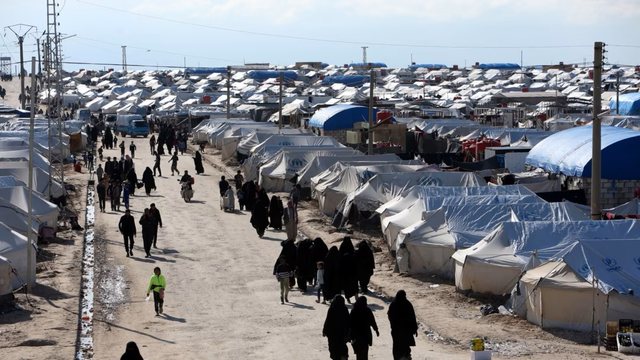
Syria has begun evacuating the remaining residents of the Al-Hol camp, a place where relatives of suspected fighters from the so-called Islamic State (IS) group were sheltering. Authorities are moving to clear the facility, which was previously controlled by Kurds, officials said.
Al-Hol, which is located in a desert region of the northeastern province of Hasakeh, was Syria's largest camp housing family members of suspected ISIS militants.
Government forces captured the camp held by the Kurdish-led Syrian Democratic Forces (SDF) last month after Damascus expanded its control across northeastern Syria.
Since then, thousands of relatives of foreign jihadists have fled the camp to unknown destinations. The facility housed around 24,000 people, mostly Syrians, but also Iraqis and more than 6,000 other foreigners from around 40 different nationalities. According to figures from the British NGO Rights & Security International, last updated in September 2025, 11 EU member states have repatriated almost 1,000 of their citizens detained in camps in northeastern Syria, including Al-Hol.
Many Albanians, mainly women and children, were also sheltered in the camp. The last person to be repatriated from this camp was Eva Dumani.
Fadi al-Qassem, the official responsible for Al-Hol camp affairs, said it "lacks basic living conditions," prompting an urgent decision to relocate residents to camps in Aleppo province.
The evacuation began on Tuesday and will be completed within a week, he said.
At its peak, after the defeat of ISIS in Syria in 2019, about 73,000 people lived in Al-Hol. The residents are mainly children and women, including many wives or widows of ISIS members.
The camp's residents are not technically prisoners and most have not been charged with crimes, but are held in "de facto" detention in the heavily guarded facility.
The SDF said on January 20 that they had been forced to withdraw from Al-Hol. The Syrian army, which entered the camp the next day, accused them of abandoning the country.
On Sunday, the UN refugee agency UNHCR said it had "noticed a significant decline in the number of residents in the Al-Hol camp in recent weeks".
"The government has informed UNHCR and partners of its plan to relocate the relatively small remaining load in the coming days to Akhtarin camp and has requested our support to assist the population there," the agency said in a statement.
"It remains important that the government is able to identify foreign nationals who have left (Al-Hol) so that appropriate repatriation processes can be followed," the agency added.
Foreign women and children, including many from Russia, the Caucasus and Central Asia, were held in the high-security section of the camp, separated from Syrians and Iraqis.
Kurdish forces still control the Roj camp in northeastern Syria, where most relatives of foreign jihadists are being held. It houses about 2,200 people from about 50 nationalities. There are also reportedly Albanians there.
Kurdish authorities released 34 Australians from Roj on Monday, but said they had to be returned due to coordination problems with Damascus. Australia has refused to help them.
The US military said last week it had completed the transfer of thousands of ISIS suspects, including many Syrians but also foreigners, from Kurdish-run prisons in Syria to Iraq. They will stand trial in Iraq under a deal with Washington.
Human Rights Watch warned on Tuesday that some 5,700 transferred detainees "are at risk of enforced disappearance, unfair trials, torture, ill-treatment, and violations of the right to life" in Iraq.