Is this police force professional and capable of handling violen...
/ 2026-10-16 18:54:07Focus


With a clear geopolitical message, the US State Department posted a photo of Donald Trump on social media, accompanied by the phrase "This is our hemisphere."
In the caption of the post, the State Department emphasizes that "this is our hemisphere" and underlines that President Trump "will not allow the security of the United States to be jeopardized."
The Caracas Operation and the Awakening of the Monroe Doctrine
The United States operation in Venezuela is not an isolated incident. It is the most brutal and modern version of a doctrine that permeates almost two centuries of American policy: the “Monroe Doctrine.” This framework has defined Latin America since 1823 as an area of vital US interests and, over time, has evolved from a defensive declaration to a means of implementation.
This is OUR Hemisphere, and President Trump will not allow our security to be threatened. pic.twitter.com/SXvI868d4Z
— Department of State (@StateDept) January 5, 2026
The Monroe Doctrine as a Continuation, Not a Memory
Since the early 20th century and Roosevelt’s “Interpretive Annex,” the United States has proclaimed itself the guardian of “order” in Latin America. During the Cold War, the doctrine was cloaked in an anti-communist cloak. After 1991, it took on the language of democracy, human rights, and the fight against crime.
The essence, however, remained the same: no competing power should gain strategic depth so close to the US.
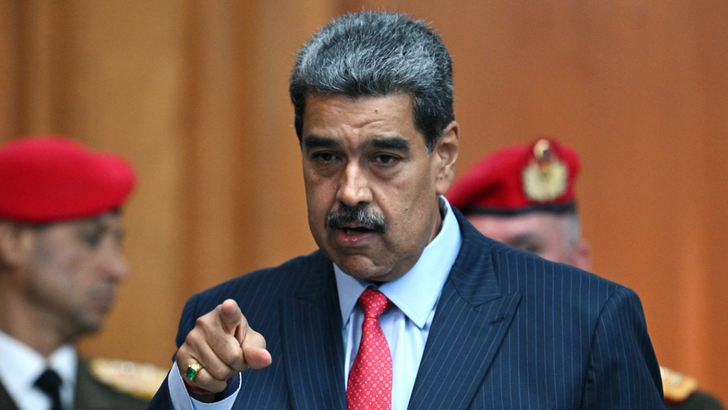
Today, the competitor is not Moscow. It is Beijing. And Venezuela – with its vast energy reserves, oil flows to Asia and geopolitical value – has become a center of this competition. The operation in Caracas is not just about the regime or even Maduro himself. It is about sending a message that the US “near periphery” is non-negotiable or you will face Trump.
From sanctions to a fait accompli
The path is familiar. Sanctions. Diplomatic isolation. Economic pressure. Attempts at internal change. When all that didn’t work, the fait accompli arrived. Capturing a sitting head of state by military means is not simply escalation. It is a break with the very rhetoric of the “rules-based order” that the US has used for decades.
And at this point the “Monroe Doctrine” shows its modern version: less as a declaration and more as a practice. Not always nominally, but operationally. Not with Cold War-style coups, but with “surgical” operations that produce an immediate political result.
What is the "Monroe Doctrine"?
The Monroe Doctrine was born in 1823 as a seemingly simple and defensive statement. The then-President of the United States, James Monroe, declared that the American continent was no longer open to European colonialism. In return, the United States pledged not to interfere in European affairs. On paper, it was an act of self-defense by a young state against old empires. In practice, however, the “Monroe Doctrine” evolved into something very different.