Protests, violence, curfews: From France to Albania, why Europe'...
/ 2026-10-20 23:47:20Focus


Israel's war against Iran is entering a second phase, which is expected to focus on attacks on underground ballistic missile installations, according to two sources familiar with the Israeli military operation who spoke to Reuters.
After the first strikes that destroyed missile launchers and surface storage facilities, Israeli warplanes are expected to target shelters and underground warehouses where ballistic missiles and military equipment are stored.
Israel-US air operation enters first week
The joint Tel Aviv-US air operation against Iran is entering its first week. The initial strikes killed several Iranian leaders and sparked a regional escalation, with Iranian retaliation against Israel in the Gulf region and Iraq, while Israel has also launched attacks in Lebanon.
The Israeli military (IDF) has repeatedly stated that it has hit hundreds of Iranian surface-to-surface missile launchers that could be used to attack Israeli cities.
Sources emphasize that the second phase of the operation aims to neutralize Iran's ability to carry out air strikes against Israel until the end of the conflict and at the same time weaken the leadership of the Islamic Republic.
First attacks on underground infrastructure
In a recent announcement, the Israeli military announced that overnight its aircraft struck an underground infrastructure used by the Iranian regime to store ballistic missiles, as well as storage facilities for missiles that can be used against aircraft.
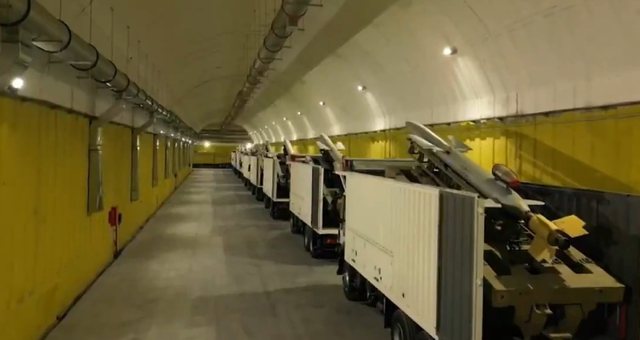
This is one of the first times Israel has publicly confirmed attacks on underground Iranian missile system targets since the launch of joint operations with the US last Saturday.
From 2,500 to 6,000 missiles in the Iranian arsenal
Estimates of Iran's missile stockpile vary considerably. Israel believes that before the war began Tehran had about 2,500 missiles, while some other analysts put the figure as high as around 6,000.
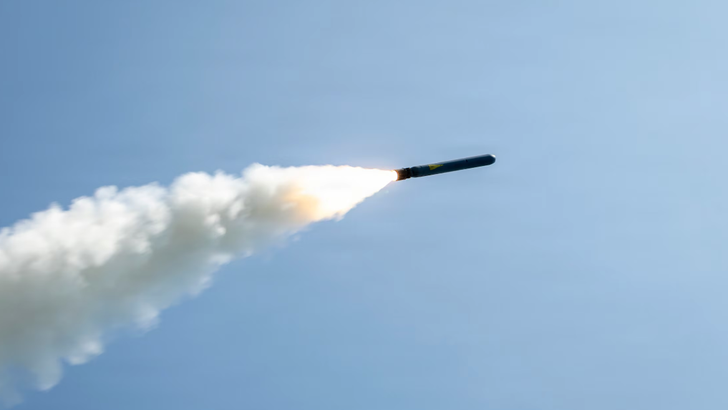
According to analyst Douglas Barrie of the International Institute for Strategic Studies, Iran may still have available surface-to-surface cruise missiles, highly precise weapons that fly at low altitudes to avoid detection by radar.
Coordinated attacks in Iran and Lebanon
Israeli warplanes have been conducting continuous missions since Saturday, as tensions rose further after Hezbollah launched rockets against Israel.
In response, Israel launched heavy airstrikes in Beirut as well. According to security sources, on several occasions the same Israeli jets have struck targets in Iran during their mission and Hezbollah positions in Lebanon during their return.
Why have missile attacks from Iran decreased?
Israeli and U.S. officials say the number of ballistic missiles and drones launched by Iran has dropped since Saturday, partly due to the destruction of launchers and military infrastructure by Israeli and U.S. strikes.
However, according to the Israeli military, another reason may be Tehran's strategy to preserve missile reserves in case the conflict turns into a long war of attrition.
Israel's former deputy national security adviser, Eran Lerman, stated that the expectation was that the Iranian regime would begin to weaken more quickly.
"We were hoping that the regime system would start to disintegrate sooner. That hasn't happened yet, and until it does, the system should be weakened more and more," he said. (Reuters)