Is this police force professional and capable of handling violen...
/ 2026-10-16 18:54:07Focus


Jacob Gronholt-Pedersen and Stine Jacobsen*
When US Secretary of State Marco Rubio meets his Danish and Greenlandic counterparts next week, Denmark will defend a territory that has been gradually moving towards independence since 1979.
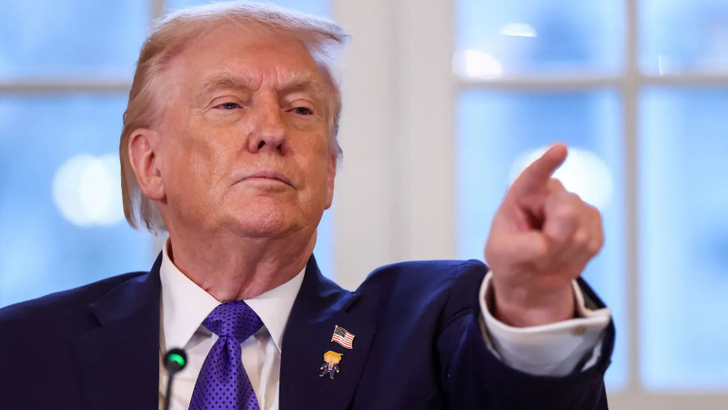
President Donald Trump's threats to take over Greenland have sparked a wave of European solidarity with Denmark. But the crisis has revealed an uncomfortable reality: Denmark is mobilizing support to defend a territory whose population is demanding independence, and the largest opposition party now wants to bypass Copenhagen and negotiate directly with Washington.
“Denmark risks exhausting its foreign policy capital to secure Greenland, only to then see it go,” said Mikkel Vedby Rasmussen, a professor of political science at the University of Copenhagen.
Strategic importance
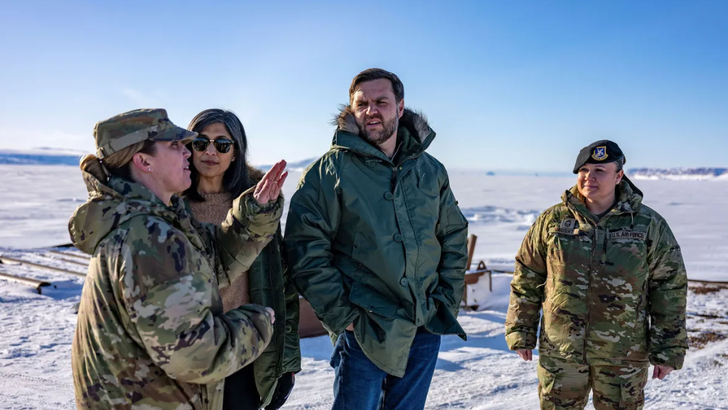
Denmark cannot give up Greenland without losing its geopolitical importance in the Arctic, strategically located between Europe and North America and a critical location for the US ballistic missile defense system.
However, the efforts may not bear fruit if Greenlanders choose independence, or reach an agreement of their own with Washington.
The danger goes beyond Denmark's national interests. European allies have rallied behind it not just out of solidarity, but because surrendering Greenland would set a dangerous precedent that could encourage other powers to claim territory from smaller states, upending the post-1945 world order.
Denmark's Foreign Ministry declined to comment, but referred to joint statements by Prime Minister Mette Frederiksen and Greenlandic Prime Minister Jens-Frederik Nielsen on December 22:
“National borders and the sovereignty of states are rooted in international law. They are fundamental principles. Another country cannot be annexed… Greenland belongs to the Greenlanders.”
This week, Frederiksen said: “If the US chooses to attack another NATO country, everything stops, including NATO and the security that the alliance has provided since World War II.”
"Greenland Charter"
For now, the Trump administration says all options are on the table, including buying the territory or taking it by force.
Professor Rasmussen said any discussion of the value of keeping Greenland has been drowned out by anger over Trump's threats.
"It's not part of the political debate in Denmark. I'm afraid we've gone into patriotic overload," he said.
During the Cold War, Greenland's strategic position gave Denmark great influence in Washington and allowed it to maintain lower defense spending than expected of a NATO ally. This became known as the "Greenland Charter," according to a 2017 report by the University of Copenhagen's Center for Military Studies.
But Greenland's aspirations for self-determination have been present since the former colony was granted greater autonomy and its own parliament in 1979. A 2009 agreement clearly recognized Greenlanders' right to independence if they choose.
All Greenlandic parties say they want independence, but differ on how and when to achieve it. Trump's pressure has accelerated a process that was already in motion, forcing Copenhagen to spend political capital and financial resources on a relationship with an increasingly uncertain outcome.
“How much should we fight for someone who doesn’t really care about us?” Joachim B. Olsen, a political commentator and former Danish MP, told Reuters.
Financial burden
Copenhagen provides an annual grant of around 4.3 billion Danish kroner ($610 million) to Greenland's economy, which is almost stagnant with GDP growth of just 0.2% in 2025.
The central bank estimates an annual financial gap of about 800 million Danish kroner to make current public finances sustainable. Denmark also covers the police, the justice system and defense, bringing total annual spending to just under $1 billion.
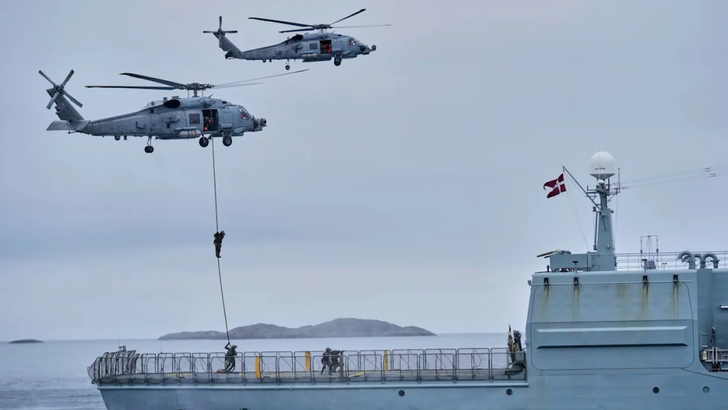
In addition, last year Copenhagen announced a 42 billion Danish kroner ($6.54 billion) Arctic defense package in response to US criticism that Denmark has not done enough to protect Greenland.
Some reject framing the relationship in transactional terms, citing Denmark's legal and moral obligations under international law and centuries of shared history.
“We are talking about family relations, a long history between Denmark and Greenland,” said Marc Jacobsen, an associate professor at the Royal Danish Defense College. “So this is much more, it’s not just about defense and economics, it’s about feelings, about culture.”
Difficult balance
Prime Minister Frederiksen faces a difficult balance, said Serafima Andreeva, a researcher at the Oslo-based Fridtjof Nansen Institute.
For now, Denmark has no choice but to stand firm to maintain diplomatic credibility, but doing so risks jeopardizing its relationship with the United States at a time "when Russia is a growing threat and being on the wrong side of the US is not good for anyone in the West."
Frederiksen also faces elections this year, although Greenland has not been a major issue.
“I don’t understand why we should cling to this community with Greenland when they want so much to get away from it,” Lone Frank, a Danish science writer and journalist, told Reuters. “To be completely honest, Greenland doesn’t inspire any sense of belonging in me.”
*Reuters