Protests highlight trauma crisis, operating rooms under reconstr...
/ 2026-10-15 18:35:16Focus


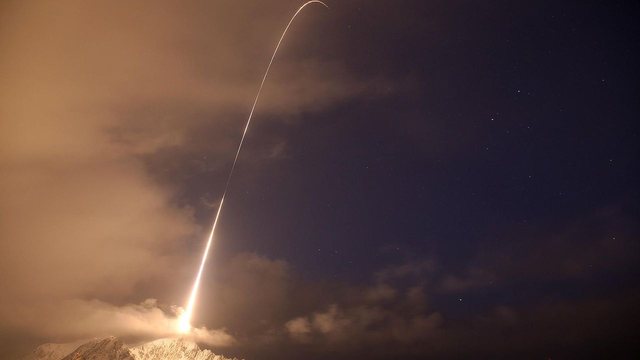
On January 25, 1995, at the height of a freezing winter day, the world came closer than ever to one of the darkest scenarios of the Cold War.
A rocket launched from Norway for scientific purposes, to study the Northern Lights (aurora borealis), was misinterpreted by Russian early warning systems as a nuclear missile on a direct course towards Moscow.
A threatening signal appeared on the radars of military stations in northern Russia, an object launched from the Norwegian coast was rising at high speed.
The question was dramatic and urgent: where was it going and did it constitute an attack? Although the fall of the Berlin Wall had fueled the idea that nuclear tensions were a thing of the past, the reality turned out to be more fragile.
For the officers monitoring the skies, the potential consequences were staggering. They knew that a single missile launched from an American submarine in those waters could deliver eight nuclear warheads to Moscow within 15 minutes. The information was rushed up the chain of command, all the way to then-Russian President Boris Yeltsin.
Yeltsin became the first world leader to activate the so-called “nuclear briefcase,” the device containing the protocols and technology to authorize a nuclear counterattack. Since the end of World War II, nuclear powers have operated on the principle of deterrence: the idea that a major attack would bring mutual assured destruction. In those anxious moments, Yeltsin and his advisers had to decide quickly whether to react.
As we know today, this alarming chain of events did not end in disaster. Instead, the story ended as an almost ironic episode at the end of the evening news.
BBC Newsnight presenter Jeremy Paxman sarcastically commented that "nuclear war did not break out today", despite initial reports from the Russian Interfax agency, which had mistakenly announced that Russia had shot down an incoming missile.
Meanwhile, global currency markets shuddered as politicians, generals and journalists spent over an hour in a state of confusion and frantic search for information. Only at 14:52 GMT did the crucial clarification come, with Interfax correcting its report, stating that although the early warning system had recorded the launch of a missile, it had fallen in Norwegian territory.
Authorities in Oslo later confirmed that it was a peaceful launch, part of a routine scientific research program at a civilian test site. The rocket was scheduled to collect data on the aurora borealis and fell, as planned, into the sea near the Arctic island of Spitsbergen, far from Russian airspace. However, anonymous Russian defense sources told Interfax that it was “too early to say” whether the launch was intended to test Russian radars.
Russian sensitivity to air defense was deep-rooted, especially after the 1987 incident, when German teenager Mathias Rust flew over 750 kilometers through Soviet defenses and landed near the Kremlin. Even though the Cold War had ended, nervousness remained.
Norwegian scientist Kolbjørn Adolfsen, involved in the project, said he was horrified by the reaction. He noted that Moscow had been notified of the launch in advance, as early as December 14, through diplomatic channels. According to him, the Russian reaction may have been prompted by the fact that the missile had reached an extremely high ballistic trajectory, about 908 miles high.
“However, this should not have been a surprise,” he said, adding that the message never appeared to have reached the right offices. A chilling reminder of how catastrophic the consequences of a missed communication can be.
Yeltsin himself, a day after the incident, told Interfax that he had used the "black suitcase" for the first time.
“Maybe someone decided to test us,” he said, hinting that the perception of the Russian military’s weakness may have played a role. Opinions on the real danger of the incident remain divided, with some former US officials calling it “the most dangerous moment of the nuclear missile era,” while other Russian experts have downplayed it, calling it an empty alarm.
Five days later, Russia called the incident a “misunderstanding” that should not be repeated. The Russian Foreign Ministry stressed that Norway had acted according to standard procedures and that there was no room for hostility.
However, the fact remains disturbing: a harmless meteorological missile was enough to bring the world to the brink of nuclear panic. An episode that, even today, serves as a stark warning about the dangers of miscommunication in a world still armed with weapons of mass destruction. / BBC