How Belinda Balluku is fabricating the rumor about Top Channel's...
/ 2026-10-19 16:19:54Focus


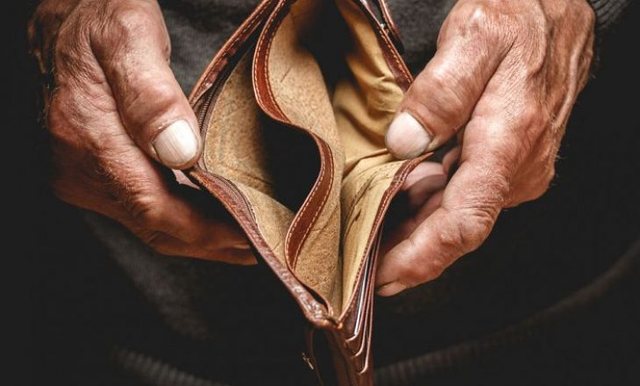
More than half of Albanians (55.3%) considered themselves subjectively poor, according to a Eurostat publication for 2022, but Albania's data is up to 2021.
In this ranking, Albanians feel the second poorest in Europe, with more than twice the EU average (24.8%). The first place is held by the Greeks, 68% of whom have declared that they feel subjectively poor.
Subjective poverty indicators are based on results from the European Union (EU) statistics on income and living conditions (EU-SILC), a data collection that is carried out in all EU Member States, as well as in most candidate countries. Indicators use, as a basis, information on the ability to afford living.
Of the countries in the region, the least poor are the Serbs with 44% who perceive that they are poor, yes for 2021, North Macedonia with 47.2%, Kosovo 47.3 (for 2019), Montenegro with 50.1%.
According to gender, 54.7% of Albanian men consider themselves poor, compared to 55.6% of women. By age group, the elderly are the ones who feel most poor in the country. According to Eurostat data, 58.4% of the elderly (over 65) considered themselves subjectively poor.
The percentage of children up to 18% who think the same is high, with 58.1%, from 43%, which is, for example, in Serbia. This percentage decreases to 54.5% for the 18-64 age group.
The lower the level of education, the higher the perceived poverty, as 66.8% of people with low education consider themselves poor, similar levels to countries in the region.
For those with secondary education, the figure is 50.9%.
For persons with higher education, the indicator improves significantly, a phenomenon that is found for all states, with 28.3% of them who considered themselves subjectively poor. The best in the region are the educated people of Serbia, with 22.2%.
However, compared to the European average of 9.2%, educated Albanians feel three times poorer.
Educated Albanians (28.4%) feel almost as poor as citizens of the European Union with primary education (29.5%).