Is this police force professional and capable of handling violen...
/ 2026-10-16 18:54:07Focus


A summer without air conditioning and a winter without heating or cooking gas? The fears of a West accustomed to these comforts pale in comparison to another concern that affects the whole world: that there is little to cook on kitchen stoves (whether on or off), and that little is becoming increasingly expensive.
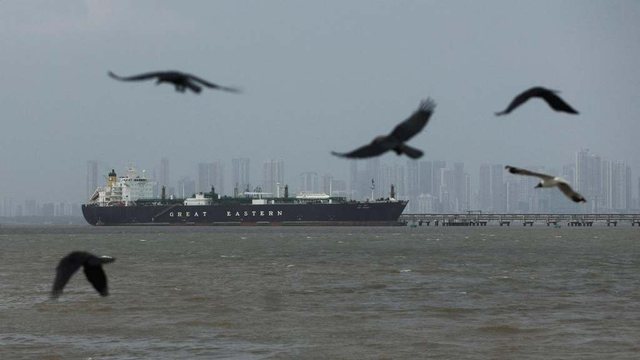
Blocking the Strait of Hormuz (or its intermittent opening) is not only a matter of energy, but in a longer and less visible cycle, also a matter of food.
A large part of the chemical fertilizers used to grow wheat and rice in the rest of the world pass through this corridor. The consequences will not be immediate, they will be seen in the harvests of the coming months, but they will be much more difficult to recover from than the markets are currently reflecting.
Even if a lasting political agreement is reached, the full reopening of the strait, from clearing mines to unblocking major maritime traffic, could take weeks, if not months. In the meantime, the agricultural cycle cannot be stopped.
What has changed?
Before February 28, up to a third of global fertilizer trade passed through the Strait, with even higher percentages in certain categories.
About 36% of the urea exported globally (the main nitrogen fertilizer that directly affects grain yields) comes from the Gulf region, along with 29% of ammonia and 26% of DAP (diammonium phosphate), which supplies phosphorus and nitrogen to major crops in Asia and the Americas.
Also, about 50% of the world's production of sulfur, an essential ingredient for phosphate fertilizers, comes from this area. The connection with gas is direct: it is the basic raw material for the production of nitrogen fertilizers, and when it becomes unavailable or more expensive, prices rise throughout the chain.
Unlike oil, there are no large strategic reserves of chemical fertilizers: a supply crisis translates into price increases within a few weeks.
Figures from recent weeks make this trend concrete. Immediately after the closure of the strait, granular urea from the Middle East increased by 19% and Egyptian urea by 28%, while the crisis then deepened.
In the first week of April, the retail price of urea in the US reached $847 per ton, 26% more than a month earlier and 48% more than a year earlier.
The Profercy nitrogen index reached its highest level since May 2022 on April 9 and is showing no signs of falling, while India has opened an international tender to purchase 2.5 million tons for June, signaling a lack of reserves in major importing countries.
FAO and WFP alarm
The FAO warns that fertilizer prices could remain on average 15–20% above year-on-year levels in the first half of 2026, an estimate that, looking at April data, already seems cautious. The organization describes the situation as a “linked” shock, moving from energy to fertilizers and then to agri-food chains, with effects that are unlikely to be reversed quickly. The World Food Program goes even further, warning that up to 45 million additional people could be severely food insecure in the event of a prolonged crisis.
Faced with these prices, farmers have three options, none of which are without cost: to cope with the increase by reducing profits; to reduce fertilizer use by accepting lower yields (with often disproportionate consequences); or to change crops to those that require less nitrogen fertilizer, affecting global markets in the coming months.
The case of India and Brazil
Vulnerability is not only linked to poverty, but also to dependence on imports. India, a major agricultural producer but dependent on imported gas for fertilizer production, and Brazil, which imports over 49 million tons of fertilizer per year, are among the most exposed.
Meanwhile, sub-Saharan Africa remains the most vulnerable. Fertilizer use is often below 20 kg per hectare, compared to 150–200 kg in Europe, and any price increase translates almost directly into lower yields. According to IFPRI, economic losses in these countries can be 10 to 20 times greater than in developed countries.
If tensions were to ease quickly, the effect would be only a temporary increase in prices. But if the crisis drags on into May or June, it will directly affect agricultural cycles in Europe, North America, Asia and Brazil. In that case, the problem will no longer be just price, but also quantity of production. And a lost harvest cannot be recovered for a full season.
A summer without air conditioning can be unpleasant. But an autumn with poor harvests and soaring food prices would be a much more serious challenge./ La Repubblica