Is this police force professional and capable of handling violen...
/ 2026-10-16 18:54:07Focus


While vehicle users have spent more of their budget on fuel due to rising prices, the budget has enjoyed a higher increase in revenue, both from value-added tax (VAT) and excise duty.
Official customs data revealed that total oil imports in March were 53.6 thousand tons, with a slight increase of 2.8% compared to the same period a year earlier.
Due to the increase in the purchase price of oil (which caused the price in the retail market to reach an average of 200 lek/liter in March, from 175 lek in February, with an increase of 14.5%), VAT revenues at customs have expanded at a much faster pace. In March, VAT revenues on oil collected at customs reached 1.93 billion lek, with an increase of 22.%, or 359 million lek more. Stripping it of the effect of the increase in imports of 2.8%, the additional revenues from the price increase in March alone were about 320 million lek, or about 3.3 million euros.
This is additional revenue only from VAT collected at customs, which is calculated on the purchase price plus taxes (excise duty 39.4 lek and turnover tax 27 lek/liter). Then, according to operators, operating expenses and profit are added to this price, which are at least 5 lek/liter for the majority and 18 lek for the minority, on which VAT is also calculated. As a result, in the final price, about 30% is added to the value collected at customs, so the amount paid as additional VAT only from the price increase in March was about 4.3 million euros.
VAT is a tax on consumption that is included in the final price of products and services and, although it is collected and paid to the state by the producer or trader, it is ultimately passed on to the consumer through the price he pays.
According to data from the Transparency Board, based on the price calculation formula, when the Platts indicator, which is the reference for purchasing oil in the country, reached 1410 dollars/ton, the VAT paid at customs alone was about 34 lek per liter, for a final price of about 220 lek per liter (the limit where the reduced excise tax begins to be calculated).
For comparison, at the end of February, before the start of the Middle East crisis, when Platts was $770 per ton, VAT paid at customs was 25 lek/liter, or 9 lek per liter less. So, for a price premium of 45 lek/liter, the additional VAT paid alone was 9 lek.
The additional VAT collected fully compensates for the 20% excise tax reduction.
In addition to VAT, the state budget has also collected more from excise taxes. From January, excise taxes were indexed to inflation, increasing by 1.5%, to reach 39.4 lek excluding VAT, or 0.6 lek more. This caused excise revenues to increase by 1.51% in January, although imports fell by 4.6%, while in February the contraction was lower than the decline in imports. In March, excise revenues increased by 8.76%, at a higher rate than imports (see table).
The government meanwhile approved a decision that if the price of oil exceeds 220 lek, the excise duty will be reduced by 20%, with a saving of 9.4 lek (including VAT). But this decision was only implemented for 5 days, although the budget would fully compensate for this reduction from the VAT collected additionally from the price alone.
On the one hand, the government has chosen not to bear any costs, benefiting from the increase in revenues. On the other hand, this additional revenue it has received from vehicle users, at least so far, has not preferred to return it to taxpayers in one form or another. Just a day ago, the government was forced to promise compensation of 50 lek per liter for public transport, after operators significantly reduced the number of buses in circulation, causing chaos in the movement of citizens.
Consumers paid 11 million euros more
Unlike the state budget, which collected more revenue in March, as a result of rising prices, consumers' pockets have been burdened. Official data from Customs revealed that oil consumption in March was 35.8 thousand tons, up from 33.8 thousand tons in the same month a year earlier, with an increase of almost 6%.
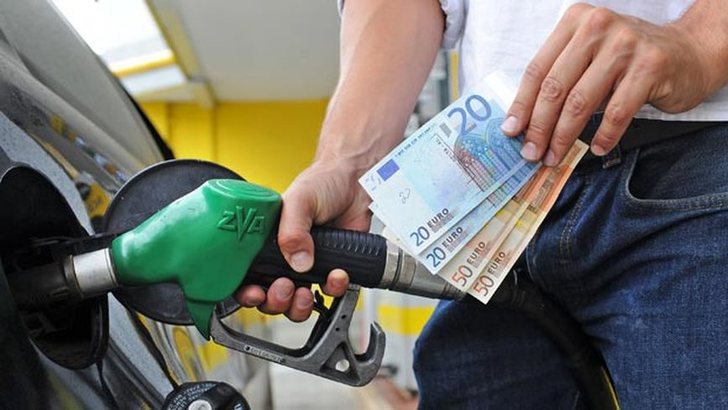
In March, consumption was 35.8 thousand tons, or about 42.4 million liters. To purchase this amount, vehicle users spent about 8.5 billion lek, or about 87 million euros, at an average price of 200 lek per liter. If they had purchased this amount at the price of 175 lek, the expenditure would have been 7.4 billion lek, or 1.05 billion lek (about 11 million euros) less./ monitor.al