Is this police force professional and capable of handling violen...
/ 2026-10-16 18:54:07Focus


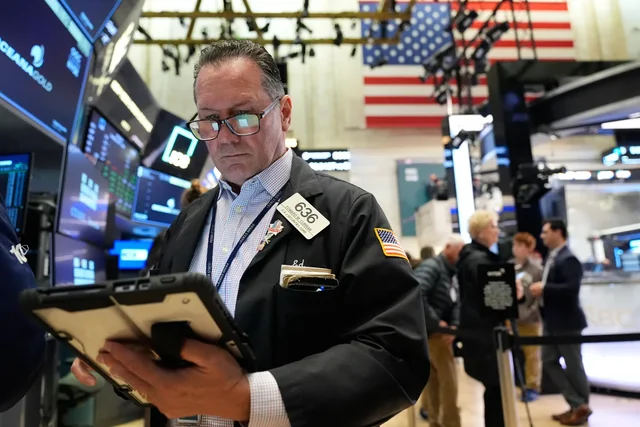
The collapse of 21-hour ceasefire talks between the United States and Iran has sparked an immediate reaction in commodity markets, while U.S. equity markets have shown resilience. On Monday, the price of crude oil surpassed the $100 per barrel threshold, amid renewed tensions that threaten the safety of shipping in the Persian Gulf.
Despite rising energy costs, the US stock market has not seen the extreme swings seen at the start of the conflict in February, suggesting that investors still see a chance of avoiding a deep global economic slowdown.
The S&P 500 was virtually unchanged, recovering an earlier decline during the day.
The Dow Jones Industrial Average fell 256 points (or 0.5%) by midday.
The Nasdaq Composite rose 0.3%.
In the corporate sector, oil and gas companies benefited from rising crude oil prices, with Halliburton and ConocoPhillips shares up 1.9% and 1.1%, respectively. Meanwhile, Sandisk rose 6.5% after announcing its inclusion in the Nasdaq 100 index starting April 20.
Earnings reporting season
Markets are also monitoring quarterly corporate reports. Goldman Sachs reported a profit of $5.63 billion for the first quarter, beating estimates, but its shares fell 3.4% due to lower revenue in fixed-asset and foreign exchange trading. Next reports are expected from institutions such as Citigroup, JPMorgan Chase, as well as non-bank companies such as Johnson & Johnson and Netflix.
The impact of the blockade on the energy market
The decision by President Donald Trump's administration to block the Strait of Hormuz — a vital artery for Persian Gulf oil exports — has prompted a backlash from Tehran. According to Iranian state broadcaster IRIB, the military and Revolutionary Guards have declared that there will be no security for any port in the Sea of Oman and the Persian Gulf unless security is guaranteed for all parties.
The international standard rose by over 6%, reaching $101.90 per barrel, below the historic peak of $119, but significantly above the pre-war level (around $70).
The bond market and collateral effects
Geopolitical tension and oil prices have directly impacted the sovereign debt market. The 10-year Treasury yield rose to 4.33% from 4.31%. This upward trend has led to higher mortgage interest rates, slowing the real estate sector, with existing home sales in March coming in below economic expectations.
On international stock exchanges, Asian and European indices reacted negatively to the failure of the talks, with major indices such as the Hang Seng (Hong Kong) and the Kospi (South Korea) each falling by 0.9%.