Is this police force professional and capable of handling violen...
/ 2026-10-16 18:54:07Focus


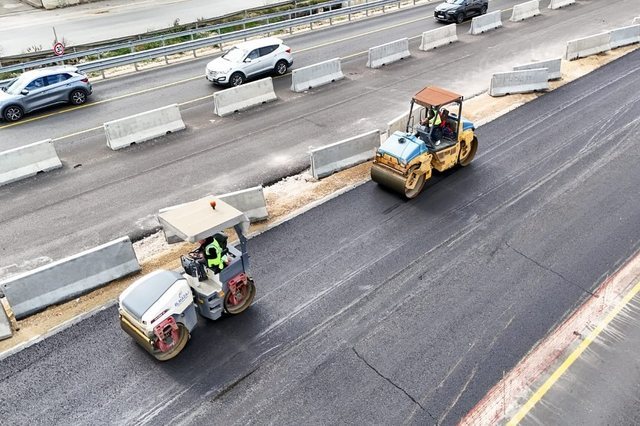
When the 2025 budget was approved by the Albanian parliament, the public investment program was quite ambitious with a total amount of 162.3 billion lek, approximately 1.7 billion euros, a historical record.
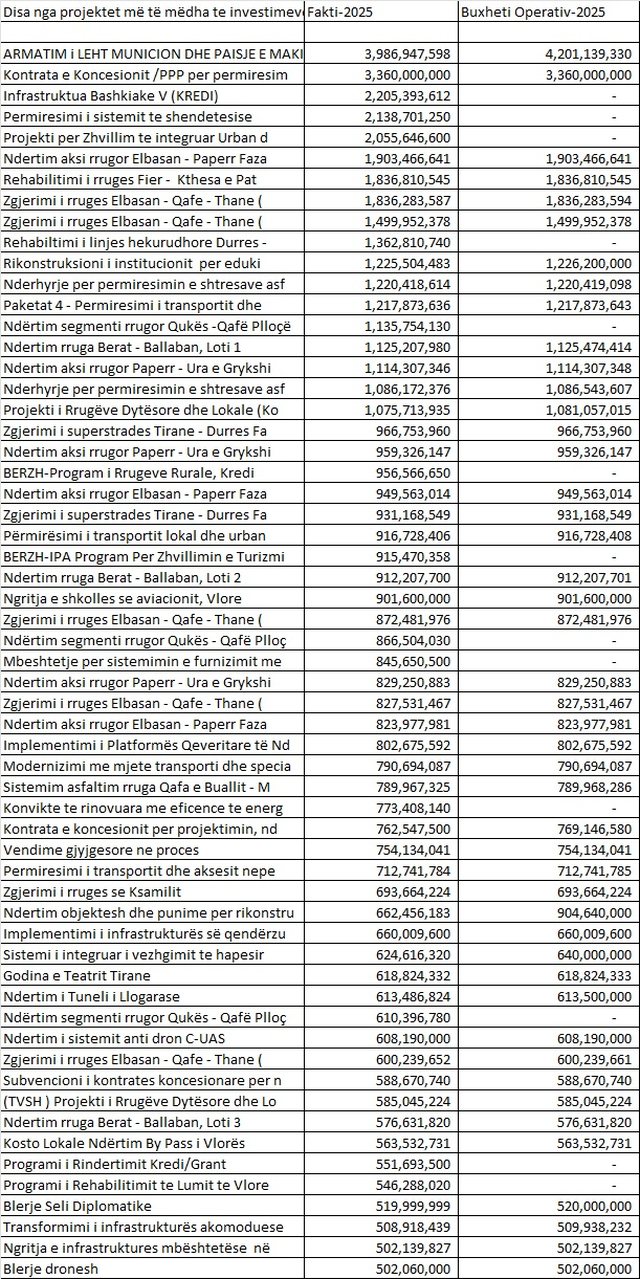
Despite the revisions made to the 2025 budget through normative acts, the actual realization of public investments was 118.5 billion lek. The progress rate remains at 73% of the initial plan, leaving around 43.8 billion lek (451 million euros) unused within the budget year.
Detailed data from the annual investment table from the Ministry of Finance shows that the best implementation was achieved by funds for the road axes of Corridor VIII, the expansion of the Tirana-Durres highway and armament projects in the army, concession contracts, and on the other hand, the weakest performance was achieved by some investment items in health and education, where universities failed to allocate donor funds.
In the 8 lots of Corridor 8 from Elbasan to Qafë-Thane, almost the entire investment program of 6.5 billion lek was allocated, and from Elbasan to Papër, another 3.1 billion lek was also allocated.
Approximately 10.1 billion lek or 8.5% of total investments last year went to investments in Corridor 8. While about 2 billion lek were given to the Tirana-Durres Highway expansion project.
The largest project after the Corridor has been about 4 billion lek or 41 million euros in investments in weapons and military equipment. While the Arbri road concession remains one of the largest projects, which was financed with about 3.4 billion lek last year, about 35 million euros.
But the 27% under-implementation of public investments reflects a high gap between planning and implementation capacities. This gap stems from excessive bureaucracy in procurement procedures and delays in expropriation processes that block the start of works on the ground. Projects often start without a well-designed feasibility study, which forces them to be revised along the way and freeze funds. This phenomenon shows that, although the budget has liquidity, the administrative machinery fails to inject it into the economy at the anticipated pace.
The consequences of this failure to implement are multiple and directly affect the pace of the country's economic development, creating costs, as funds frozen in the budget do not produce value. The delay in completing road, water supply, education and health infrastructure hinders the growth of private business productivity and reduces the quality of life for citizens. This failure to inject capital inhibits the growth of Gross Domestic Product (GDP), as public investments are the main engine that stimulates consumption and employment through chain effects in the construction and services sectors.