How Belinda Balluku is fabricating the rumor about Top Channel's...
/ 2026-10-19 16:19:00Focus


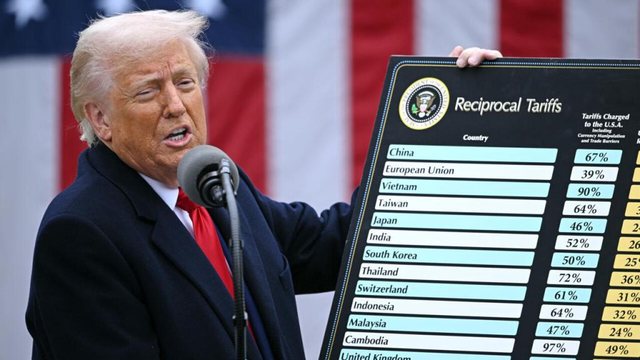
A US federal court has blocked President Donald Trump's massive tariffs, dealing a blow to a key component of his economic policies, writes the BBC.
The Court of International Trade ruled that an emergency law invoked by the White House does not give the president unilateral authority to impose tariffs on almost any country.
The Manhattan court said the US Constitution gives Congress exclusive power to regulate trade with other nations and that this power is not superseded by the president's mandate to protect the economy.
The Trump administration said it would "appeal the decision."
Who raised the issue?
The decision was based on two separate cases. The nonpartisan Liberty Justice Center filed a lawsuit on behalf of several small businesses that import goods from countries affected by the tariffs, while a coalition of U.S. state governments also challenged the import taxes.
Both cases mark the first major legal challenges to Trump's so-called "Liberation Day" tariffs.
A three-judge panel ruled that the International Emergency Economic Powers Act (IEEPA), a 1977 law that Trump cited to justify the tariffs, does not give him the power to impose massive import taxes.
The court also blocked a separate set of tariffs that the Trump administration imposed on China, Mexico and Canada in response to what it called an unacceptable flow of drugs and illegal immigrants into the United States.
However, the court was not asked to address tariffs on specific goods such as automobiles, steel and aluminum, which fall under a separate law.
What has been the reaction so far?
The White House has criticized the decision, although Trump has yet to issue a direct statement.
"It is not up to unelected judges to decide how to properly address a national emergency," White House deputy press secretary Kush Desai stressed.
"President Trump is committed to putting America first, and the administration is committed to using every lever of executive power to address this crisis and restore American greatness," he added.
But Letitia James, attorney general of New York, one of the 12 states involved in the lawsuit, welcomed the decision.
"The law is clear: no president has the power to raise taxes on his own whenever he wants," said Letitia James.
"These tariffs represent a massive tax increase on American families and businesses that, if allowed to continue, would have led to higher inflation, economic damage to businesses of all sizes, and job losses across the country," she added.
Global markets reacted positively to the decision. Asian stock markets rose on Thursday morning, U.S. stock futures also rose and the U.S. dollar gained ground against safe-haven currencies including the Japanese yen and the Swiss franc.
What happens now?
The White House has 10 days to complete the bureaucratic process of halting the tariffs, although most are currently suspended anyway.
"The case must go through the appeals process. If the White House is unsuccessful in its appeal, the U.S. Customs and Border Protection (CBP) agency will issue guidance to its officers," said John Leonard, a former senior CBP official.
However, a higher court may be friendlier to Trump.
But if all courts uphold the decision, businesses that have had to pay fees will receive refunds for the amounts paid, with interest.
These include so-called reciprocal tariffs, which were reduced to 10% across the board for most countries and increased to 145% for Chinese products, now 30%.
Leonard said that "there will be no changes to the border at this time and fees will still have to be paid."
“Market reactions indicated, in part, that investors were taking a breather after weeks of trade war-fueled volatility,” Stephen Innes at SPI Asset Management wrote in a commentary.
Innes said that the American judges sent a clear message, that "the Oval Office is not a trading desk and the Constitution is not a blank check."
"Executive overreach may finally have found its limit. And with it, a new dose of macro stability – at least until the next headline," she emphasized.
Paul Ashworth, of Capital Economics, said the decision “will undoubtedly undermine the Trump administration’s drive to quickly sign trade ‘deals’ during the 90-day tariff pause.”
He predicted that other countries will wait and see what happens next.