Is this police force professional and capable of handling violen...
/ 2026-10-16 18:54:07Focus


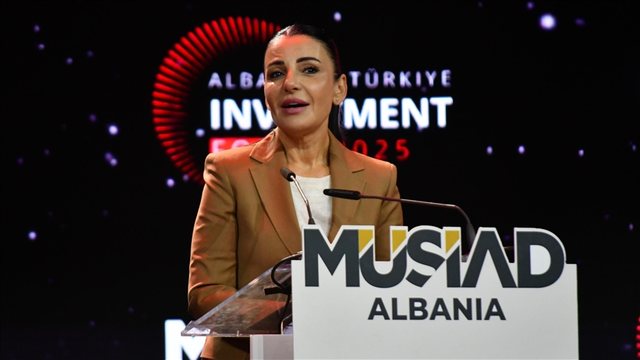
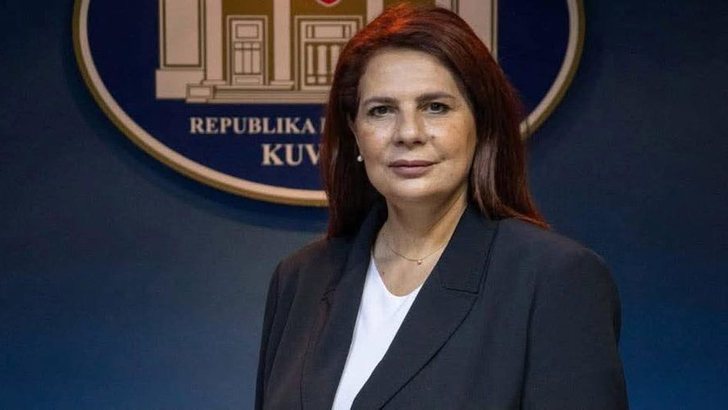
At an economic forum where investment, strategic cooperation and energy, figures and money are usually discussed, Deputy Prime Minister Belinda Balluku decided to give energy to a completely different topic: historical education through Turkish soap operas. With a smile that would envy even Sultana Hurrem and with the conviction of a teacher who has just discovered a revolutionary teaching method, Balluku proudly announced that she has not missed a single episode of “Suleiman the Magnificent” and that, thanks to this series, she has learned history. Not economics, not geopolitics, but history — with a capital “H”, as in the subtitles of a special episode.
The Albanian public was not surprised. In a country where every minister has his own “role” in the series called “Renaissance”, it was expected that even the story would be replaced with a television script. The Turkish Vice President, Cevdet Yilmaz, probably asked himself: “Is this a joke, a joke, or an offer for a television co-production?”
We do not know whether the Turkish vice president gifted Balluk a DVD collection with “Ertugrul Gazi” and a gift set of napkins with the Sultan’s logo — “limited edition for strategic friends.”
In fact, it must be admitted that Mrs. Balluku has caught the spirit of the times. In Albania, history is not read — it is broadcast. Not in class, but in prime-time. Now, every Albanian who knows who Sultan Suleiman was may not know where Prizren is, but it is clear that Mahidevran was not a woman to be underestimated. Is there a need for history teachers, when we have screenwriters from Turkey? Why bother with archives and documents, when you can see a version with lights, costumes and dramatic dialogues? The future of education is here: “History through Hurrem”.
According to the new Baluchian logic, instead of reading about Skanderbeg, we can expect a Turkish version where he appears as a secondary character who falls in love with an Ottoman princess and then regrets his betrayal.
But why stop there? The Ministry of Education could include the most popular chapters in school curricula:
– “Reforms of the Ottoman Empire: from Mahidevran to Balluku”;
– “Suleiman, the feminist version”;
– “National Renaissance, series awaiting financing”.
In the matura exams, the questions can be much more inspiring: “What would Hyrrem have done if he had won the Llogara tunnel tender?” or “What were the impacts of the series 'Suleiman the Magnificent' on Albanian public policies 2020–2025?”
In this sense, Balluku is not to be criticized, but to be praised as the forerunner of a new era — the era of television didactics. Albania has finally found a way to bridge the gap between culture and entertainment. We no longer need universities, we need more Turkish historical series. We do not need historians, we have “regular subscribers.”
After all, Albanian politics itself is a never-ending soap opera. Every day a new episode, with intrigue, forbidden love, unexpected betrayals, suspenseful arrests and surprising returns of characters the public thought had left the stage. Sultan is the name most often heard in the Albanian political court, filled with ambition, jealousy and people who swear by their love for Sultan. The opposition, like every hapless character in a soap opera, wanders the corridors shouting "I'll be back!", while the people, with a cup of tea, watch the never-ending drama on the screen.
And as in every Turkish series, there is no “The End” here — only “to be continued.” Because when history becomes a spectacle, politics becomes scenography, and diplomacy turns into a television monologue, the only thing that remains constant is the audience, who no longer has the strength to change the channel.
Meanwhile, Belinda can proudly declare: “I am proof that education through television works. Because today I am not only a politician, but also a historical figure.”
In Albania, history is taught through film. This is now state doctrine. Now, students don’t have to learn about the “Congress of Lushnja”, they just need to watch “Suleiman” and understand that we too have had our own versions of the political harem. Universities can save millions: history lectures can be replaced with “seasons”, while doctoral degrees with “premium subscriptions”. And if any minister wants to deepen his knowledge of political science, he just needs to watch a marathon of “Ertugrul” — there he learns everything about power, betrayal and sacrifice, without any need for reading.
But the truth is that Mrs. Balluku is not alone. All Albanian politics is a soap opera with a public budget. The parliament is a studio, the parties are productions, while the citizens are unfortunate spectators who have not yet found the remote control to stop it. Every day a new episode: one leaves, another returns, someone laughs with tears, someone suffers for the love of power. The series is called “Reborn Republic” and the seasons are endless. On one side we have the intrigues of political palaces, on the other the melodramas of public tenders — and in the middle, the people who see, but do not speak.