Protests, violence, curfews: From France to Albania, why Europe'...
/ 2026-10-20 23:47:20Focus


In one of Elbasan's many bars, where a coffee still costs 50 lekë, the voice of opposition leader Sali Berisha rings out from the screen on Monday morning.
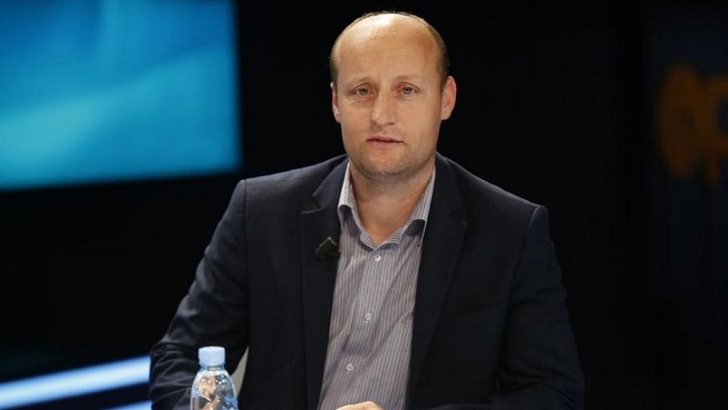
"The issue of Skapi and its misuse is part of Edi Rama's strategy to hit the Albanian opposition," Berisha accuses after his weekly exit from the Special Prosecution Office building.

But in a Democratic Party electoral office near the Pedagogical School in Elbasan, SPAK seems like the only hope to turn the tide of the elections.
“The odds are 60 to 40 in their [SP] favor, but if we have any hope that anything will change, it depends on SPAK,” says a 30-year-old Democratic Party activist, who asks not to be named for fear of any retaliation against his relatives who work in the administration.
“Only if SPAK acts, things can change,” he adds.
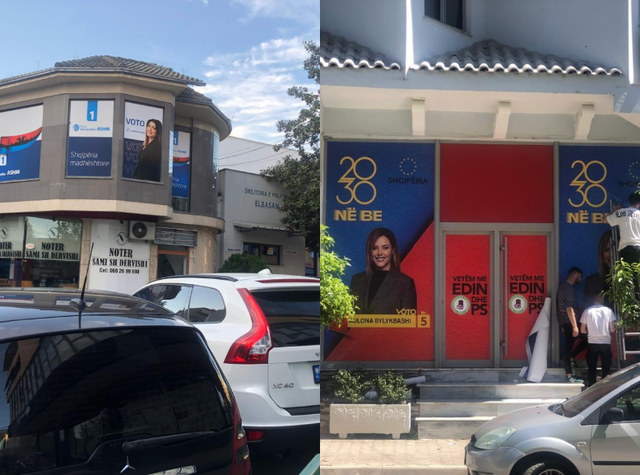
The electoral race for the May 11 parliamentary elections has entered its peak phase, but the streets of the city of Elbasan are missing the usual "decorations" of the campaign.
The only visible traces are the posters pasted on the glass facades of 3-4 electoral offices of the major parties.
However, a war for votes appears to be taking place in the shadows.
Local representatives of opposition parties denounce the suspicious movements of an escort of 4X4 cars, two Range Rovers and a Toyota, after 10 pm on the city streets, according to them they are exerting pressure and buying votes.
"They work in the dark," says the DP activist, referring to Suel Çela's group - a suspected organized crime leader, wanted by SPAK and previously denounced by the opposition for involvement in the campaign.
Even candidates from new parties, who are testing the electoral reality in Elbasan, speak of a situation of pressure and fear among voters.
"We are very far from democracy, they have created an atmosphere of pressure on voters here and people are afraid to express themselves," said Oltion Fociro, who heads the "Together Movement" list in Elbasan.
Pressure is also a topic for Sara Zekaj, a candidate for MP for Agron Shehaj's "Mundësia" party.
"People who live on quiet streets in Elbasan say that suddenly at midnight in Elbasan the traffic becomes like during the day, expensive cars coming around and doing business," she said.
For the ruling socialists, the situation is different.
Arbjan Mazniku, the regional leader for the Socialist Party, told BIRN that their votes have increased despite their long years in government, while considering the DP's denunciations as an "alibi for defeat."
Maznik also insisted that he only works with Socialist Party structures and that he has warned his own that any violation of the law will be reported.
"I also put this as a topic among the general alibis for the defeat," said Mazniku, referring to the accusations surrounding Suel Çela's name.
The Elbasan region is composed of 7 municipalities and sends 14 deputies to the Albanian Parliament.
Elbasan is also known as one of the poorest regions in Albania, where organized crime is believed to control key segments of public life, becoming one of the battlefields of political machines with results that have changed dramatically over the last decade.
Adjacent to the Manasdera stream, east of Elbasan, the poor Roma minority lives on both sides.
At a small kiosk in this neighborhood, a man has stopped to buy breakfast; half a bun filled with a meatball and Elbasan's famous pie-bugaç costs only 40 lek.
The man wears clothes stained with lime and refuses to talk about politics.
“We don't know anything, we haven't seen anything,” he says and walks away. The woman who served him also cuts him off. “We don't know. We're out to work, there's no work,” she says, waving a piece of cloth with which she's cleaning her hands.
A few steps away, on the bridge over the stream polluted by sewage and plastic waste, two men in their 40s stop their car curiously.
“It’s passionate. There are many supporters from abroad,” says one of them when we ask him about the campaign. He is talking about Chris LaCivita, the DP campaign advisor in these elections. “You see the grapes ripening, it’s inspiring,” he adds.
In past elections, the neighborhood inhabited by the Roma community has served as a haven for vote buyers, but in these elections, the campaign is still invisible.
"It's early. Even if he goes out, he goes out at night, no one notices," says one of the men in the car.
The owner of a café next to the stream, a 32-year-old with a gold necklace with an eagle hanging around his neck, also says that the campaign in their neighborhood consisted of vote buying.
"Here they come in the 90th minute," he said ironically.
A 21-year-old man, who says he won't vote, claims the neighborhood has been neglected because of racism.
"No one has ever touched us here, because we are Roma," says the young man with three years of schooling, who sells used clothes.
Other residents of the neighborhood are outraged and feel abandoned. A man with tattoos on his hands and two teardrops drawn under his right eye says that anyone who comes to campaign 'will be beaten up'.
“Ten people without bread in the house, what can I feed them,” he says. “In the small kitchen, 8 Roma in one room,” he adds, pointing to his apartment. “Nobody invests here, look at the streets, our children have blood on their knees from the stones, nobody invests because they say these are Roma,” he says loudly.
DP representatives describe this area as the one most easily targeted for vote buying.
They say that the price this election season has gone from 7,000 to 10,000 lek per vote and that the opposition has no other options than denunciations. But DP activists complain that even these are hardly taken into account.
"The police stop us on the street for no reason," says one of the activists, while emphasizing that opponents had no such problems.
Unequal competition for the little ones
Unlike past campaigns, Elbasan voters have other alternatives besides the two major parties, the Socialist Party and the Democratic Party.
But the new parties find themselves in an unequal competition and, in the absence of electoral offices, have brought out activists with small stands on the streets to distribute leaflets.
Candidate Oltion Fociro of the "Together Movement" says that the entire budget of their campaign in Elbasan is 50 thousand lek and every expense was covered by the pockets of the candidates and activists.
“They are many times more powerful,” he says, referring to the big parties. “But on the other hand, what we notice is that they are very poor in ideas,” he added.
Facing the giant facades of old rivals and their infrastructure scattered on every corner, Faciro explains that they see the campaign for the May 11 elections as a milestone, for a race that lasts over time.
"As a political force, we do not see it as a sprit that will end on May 11, and we are not fighting for the result of May 11. This is ours as a marathon of kilometers and May 11 is a milestone," he said, explaining that the campaign helped them create strong foundations for the future.
Sara Zekaj from the "Mundësia" party also considers this electoral race as an experience in her desire to get involved in politics. The candidate says that she does not calculate the result, but the campaign has given her the opportunity to talk to people and listen to their problems.
“Regardless of political beliefs, everyone agrees on one thing, that the situation must change in Elbasan and throughout Albania,” said Zekaj.
Artan Bashli, a lawyer in Italy, returned to run as a candidate from the diaspora for the "Nisma Shqipëria Bëhet" coalition led by Adriatik Lapaj and Endrit Shabani, also complains that the race is unfair.
“We have very few resources, but we have very young, very talented and very enthusiastic people,” he says.
The efforts of these forces in Elbasan do not seem to pose a serious threat to any of the major parties. In the electoral offices of the SP and the DP, they do not think that the region will give any chance to new parties.
Arbjan Mazniku told BIRN that the Socialist Party keeps its own votes and does not care what happens to the rest of the votes. He also believes that the Socialist Party is the only force that claims to produce winning candidates even from open lists.
"We believe we are better compared to 2021, marginally better, but better. So in small numbers, because the SP was 55.6% and when you are at 56 percent, growth becomes more difficult," said Mazniku.
In the Democratic Party camp, activists are concerned about the effect that the lack of a strong figure in the district and the presence of candidates from ally Ilir Meta's Freedom Party will have.
"The absence of Luciano Boçi hurts us a lot," said one of them, seeing his transfer to the Shkodra region as a wrong move.
Code of silence
A Democratic Party electoral office in Elbasan. Photo: Vladimir Karaj.
On the streets of Elbasan, you rarely hear a word about the campaign or the elections. Apart from those directly involved, few people have any apparent interest and most avoid questions.
The exception is Rexhepi, a 71-year-old retiree who sells fruit and vegetables from a makeshift stall on the sidewalk in the “5-Maji” neighborhood. The man, originally from Labinoti Mal, seems to lean toward the socialists, but he has a host of problems to share.
Rexhepi receives an 8,700 lek pension after 35 years of work and complains that 5 years were lost in the calculations of his old-age pension. His daughter has graduated from university, but is unemployed, while 4 of his 6 children are in emigration. Rexhepi also complains about the frequent clashes with the Municipal Police, who demand to remove the stalls from the street.
“The trouble brings us here with no bread in the house,” he says.
The man says he is confused by the ballot paper, comparing it to a sheet, and says the messages are contradictory and that he is not even clear on how he will vote.
But Rexhepi's case is rare, while most of those we meet, even when wearing party symbols, avoid conversation or speak under conditions of anonymity.
In the DP electoral offices, people feel intimidated.
"Everyone has a person, a sister, an uncle with a job in the state," says the man who runs the office to justify his stance.
In the office full of electoral leaflets near the Pedagogical School, a branch manager who refuses to give his name says that the opposition is powerless in the face of the government's electoral machinery or the connections they say this machinery has with organized crime.
“We don't lack courage, but we are vulnerable,” he says, chuckling almost resignedly.
Even representatives of small parties say they are facing a code of silence, which they say is due to people's strong ties to the public administration.
"Many of them tell us that we like Agron, we support your party, but we can't speak, we can't express that we have people working in the state. And I have noticed this more in Elbasan in the city, than outside in the villages," said Zekaj from the "Mundësia" party.
Even candidate Bashli from Nisma-Shqipëria Bëhet says he has found voters upset and scared.
"We have people, our family members, who when we invite to rallies, say I will vote, but I won't come there," he said.
Unlike others, Mazniku denies that such a fear exists, but explains the hesitation with "citizens' fatigue from politics."
"I notice something that is typical at the global level, the public's fatigue with politics," Mazniku said.
Faced with the insistence that opposition candidates constantly encounter such behavior among voters, Mazniku says he cannot explain what happens.
"I can't figure out what this is about, but I don't believe it's systematic. It could be part of a certain public psychosis. It doesn't seem to me that people are afraid to speak out," he added.
Fociro from the "Together Movement" says that the campaign has a sense of secrecy and shyness from citizens, for which he blames pressure from the government.
He illustrates this with an episode from his visit to Belsh, when he went in to leave flyers at a store and a young man working there asked him to leave with signs.
Then Fociro says he strangely showed him a message on his phone where, according to him, it was written: "I'm with you, we're together, but don't be sad"!/ Birn