"The fate of the homeland is in our hands" - An appeal by Ismail...
/ 2026-10-18 16:09:54Focus


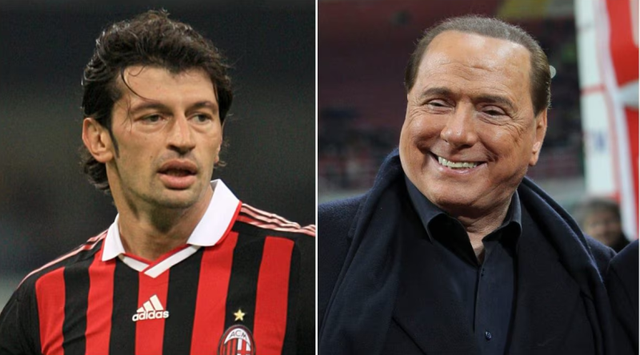
Kakhaber Kaladze is now 47 years old and is the mayor of Tbilisi, the capital of Georgia. The former Milan defender, after hanging up his boots in 2012 after his final season with Genoa, immediately began his political career: first as deputy prime minister of his country from 2012 to 2017, then, from October of that year, as mayor of Tbilisi, a position that has been renewed twice, in 2021 and 2025. Kaladze explains that he had a great teacher in this regard, namely his president at Milan, Silvio Berlusconi, who at the time was deeply involved in politics.
The drama of the Russian-Georgian war
There is an episode that the former defender with the red and black club (a Scudetto and two Champions Leagues in his palmares, in addition to other trophies) cannot forget. It was the summer of 2008, a dramatic moment for Georgia occupied by Russia, whose troops first intervened strongly in defense of the separatist regions of South Ossetia and Abkhazia, and then entered Georgian territory, reaching a few dozen kilometers from Tbilisi.
At that moment, Kaladze, who was still playing with Milan, used the desperation card to try to stop the Russian forces advancing towards the capital: "I went to Berlusconi, knowing the good relationship he had with Putin, and asked him if he could do something. He called him before me and a short while later peace was signed - he tells 'Gazzetta dello Sport' today - Silvio for me has not only been a great president, entrepreneur and politician. First and foremost for me he has been a great man."
How did the conflict start?
Starting on 8 August 2008 (during the opening of the Beijing Olympics), the Russo-Georgian War formally lasted until 12 August 2008, with partial ceasefires and a peace agreement signed around mid-August and brokered by French President Nicolas Sarkozy, then the incoming president of the European Union. Sarkozy's plan envisaged a Russian military presence in South Ossetia and Abkhazia, so that Georgia effectively lost control of these two regions, but preserved the integrity of the rest of the territory.
According to Kaladze, Berlusconi spent five hours on the phone with his great friend Putin to find a solution and convince him to stop the Russian advance, avoiding a “bloodbath” in Tbilisi. At that moment, Silvio had just started his fourth government in the Italian Republic and his power was at its peak. Personal relations with Putin were excellent, with joint vacations, energy deals and a softer line towards Moscow compared to other EU leaders.
However, the main internationally recognized mediator for stopping the conflict was Nicolas Sarkozy, who negotiated directly with Presidents Medvedev and Saakashvili and had the peace plan signed. Berlusconi has claimed in later interviews that he contributed to avoiding a greater escalation, but the credit – “in the documents of history” – is attributed to France and the EU. Some Georgian sources (such as Saakashvili himself in 2010) have denied or downplayed the idea that Berlusconi “saved” Georgia in that case.