"Condemned" protesters?! Who trapped Rama inside the Prime Minis...
/ 2026-10-23 16:02:00Focus


The German media Deutsche Welle, in an article dedicated to the Berisha case, wrote about the political life of the former prime minister, and the accusations against him, stating that this phase could be the beginning of a new political era, with the end of the era of impunity for those involved in high-level corruption.
Full DW article
For the first time in the 30 years of Albania's post-communist political transition, a once all-powerful leader is accused of "passive corruption" over decisions made during his time in office.
Sali Berisha, a former president and former prime minister, current leader of the Democratic Party, the largest opposition party in Albania, was placed under house arrest on December 30.
Prosecutors have accused Berisha of abusing the power of his office during his first term as prime minister from 2005 to 2009. The case centers on the privatization of a sports center in Tirana, from which his son-in-law allegedly benefited.
Berisha has said that the accusations are baseless, claiming that it is a politically motivated attack by his opponent, the current Prime Minister Edi Rama.
From the 'hope of democracy' to the undermining of democracy
Berisha's political career, which lasts 33 years, has had its ups and downs. Hailed as "the hope of democracy" in the early days of his career after the fall of the communist regime in the early 1990s, the charismatic ex-communist and cardiologist became Albania's first democratically elected president in 1992.
But in 2021, he was declared non-grata by the United States "due to his involvement in gross corruption" and was banned from entering the country. Secretary of State Antony Blinken wrote on Twitter, now X, that "Berisha's corrupt acts [had] undermined democracy in Albania".
Now, at the age of 79, he is confined to his home and, according to his lawyer, is forbidden to communicate with other people "except the family that lives with him".
Authoritarian leadership
After Berisha was elected to power, it did not take long for his leadership to turn authoritarian. He concentrated power in his hands, arrested independent journalists and opposition leaders, expelled opponents from his party, fired anyone critical of him, and used the courts to prosecute his political opponents.
After the collapse in 1997 of the Ponzi-type schemes (a form of fraud that lures investors and pays profits to earlier investors with funds from later investors) that he tolerated and encouraged, Berisha was ousted from power after a popular revolt.
After widespread discontent over the corruption of successive socialist governments, he returned to power eight years later, this time as prime minister, and led the country from 2005 to 2013. During his time as prime minister, Berisha exerted influence and pressure on the Albanian judiciary.
Is the support for Berisha decreasing?
"Berisha remains controversial due to accusations that his governance resulted in bloodshed and loss of innocent civilian lives, as in the high-profile case of Gërdec, where 28 citizens lost their lives in an incident related to the dismantling of ammunition, where it is suspected that Berisha's son was involved," Aleksander Cipa, an independent political analyst in Tirana, told DW.
"There was also the case of the death of four innocent protesters in 2011 when Berisha was prime minister. In all these cases, there have been no independent investigations into his explicit or implied responsibility and involvement, nor any accountability," he added.
Berisha has responded to recent events by calling for civil disobedience, trying to make his personal and family struggle national. So far, he has not received much support. His fellow MPs in the Democratic Party have tried to cause chaos in parliament, interrupting proceedings with firecrackers, but support for him on the street has dwindled.
Albania faces a difficult path towards the EU
Albania is in a permanent and turbulent state of political and economic transformation for three decades. Throughout this time, corruption at the highest level has continued its transition process, hindering the chances of NATO member Albania to join the European Union.
"Once called the 'North Korea of Europe', there was optimism that Albania's leadership would move towards democracy and the embrace of the rule of law, supporting the aspirations of its people for further integration and eventual accession to the EU," said editor Besar. Likmeta for DW, head of the Balkan Network of Investigative Journalism.
"Unfortunately, its political evolution has taken an alternative path, converging more towards oligarchy and the penetration of state structures by its own interests," he added.
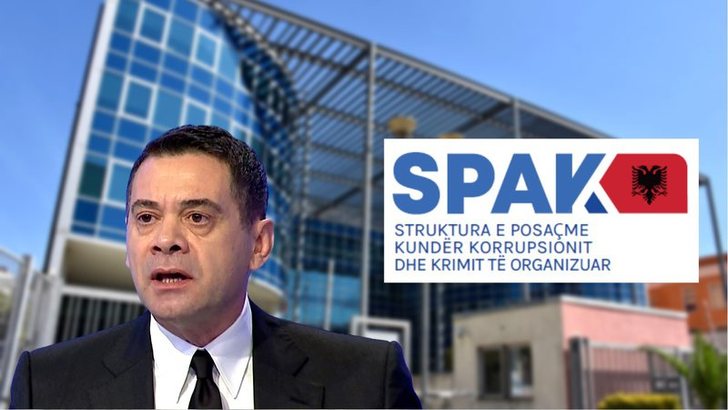
However, justice reform and the work of two relatively new judicial institutions, namely the Special Structure Against Corruption and the National Bureau of Investigation, are giving hope that the era of impunity for those involved in high-level corruption is coming to an end.
For 30 years, the judiciary was the most corrupt sector in post-communist Albania, with many judges and prosecutors using their influence to cement impunity at the highest level, protecting corrupt politicians and organized criminals.
The vetting process has brought dramatic changes
The introduction of a vetting process – the backbone of the country's judicial reform, which is supported by the EU and the US – has led to the removal of hundreds of judges and prosecutors from their posts because they could not provide proof of the source of their wealth.
Over the past two years, the reformed judiciary has carried out many investigations, convictions, seizures and confiscations at the highest level of politics, including members of the government and the opposition.
"The house arrest of Berisha and the investigations really destroy the myth of impunity in Albania. The fact that the person who was once the most powerful man in the country is being held responsible is creating a precedent for those who believe they are above the law," Çipa told DW.
Albanians now expect a lot from their reformed judiciary in terms of the fight against corruption. Many hope that the Berisha case will herald the beginning of a new political era, with new politicians who have nothing to do with the corruption of the past.