"Condemned" protesters?! Who trapped Rama inside the Prime Minis...
/ 2026-10-23 16:02:00Focus


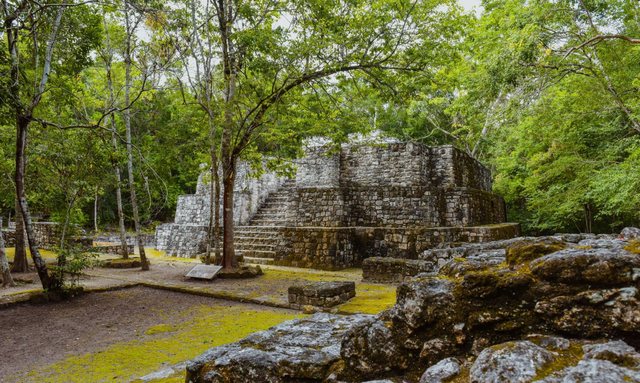
Archaeologists have discovered thousands of ancient, unknown buildings and pyramids deep in the Mexican jungle. Over 6,600 buildings associated with the Mayan civilization have been found in Campeche, on the Yucatan Peninsula.
Experts have analyzed the scans of terrestrial space that are made from above using lasers.
The Maya were one of the most dominant civilizations in Central America and built cities with ceremonial buildings and large stone pyramids in the countries we know today as Mexico, Honduras, Guatemala and El Salvador.
The pyramids at Calakmul were found by archaeologists at Tulane University in New Orleans.
"For a long time, our sample of the Maya civilization was a few hundred square kilometers ... by archaeologists patiently uncovering every square meter, hacking through the plants with axes," said Luke Auld-Thomas.
But instead of sending teams into the field, archaeologists analyzed existing records across a 47-square-mile area.
In the landscape they found anomalies revealing pyramids, houses and other buildings. The results published in Antiquity show a large and varied density of Mayan buildings spread throughout the region.
It also includes an entire city that the team named Valeriana, after a lagoon.
"We didn't just find rural areas and small buildings. We found a large city with pyramids next to the only highway in the area, next to a city where people have been planting along the ruins for years. The government never knew, neither did the local scientists," said Auld-Thomas, predicting that "there is more to discover."
Last year, a Mexican team discovered an ancient Mayan city in the same region dating back to 1,000 AD. But unlike American scientists, the group explored 60 km of road through dense vegetation.
The Mayan civilization reached its peak in 300-900 AD and their descendants are said to still live there