Frident Kuqi and Halil Gashi win the 62 million USD auction to b...
/ 2026-10-26 22:13:42Focus


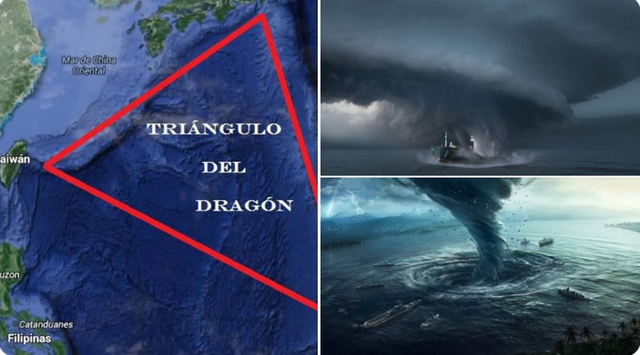
The Devil's Sea, Ma-no Uma in Japanese, better known as the Dragon's Triangle, is an area in the Pacific Ocean around the Japanese coast and Ogasawara Island that includes a good portion of the Philippine Sea.
It lies directly across from the Bermuda Triangle and is considered its counterpart in the Pacific. In addition to all this, activities that are difficult to explain have also been recorded in that area.
Several thousand years ago, the Chinese believed that a monumental dragon lived in that sea, dragging ships to the bottom to feed the hungry. Precisely for this reason, today it is no wonder that many attribute the disappearance of ships in the Devil's Sea to that mythical being.
There are stories about how the great Mongol leader Kublai Khan tried to attack Japan in the 13th century, but he lost 40 thousand people right in the Dragon Triangle. During the 19th century, many sailors reported the sudden appearance of a mysterious lady on their sailing ships.
However, the most famous story dates back to 1952, when the research vessel Kaio Maru No disappeared on September 5 with a full crew of 31. The researchers were investigating the activity of the Myojin-sho underwater volcano, and they never returned home.
According to Charles Berlitz's 1989 book "Dragon Triangle", the Japanese military lost five ships with about 700 people in the area from 1952 to 1954, which is why the Japanese Ministry of Maritime Affairs and Fisheries declared it dangerous.
What really happened to the missing men and ships has never been fully clarified, as in the case of the Bermuda Triangle.
Science claims that it is not about paranormal activity, but about the existence of trapped amounts of dangerous gases on the seabed. More precisely, it is about deposits of methane clathrate, which at a temperature higher than 18 degrees Celsius can cause a stunning explosion and sink ships without any remains or evidence.
¿Dragones, barcos phantasmas? Nadie sabe lo que se oculta dentro del Mar del Diablo. ???? pic.twitter.com/NPsRvpelaX
— Cultura Colectiva (@CulturaColectiv) October 12, 2022