Is this police force professional and capable of handling violen...
/ 2026-10-16 18:54:07Focus


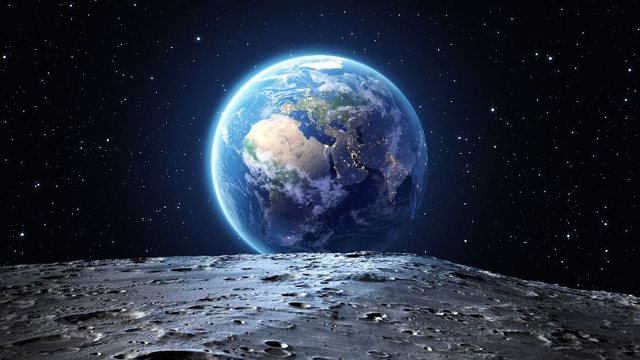
A new study conducted by scientists from NASA and Toho University in Japan warns that Earth's oxygen-rich atmosphere could be destroyed within a billion years.
Although it seems like a very distant horizon, the first significant drop in oxygen levels could begin much earlier, perhaps within the next 10,000 years.
According to Christopher Reinhard, co-author of the study from the Georgia Institute of Technology, "the lifespan of oxygen-rich atmospheres may be shorter than we previously thought."
Researchers have focused on the link between oxygen levels and the gradual increase in sunlight. As temperatures on Earth rise, carbon dioxide (CO₂) in the atmosphere will begin to break down, making it harder for photosynthesis, the process essential for plant survival and oxygen production, to occur.
If plants cannot survive, the consequences will be dramatic, as they are the main source of oxygen on the planet. The lack of oxygen production will lead to the disappearance of the protective ozone layer, allowing ultraviolet radiation to reach the Earth's surface.
At the same time, high amounts of methane, a powerful greenhouse gas, will accumulate in the atmosphere, creating an environment unsuitable for life as we know it. According to the study's leader, Kazumi Ozaki, a "major deoxygenation" will occur, where Earth's atmosphere will be characterized by high concentrations of methane, very low levels of CO₂ and a lack of an ozone layer.
This toxic atmosphere will not support life for humans and other oxygen-dependent species, as oxygen concentrations are predicted to drop to a million times lower than today. Only a few anaerobic microorganisms, which do not require oxygen similar to the first life forms, could survive.
However, these changes are expected to occur in the very distant future, when humanity will most likely no longer exist.
Important to note is that this decline in oxygen is not a result of human-caused climate change, but as part of the Earth's natural evolution.
According to researchers, this knowledge is important not only for understanding the future of our planet, but also for searching for life on other planets that have oxygen atmospheres.
Although a planet may have oxygen today, that doesn't mean it will have it forever. Ultimately, the study reminds us of a fundamental truth: nothing is permanent. And it makes us reflect more deeply on the conditions that make life possible on Earth and how fragile they really are.