How Belinda Balluku is fabricating the rumor about Top Channel's...
/ 2026-10-19 16:19:00Focus


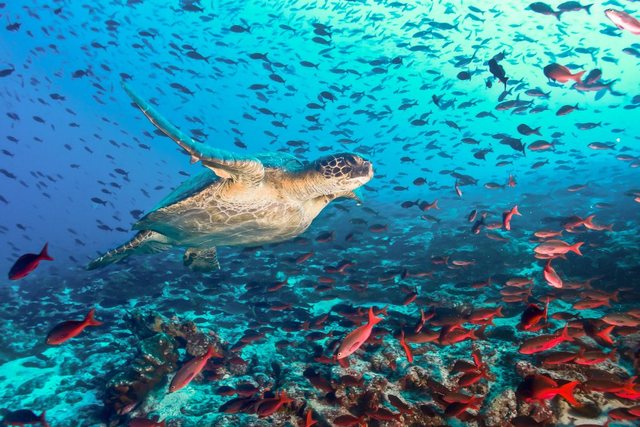
Scientists say Earth's oceans, known for their deep blue color, could one day experience color changes.
The report, based on a study published in the journal Nature, suggests that our oceans have not always been blue and depending on atmospheric and chemical changes, they could one day appear green, red or even purple.
The color of the ocean serves as a visual indicator of the chemical and biological state of the planet. According to scientists, changes in ocean color over time reflect major changes in Earth's atmosphere and life forms.
Understanding these changes provides insight into the history of a planet's climate and life.
The study, conducted by Japanese scientists and published in the journal Nature, used simulations to investigate how the color of the oceans has changed throughout Earth's history.
Their study's models suggest that under low-oxygen conditions, such as those billions of years ago, during a period when life on Earth was probably still in its infancy, known as the Archean Eon, the oceans might have appeared green.
Early photosynthetic organisms eventually caused what scientists call the Great Oxidation Event – an ecological turning point that introduced significant levels of oxygen into Earth's oceans and atmosphere, paving the way for complex life.
Evidence of this transformation is preserved in banded iron formations, where alternating layers of iron deposited in low-oxygen conditions and oxidized red iron indicate the changing chemistry of the planet.
Citing a Japanese study in Nature, an article in The Conversation suggested that given the study's emphasis on the relationship between water chemistry and ocean color, it is plausible to imagine oceans of different colors in the future.
Elevated sulfur levels – potentially caused by intense volcanic activity and low atmospheric oxygen – could fuel the growth of purple sulfur bacteria, resulting in purple oceans, writes The Conversation.
Similarly, red oceans can occur in hot, tropical climates where iron from weathered rocks is oxidized and transported to the sea, or through the spread of red algae associated with nutrient pollution, particularly from nitrogen-rich runoff near coastal areas.
According to the article, as the sun ages and becomes brighter, increased evaporation and ultraviolet radiation could further fuel the proliferation of pigment-producing anaerobic microbes. These changes could gradually replace the deep blue hues of today's oceans with purples, browns and greens, especially in coastal or stratified waters.