"Condemned" protesters?! Who trapped Rama inside the Prime Minis...
/ 2026-10-23 16:02:00Focus


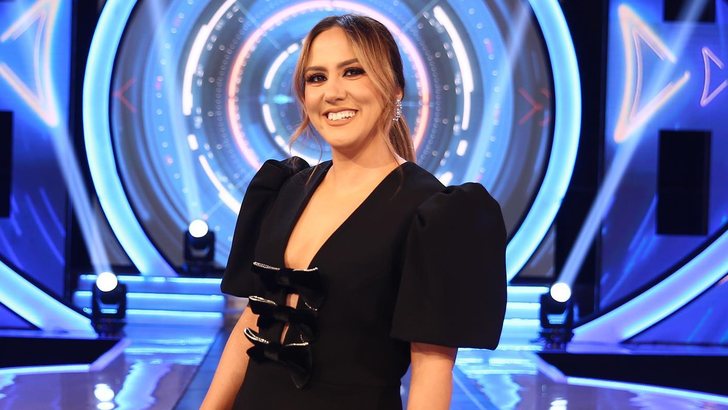
Fjona Çakalli, a girl of Albanian origin who lives in Italy, is one of the three most influential automotive influencers in Italy according to TikTok. With a passion for video games, technology, cars and travel, she has had to fight against stereotypes since she started her first blog as a teenager.
Fjolla started talking about topics considered "masculine" very early.
For example, she was the first girl in Italy to open a blog about video games called 'Games Princess' and she was truly the princess of video games. Only, unlike those who were saved by a prince or Super Mario, Fjona Çakalli was fine on her own.
Years have passed since then and Fjona Çakalli never stopped. After video games came technology and then it was the turn of cars.
Today Fjona Çakalli is one of the most popular automotive influencers in Italy and in June she was one of the top three influencers in a TikTok ranking. But that's not all: Facebook and Instagram also place it among the ten most influential names in the sector in Italy.
Fjona Çakalli is also a young girl, who with passion and dedication has followed her dream without ever giving up, dealing every day with hundreds of thousands of followers that she likes to define as a "community". But she is also a modern and contemporary woman.
FULL INTERVIEW OF FJONA CAKALLI FOR "THE WOM"
"The first one represents the life bar from Zelda, my favorite video game," answers Fjona Cakalli when I ask her about the two tattoos I see during our exclusive interview. “There are four hearts, three full and one half full: it reminds me that we are not always 100%. The second is an origami, a symbol of my passion for Japan. But there is a third behind my neck: a splinter. However, we have lost the key, I don't know how to get in, there is a mess that I would like to fix".
-You are what defines yourself as an automotive influencer. And the ranking of the three most important social networks, Instagram, TikTok and Facebook also show us how you are the only woman among the top ten automotive influencers. What is it like for you as a woman to move into a sector that is by definition for men?
I have learned to fight stereotypes since I was a child. To give an answer, I have to start from a long time ago, from when I was a little girl. My parents were principal dancers at the Opera and Ballet Theater in Tirana and it was normal for me to see a man practicing dance. When we arrived in Italy, my father started teaching, but no one would take children or little boys to dance because it was considered a girlish discipline. My father was always puzzled by the prejudice and tried to fight it: why can't a child choose dance? What is the reason why he should practice football?
It was 25 years ago that I learned the greatest lessons: if something makes you feel good, do it and don't care what others judge. A lesson I learned when I discovered I loved video games. For me, they were neither male nor female things. I just loved them: it was only later that I realized they were considered boys' games and I understood why none of my friends at school played with them. My father had no idea either when he gave me the first one: he had just done it for family fun.
That's when I realized that I didn't like default patterns: I liked to move between "anomalies". In a way, I also liked to surprise others and break their beliefs as they expected me to be what they wanted me to be. After video games came the passion for technology and today also for cars. I was never inspired by anyone, they fascinated me on their own. I remember, for example, driving a lot with my parents and sitting at the window to watch all the cars go by.
The passion for cars was born as a bit of a challenge. The childhood pleasure of observing them unconsciously led me to explore their world myself. Being in those rankings today is a source of pride for me, it's synonymous with how much I'm not used to following patterns. I only follow what I love to do, learning not to be afraid of making mistakes.
-Breaking even that patriarchal and macho stereotype, according to which "women and motorbikes, like joys and pains"...
Men's comments on various social networks are still in first place: "Why don't you go get your nails done?", "What are you doing here?". I don't understand what their problems are because I can go and get my nails done, but there's nothing stopping me from doing what I love. I am often asked why they give me certain cars to drive or who am I to do it and talk about it: "why not?", I ask myself.
Over the years I have developed my credibility and sometimes I get to answer. Not so much for me, it doesn't affect me that much, but I do for other girls who maybe try something even a little, finding themselves struggling with obstacles stemming from a misguided male-dominated culture. I feel responsible for them: when you have the ability to do something, it doesn't matter what biological sex you were assigned at birth. There are no taboo activities or topics.
- As a child, one is usually drawn to the profession of one's parents. Did dance mean anything to you?
Dance still appeals to me, but my body didn't adapt 100% to the type of dance I wanted to do, classical. My body didn't exactly meet the required standards and that of classical dance is a world that, still very much tied to tradition, is not open to slightly different bodies. I could have learned or practiced modern or contemporary dance, but those weren't what I wanted, I loved ballet.
But around the age of 17 or 18 came the final decision: I had no idea what I was going to do with my life. Maybe a translator (I've always liked languages), but the desire for independence led me to my first odd jobs, making me discover that I could do quite well too. And it was at that moment that I started to believe in myself a little more and think seriously about what I could do.
Back then, blogs were very popular, that's why I started my first video game blog. The idea was to offer something different from what others were doing: I left the comments to those who were better than me and started talking about news, including cultural news, related to the world of Japan, finding a small niche. The blog was called Princess of Games, but I wasn't the princess who wanted to escape. I was the one who slowly saved myself by implementing her plan.
Gradually, girls who would like to collaborate with the blog started writing to me. They all claimed that this seemed like a safe haven without prejudice, They had tried to knock on the doors of several online gaming magazines, but had been turned down without many compliments. And so the blog took an unexpected turn…
-Being what I call a self-made woman: from the blog, then a company (now TechDream) was born which, at least initially, only employed women.
The turning point was the birth of Tech Princess. You couldn't live on video games alone, there was also the economic aspect to deal with. Investments in the video game sector were not (and are not) plentiful, so I expanded the range of my passions into technology. And the first small victory came when some guys started contacting me, who, impressed by the way we handled the topics, wanted to be part of our team. From what was a girls-only safe haven, the foundations were laid for a gender-neutral community where everyone could talk about what they liked best. I had turned into a solid reality what everyone laughed at.
I'm glad to be defined as a self-made woman: behind the success of the blogs, there has been incredible teamwork. I believe in the work of those around me and my partners because without a diversity and plurality of visions, nothing can ever work. Thanks to the passions and diversity of those who work with me, ideas are born, showing that diversity is always the key that makes the difference.
-Talking about cars today is a big responsibility. How difficult is it for you to approach describing the characteristics of a car if it does not reflect certain values, such as eco-sustainability for example?
It is not only difficult, but also complex. Car manufacturers often offer models with features that even they don't believe in because they are confused by the decisions that come from above. As a result, our stories are also disoriented: we discover aspects we have never encountered before. Therefore ours is a continuous work of discovery and study and the responsibility becomes great. In my case, I don't just feel like an influencer who gets paid for her work, because I have a journalistic spirit, even if I'm not a professional, which makes me ask myself a lot of questions.
For example, I wonder who decided on an innovation, I go back to the sources and try to have a different approach than those who limit themselves to the notes of car manufacturers. I try to gather as much information as possible to then turn into a story that combines information and entertainment. I have nothing to teach anyone, I also learn in this field but I try to arouse curiosity about models.
I don't want to be a point of reference in the sector, but a starting point: I'm talking about a "product" that if you're interested, go look for it somewhere else, my job is to let you discover it, while it's up to the followers to explore. But, unfortunately, today it happens that the public stops at the first step, without going deeper. It is a little sad, but it is a consequence of the decrease in attention that is also generated by the use we make of social networks. We are constantly bombarded with content.
- You are of Albanian origin. This was a strange August for Albania, on the one hand it was the anniversary of the arrival in the port of Bari of 'Vlora', while on the other hand there was talk of the Italian tourist boom that the nation is experiencing. For many years, being Albanian was associated with an unpleasant social stigma as Albania was synonymous with poverty or crime. How difficult was it for you to live with your origins?
That it was complicated I realized now that I am an adult and not as a child. I came to Italy at the age of four and spoke Italian fluently (maybe thanks to cartoons) and I consider the first day of primary school my first introduction to society (I had no contact with Italian children before). The teachers were amazed by my Italian, I felt like everyone else and I had no one knows what difficulties. The problem arose when, in the face of a dispute, they addressed me as "Albanian trash". This made me realize that something was wrong.
I slowly realized that I was not like others, I was something else. My father always told me to remember to show my worth. As a child it made no impression on me, it was normal to grow up knowing that I was a stranger and that I was not at home. I still remember when in geography we were going to study the countries of Europe and with my euphoria that I could finally talk about my country, I was disappointed when I heard it said "Albania is the poorest country in Europe..."
However, growing up, things changed. In high school, I didn't feel either Albanian (I left as a child) or Italian (precisely because others pointed out where I came from). The identity crisis was strong, but it culminated there, arousing in me the desire and curiosity to discover any culture other than my own.
Lately, for example, I've been enjoying rediscovering my roots. And I started going on trips with my community (I don't like to call them followers because I have a daily exchange relationship with everyone). The first was six months ago and no one imagined that Albania was such a beautiful country: the stereotype of the ugly, dirty and dirty Albanian is still strong, but the reality is very different. This is why I define my trips to Albania as integration trips, meetings and experiences.
We were a bit of a forerunner of what happened in August with the tourist boom in Albania, where people mainly go to the sea in search of lower prices than on the shores of the Balkans or Italy. I don't know how prepared the country was for tourists: coming from a kind of pit that lasted forty years and suddenly finds itself projected into the future. There was and is a rush to organize and be hospitable, even though welcome and kindness are characteristics that the Albanian people have always had.
-A recent Instagram post of yours brought up an issue you've never talked about before: your relationship with your body. At what stage is your complicated relationship?
It is a relationship that must be cultivated day by day, just as we must continue to cultivate earned rights, so we must never take our inner achievements for granted. I'm starting to make peace with my body, it's like we signed a treaty that now has to be kept. And it's not easy.
I have always suffered from being too feminine, prosperous. I don't like the idea of sexualization. I'm afraid that watching my videos people will focus on my physique and not the content.
-Who is Fjona Cakalli when she turns off her smartphone and computer?
She is a very introverted person. I know it seems like a paradox for someone who is always in front of a camera, but inside I often feel like an eight-year-old who needs to be taken care of. I also like to dance around the house, lie on the floor and start singing, read a book, dress up and imitate the voices of cartoons. When I need to listen to what's inside me, I take long walks, walk for hours without anything in my ears, to listen to nature and that's where my ideas come from. I've also been reading a lot of essays lately. In other words, Fjona away from the cameras is an introverted person who likes to be alone a lot.