"Condemned" protesters?! Who trapped Rama inside the Prime Minis...
/ 2026-10-23 16:02:00Focus


The city of Florence in Italy is a historical gem filled with art.
From art in the Uffizi Gallery and Michelangelo's statue of David, to the 1345 Ponte Vecchio, in this city, you can immerse yourself in the past.
Officina Profumo-Farmaceutica di Santa Maria Novella is one of the oldest pharmacies in the world and is located right in Florence.
Whether you love skin care, perfumes and elixirs, or want to shop where people did hundreds of years ago, this is one place in Florence you can't miss.
You can even buy a perfume created for the queen of France in the 16th century.
The church in which the Profumo-Farmaceutica di Santa Maria Novella is located began to be used by Dominican priests as a monastery at the beginning of the 13th century, where they made their medicines and elixirs.
It then became an infirmary in 1381, around the time of the plague. The pharmacy actually still sells rose water essence, once used to clean plague-stricken homes (nowadays, it's used for skin care and aromatherapy).
The site was officially opened to the public in 1612.
Nowadays, you can even order their products online or visit one of the many locations around the world, including Rome, Milan, Venice, Madrid, Valencia, New York, Miami, Boston, Los Angeles, Osaka and Seoul .
That said, it is absolutely worth visiting the original shop, its tea room and showroom in Florence.
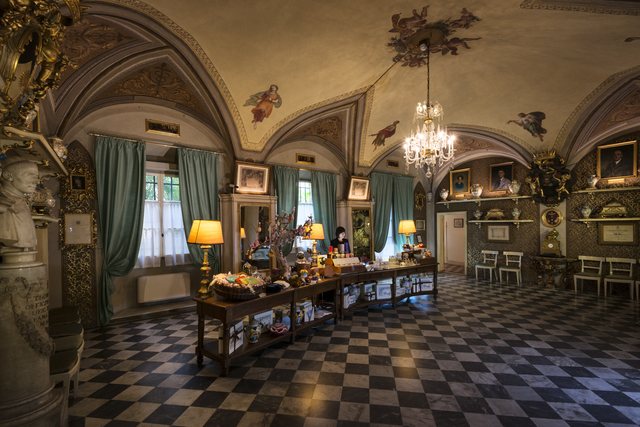
Profumo-Farmaceutica di Santa Maria Novella in Florence isn't just a shop – it's a work of art in itself, despite its unassuming exterior.
Inside, you'll find Renaissance frescoes, elaborately decorated walls and soapstones.
It still sells Acqua della Regina, or Queen's Water, a perfume created in 1533 for Queen Catherine de' Medici, who married the future king of France that same year at the age of 14.
Another historical product is the Acqua di Santa Maria Novella elixir, which was once sold as an "anti-hysteria" medicine.
There are wonderful soaps, oils, perfumes, creams, potpourri and candles.
It even sells ancient concoctions, including Sali Lavender and Acqua di Melissa, from a recipe dating back to 1690.