


"Condemned" protesters?! Who trapped Rama inside the Prime Minis...
/ 2026-10-23 16:02:00Focus


The universe is full of mysteries and inexplicable phenomena. There are various theories that explain aspects of creation, origins, and how the universe works, but none of these theories can be tested, and moreover, they do not enjoy consensus among scientists and philosophers. Anyway, in the following we are presenting mysterious knowledge of the universe that has accompanied humanity since its birth.
How old is the universe?
Despite the fact that we live in the 21st century and the development of technology, the age of the universe is unclear to us. Today's scientists estimate that the age of the universe may be about 13.799±0.021 billion years.
How galaxies formed
There is a wide debate on how galaxies are formed. After the "big bang", scientists are not sure whether small fragments gradually joined together to form stars.
The universe before the "Big Bang"?
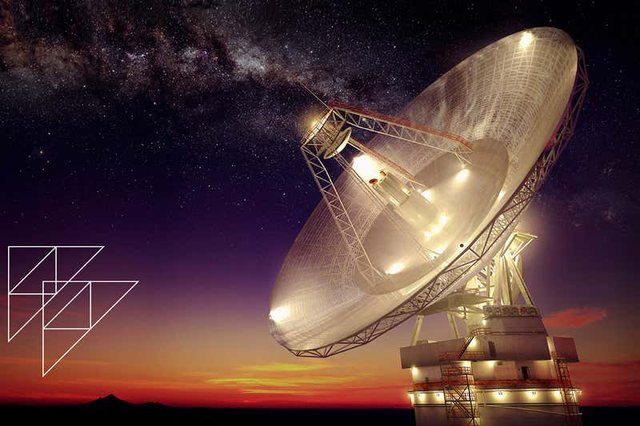
What if there was something before? We have been able to determine the genesis of our existence starting with the "big bang", but beyond that we know nothing.
Does life originate from Earth?
This is one of the most fundamental questions of all time and there is still no scientific answer to it.
We know that there was no life on Earth until the solar system was formed. Then signs of life appeared on our planet evolving into the species we know today.
Scientists estimate that there is a possibility that life may have flourished spontaneously depending on the conditions of the Earth. Other scientists believe that complex organic molecules may have come to earth from space and arrived on earth by comets or meteors.
What is dark matter?
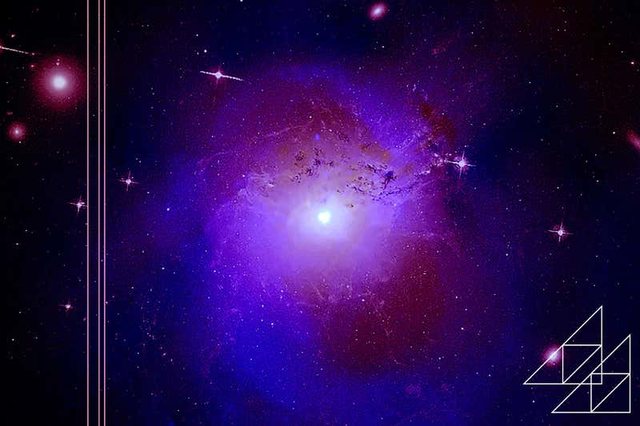
The truth is, we don't know exactly what dark matter is. However, scientists have been able to highlight some features. For example, we know that it is black, which means that there are no stars or planets that can be seen. Second, it is not in the form of black clouds. Third, dark matter is not antimatter, and finally, dark matter is not a galactic black hole.
How the Moon was formed
Where did our romantic satellite come from? Scientists and philosophers have thought about this for centuries. The first modern idea of the formation of the Moon comes from Charlie's son, George Darwin. But the most accepted theory is that the Moon was formed by large objects crashing into the Earth billions of years ago. This collision formed the Earth and released molten material into orbit, gradually forming the Moon.
Why is the planet Mars dry?
We already know that Mars was once rich in water. But what we don't know and scientists are trying to understand is why the red planet is so dry and inhospitable. Theories are numerous and range from asteroid collisions to catastrophic events or even the solar erosion wind.
Are we alone?

This is another mystery that many thinkers and scientists try to answer through the history of human civilization. Can we distinguish all types of life? What if some life forms are watching us, and we don't realize it?
Where did we come from?
It is one of the earliest questions and one of the greatest mysteries in human history. Despite the various theories, the truth is that scientists do not have a clear idea.
Do we live in a parallel universe?
For as long as humans have been able to think and reason, one question has always been present in our heads: How do we know that whatever we see is what we see? Modern science is almost certain that a parallel universe may exist, but it remains difficult to test such a notion.
What we can see makes up only 5% of the universe

Everything we can see makes up only a small part of the universe, 5%. And 95% of it is still unknown, dark. According to scientists, dark matter is an invisible material that makes up the bulk of matter in galaxies. Scientists think it exists because the gravitational pull of galaxies is too, too great to be explained by what we can see alone.
How will the universe end? How will the end of the world come?

Astronomers think that in about 6 billion years the Earth will evaporate from our sun. What about the rest of the universe? There are some scary theories about this. Thermodynamics tells us that everything in the universe can be made at the same temperature. This means that all the stars will dissolve and matter will decay. There is also a theory, which is the opposite of the Big Bang. It's called Crunch Big. If the universe continues to expand and grow, eventually there will not be much gravity and all that gravitational force will do everything to start contracting.
If the universe continues to expand and grow, eventually there won't be much gravity and all the gravitational forces will do everything to start contracting.


