Protests, violence, curfews: From France to Albania, why Europe'...
/ 2026-10-20 23:47:20Focus


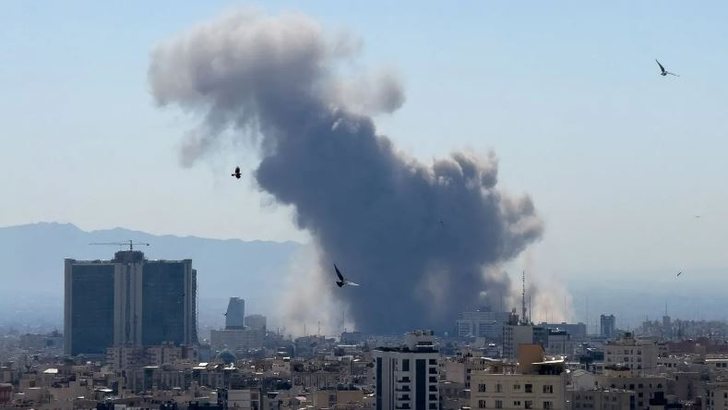
For the second time since the 1979 Islamic Revolution, Iran faces the monumental challenge of electing a new Supreme Leader. The assassination of Ayatollah Ali Khamenei, who ruled the country with an iron fist for 37 years, following surprise bombings by the US and Israel, has plunged the Islamic Republic into its biggest crisis in decades.
The country is currently being run by a provisional governing council made up of President Masoud Pezeshkian, Judiciary Chief Gholamhossein Mohseni Ejei and senior Shiite cleric Ayatollah Ali Reza Arafi. According to Foreign Minister Abbas Araghchi, a successor is expected to be chosen early this week, ending a vacuum at the top of power, where final decisions on war, peace and the controversial nuclear program are made.
How is the Supreme Leader chosen?
The fate of Iran's leadership rests in the hands of the Assembly of Experts, a panel of 88 Shiite clerics elected by popular vote but whose candidacies are pre-approved by the Guardian Council (the constitutional oversight body). This body is legally obligated to quickly appoint a successor.
The internal competition is a clash between factions: from hardliners seeking escalation with the West, to more pragmatic or reformist ones. Given the extraordinary influence that the late Khamenei had over these bodies, analysts believe that a radical deviation from his political line is unlikely.
Who are the main contenders?
The list of potential candidates includes figures with significant political and religious weight in the country:
Mojtaba Khamenei
The son of the late leader. He is a mid-level cleric with deep ties to the Revolutionary Guard. However, his choice could provoke internal resentment, as the Islamic Republic has historically condemned hereditary rule (monarchy) which it overthrew in 1979.
Ayatollah Ali Reza Arafi
A member of the current interim governing council. He was personally selected by Khamenei to be part of the Guardian Council in 2019 and later to the Assembly of Experts. Arafi runs a wide network of religious seminaries, giving him a strong support base among the clerics.
Hassan Rouhani
The relatively moderate former president (2013-2021) and architect of the nuclear deal with the Obama administration. Although a well-known figure, he was recently disqualified from running for re-election to the Assembly of Experts, a move that marginalized him from the narrow circle of clerical decision-making.
Hassan Khomeini
The grandson of the founder of the Islamic Republic, Ayatollah Ruhollah Khomeini. Considered a moderate voice, he has never held a government post and currently works at his grandfather's mausoleum. His name carries great symbolic weight.
Ayatollah Mohammed Mehdi Mirbagheri
A senior cleric and extremely popular among hardliners, Mirbagheri, who heads the Islamic Cultural Center in Qom, has been close to circles that seek to develop “special weapons” (nuclear weapons) and is known for his extreme rhetoric, including calling the COVID-19 pandemic lockdowns a “conspiracy.”
The coming days will be crucial not only for Iran's domestic future, but also for the trajectory of the simmering conflict across the Middle East.